

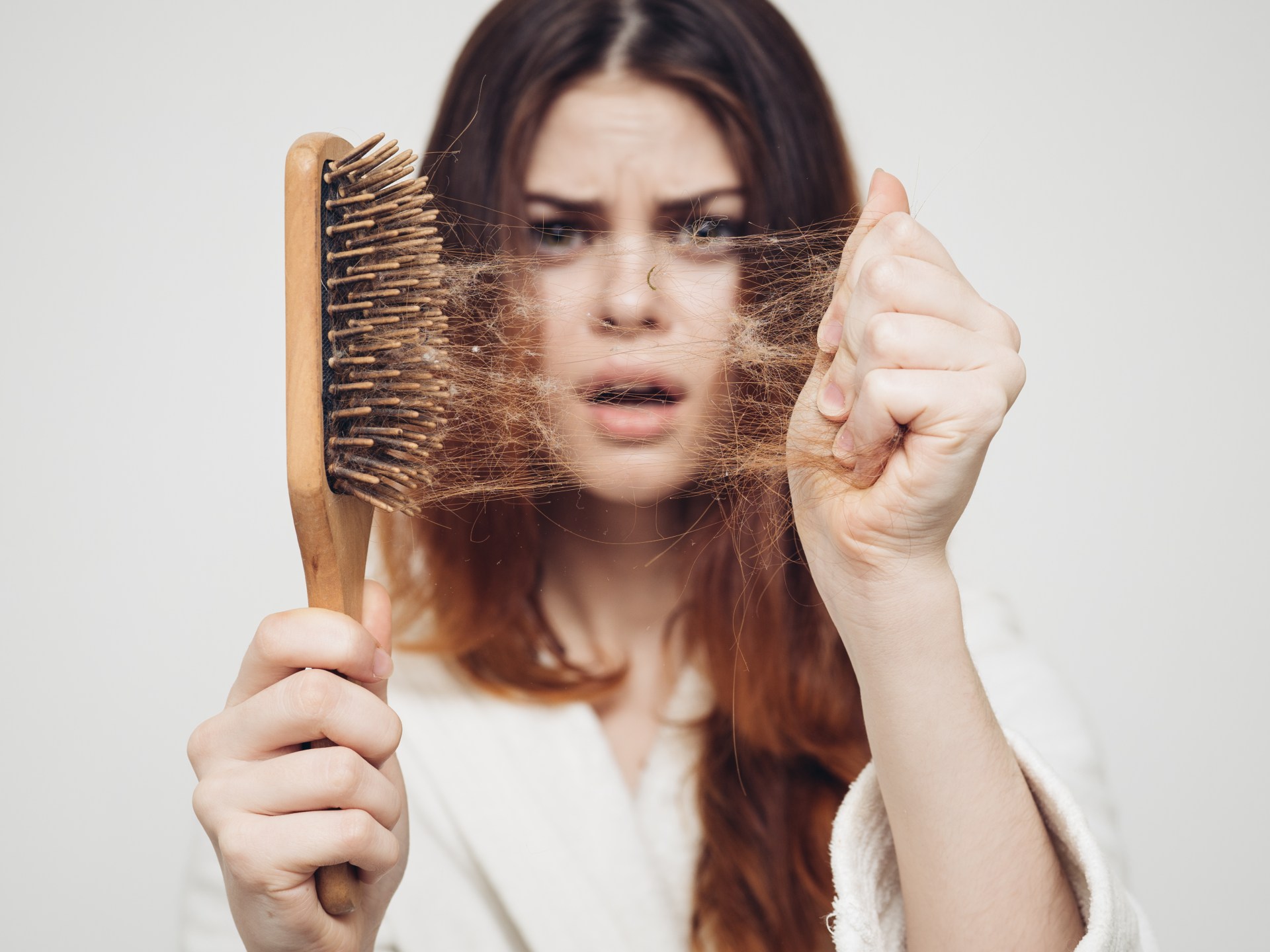
Intermittent fasting has multiple health benefits, but a new study finds that it can slow hair growth, at least in mice.
Intermittent fasting, or regulating eating times, is a diet that depends on the timing of eating. With intermittent fasting, you only eat at a specific time, and you fast a certain number of hours each day, according to the Johns Hopkins website.
The study was conducted by scientists, led by the chief stem cell specialist Ping Zhang from Westlake University in Zhejiang, China, and was published by the journal Cell on December 13, and was conducted on mice.
The researchers found that mice that underwent intermittent fasting showed improved metabolic health (i.e., the body’s energy-burning and cell-building processes), but their hair regeneration was slower compared to mice that had 24/7 access to food.
The researchers said that this process may occur similarly in humans, based on a small (human) clinical trial that the team also conducted, but it is likely to be less severe, because humans have a much slower metabolic rate and different hair growth patterns compared to mice.
“We don’t want to scare people away from intermittent fasting, because it’s associated with so many beneficial effects,” says lead author Ping Zhang, “It’s just important to realize that it may have some unintended effects.”
In addition to its metabolic benefits, previous studies have shown that fasting can improve the stress resistance of cells in blood, intestine and muscle tissue, but little is known about how it affects peripheral tissues such as skin and hair. Zhang’s team hypothesized that fasting may also be beneficial for skin tissue regeneration, the process during which old and damaged cells are replaced.
Different intermittent fasting systems
To test this, scientists examined hair growth in mice that were shaved and then subjected to different intermittent fasting regimens. Some mice were fed on a time-restricted feeding schedule that included 8 h of food access and 16 h of fasting each day, while other mice were fed on alternating days.
The researchers were surprised to find that fasting prevents hair regeneration. While the mice that had unlimited access to food regrew most of their hair after 30 days, the mice on both intermittent fasting diets showed only partial hair growth after 96 days.
The researchers found that the inhibition of hair growth occurs because hair follicle stem cells (the cells that differentiate into hair follicle cells from which hair grows) are unable to deal with the oxidative stress associated with the switch from using glucose to fat.
Hair follicle stem cells go through phases of activity and inactivity, and hair growth depends on the activity of these cells. While in the control mice, these cells began to activate around day 20 after shaving, and remained active until their hair grew back. The stem cells of the activated hair follicles in the intermittent fasting mice underwent apoptosis during long periods of fasting.
Using genetic engineering methods, the team showed that fasting-induced apoptosis was driven by an increased concentration of free fatty acids near the hair follicles, causing harmful molecular species to accumulate within the hair follicle stem cell cells.
“During fasting, adipose tissue begins to release free fatty acids, and these fatty acids enter the stem cells of the hair follicles that have been recently activated, but these stem cells do not have the proper mechanism to use them,” Zhang says.
In comparison, human stem cells responsible for maintaining the human skin barrier were not affected by intermittent fasting. The main difference between these types of stem cells is that human stem cells have a higher antioxidant capacity.
When the team tested whether antioxidants could mitigate the effects of fasting on hair growth, they showed that both topical application of vitamin E helped hair follicle stem cells survive the fast.
Experiment on humans
The team also conducted a small clinical trial in 49 healthy young adults to examine whether fasting similarly affects hair regrowth in humans.
A time-restricted diet that included 18 hours of fasting per day was shown to reduce the average speed of hair growth by 18% compared to those who ate a normal diet. But larger studies will be needed to verify this effect due to the small sample size of the study and its short duration (10 days).
In the future, the researchers plan to collaborate with hospitals to investigate how fasting affects other types of stem cells in the skin and other body systems.
“We plan to examine how this process affects regenerative activities in other tissues,” says Zhang. “We also want to know how fasting affects skin wound healing and identify substances that could help hair follicle stem cells survive and promote hair growth during fasting.”