

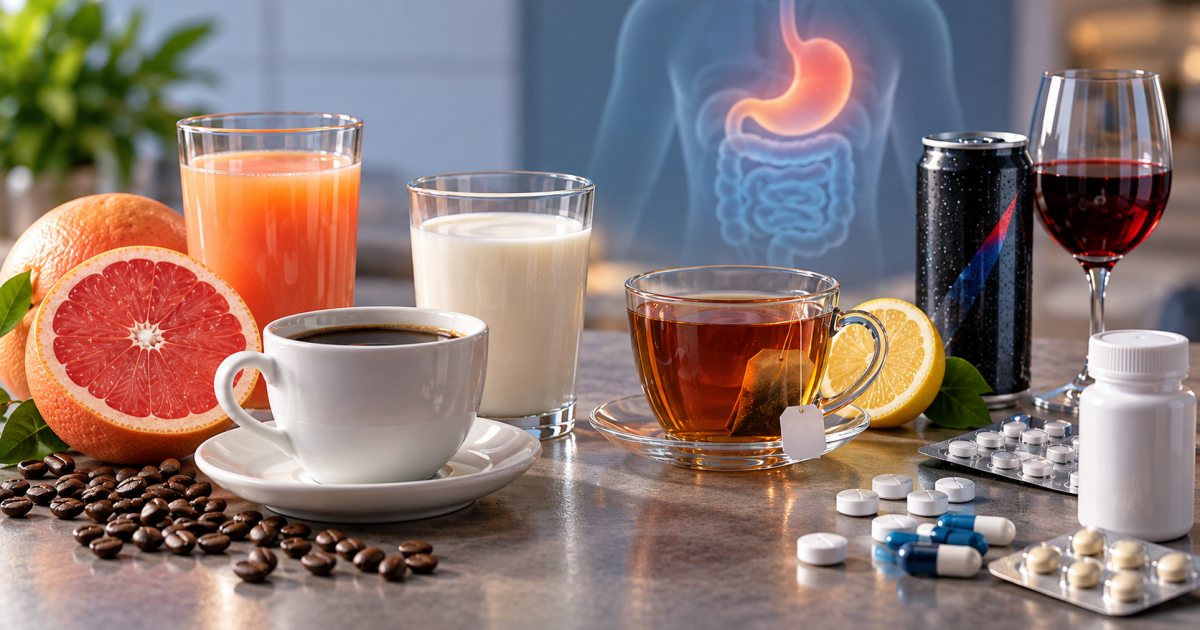
A cup of coffee, milk, or juice may seem like a normal part of the daily routine, but taking it with some medications may change the amount of medication that reaches the blood, reducing its effectiveness or increasing its concentration and increasing the possibility of side effects.
This does not mean that these drinks are harmful in themselves or that all medications are affected by them in the same way, as the interaction depends on the active substance, the type of drink, its quantity, and the timing of its consumption, in addition to individual factors that differ from one person to another.
The US Food and Drug Administration explains that some foods and drinks can affect the way medications work, so knowing the instructions for taking medication is an essential part of using it safely.
How does the drink affect the medicine?
The pharmacist at Al-Jufairi Hospital for Diagnosis and Treatment in Qatar, Ahmed Joudah, says that the interaction between drinks and medications may occur in several ways, including reducing or increasing the absorption of the drug from the digestive system, or affecting the enzymes responsible for breaking it down inside the body.
Jouda adds to Al Jazeera Net that the result may go in two opposite directions. A smaller amount of the drug may reach the blood, causing its effectiveness to decrease, or its concentration to increase, increasing the possibility of side effects.
It is more important to pay attention to these interactions in people who take several medications at the same time, or treatments that require maintaining specific levels of them in the blood.
Grapefruit…the most famous example
Grapefruit juice is one of the most famous examples of beverages interacting with medications.
The US Food and Drug Administration explains that it can affect an enzyme known as (CYP3A4), which is found in the intestines and contributes to the breakdown of a number of drugs before they reach the blood circulation.
When the activity of this enzyme decreases, a greater amount of some medications may reach the blood, which may increase the risk of their side effects.
Medications that may be affected by grapefruit include some cholesterol and blood pressure lowering medications, some immunosuppressants used after organ transplants, as well as certain medications for heart arrhythmia and anxiety.
However, this interaction does not include all medications within these categories, so it is not correct, for example, to consider all blood pressure or cholesterol medications as incompatible with grapefruit.
Judeh pointed out that two medications used to treat the same health problem may have completely different interactions with the drink, and therefore one should look at the active ingredient and not just the name of the drug group.
A study published in the journal Clinical Pharmacology & Therapeutics on the effect of grapefruit juice on the drug simvastatin showed that the effect of consuming a large amount of juice remained noticeable when taking the drug after 24 hours, which means that separating the two for a few hours may not be sufficient in some cases.

Juice may decrease drug absorption
Fruit juice does not always increase the concentration of the drug. The US Food and Drug Administration indicates that grapefruit, orange, and apple juices may reduce the absorption of the allergy drug fexofenadine from the intestine.
This is why the medication instructions recommend taking it with water instead of fruit juices.
This example reveals that the interaction of drink and medicine does not go in one direction, as it may raise the concentration of the drug in some cases, while reducing the amount absorbed by the body in other cases.
When does milk interfere with medications?
Milk is also not the right drink for every medication. Calcium found in milk and dairy products may bind to some medications within the digestive system, reducing their absorption.
Gouda explained that one of the most famous examples is the antibiotic tetracycline, as milk and dairy products can reduce its absorption, which may affect its effectiveness.
This information is important because some medications from the tetracycline family are used to treat common conditions, including acne. Absorption of the antibiotic ciprofloxacin may also be affected when taken directly with milk or dairy products.
The British National Health Service recommends at least two hours of separation between ciprofloxacin and dairy products or calcium-fortified drinks when consumed alone, but this does not mean that all antibiotics are affected by milk in the same way.
Coffee and thyroid medication
Coffee represents another example of the effect of beverages on the absorption of some medications, especially levothyroxine, which is used to treat hypothyroidism.
A systematic review published in the journal Pharmaceuticals in 2021 showed that coffee, along with calcium, iron, and some foods and supplements, may reduce the absorption of levothyroxine.
A study published in Thyroid magazine also found that taking medication tablets with coffee reduced their absorption compared to taking them with water, while this effect decreased when the coffee was drunk after 60 minutes.
This highlights the importance of adhering to the timing specified by the medication instructions, even with a common beverage such as coffee.
Is “Green Panadol” stronger with tea and lemon?
Some people circulate a home recipe based on taking what is popularly known as “Green Panadol”, meaning “Panadol Cold & Flu”, with tea and lemon when suffering from a cold, in the belief that the drink increases the effectiveness of the medicine.
But there is no clinical evidence to prove that taking the medicine with tea and lemon makes it more effective in treating colds. The feeling of improvement may be related to the hot drink itself.
A study published in the journal Rhinology, which included 30 cold or flu patients, found that drinking a hot drink temporarily improved the feeling of nasal congestion, cough, sore throat, and a number of symptoms, without showing an objective improvement in air flow through the nose.
A review in the Cochrane Database of Systematic Reviews also showed that adding 100 milligrams or more of caffeine to a usual dose of some analgesics, including paracetamol, led to a limited improvement in pain relief in some people.
But this result does not mean that a cup of tea specifically increases the effectiveness of “Panadol Cold & Flu,” as the amount of caffeine varies between drinks, and the studies dealt with pain relief and not the treatment of colds themselves.
Thus, the feeling that tea and lemon with the medication “works better” may result from the combination of the medication’s effect and the temporary relief provided by the hot drink, rather than from the increased strength of the medication itself.

Energy drinks…extra caution
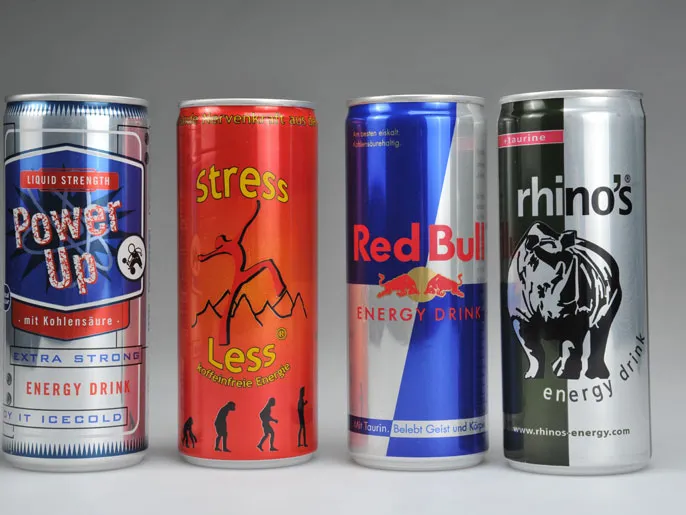
Energy drinks usually contain caffeine, along with other ingredients with stimulant effects.
A review published in the journal Pharmaceutics in 2021 concluded that there are potential interactions between components of energy drinks and a number of medications, noting limited long-term safety data.
Studies have also indicated that energy drinks may affect blood pressure and some indicators of cardiovascular function.
Therefore, it is increasingly important to pay attention to its consumption among those who take medications regularly, especially those with heart disease or high blood pressure.
Alcohol: a dangerous interference
The interaction of alcohol with some medications may be more dangerous, especially those that affect the central nervous system.
The US National Institute on Alcohol Abuse and Alcoholism warns against combining alcohol with opioid medications or benzodiazepines used in some cases of anxiety and sleep disorders, because their combined effect may increase respiratory depression and raise the risk of overdose.
Water is the simplest option
Joudah advises that water be the usual choice for taking tablets, unless the medication instructions state otherwise, and that the patient not replace it with milk, juice, or coffee before ensuring that there is no interference.
He also stresses that discovering the presence of an interaction does not mean stopping the medication on its own. In some cases, the solution is to separate the medication and the drink for a period of time, while other cases require avoiding the drink during the treatment period or choosing an alternative in consultation with the doctor or pharmacist.
The practical rule when starting any new medication is simple: Ask the doctor or pharmacist if there is a food or drink you should avoid, and read the medication instructions carefully.
A cup that seems completely ordinary may not affect a drug, but it may change the absorption or concentration of another drug in the body in a way that deserves attention.