

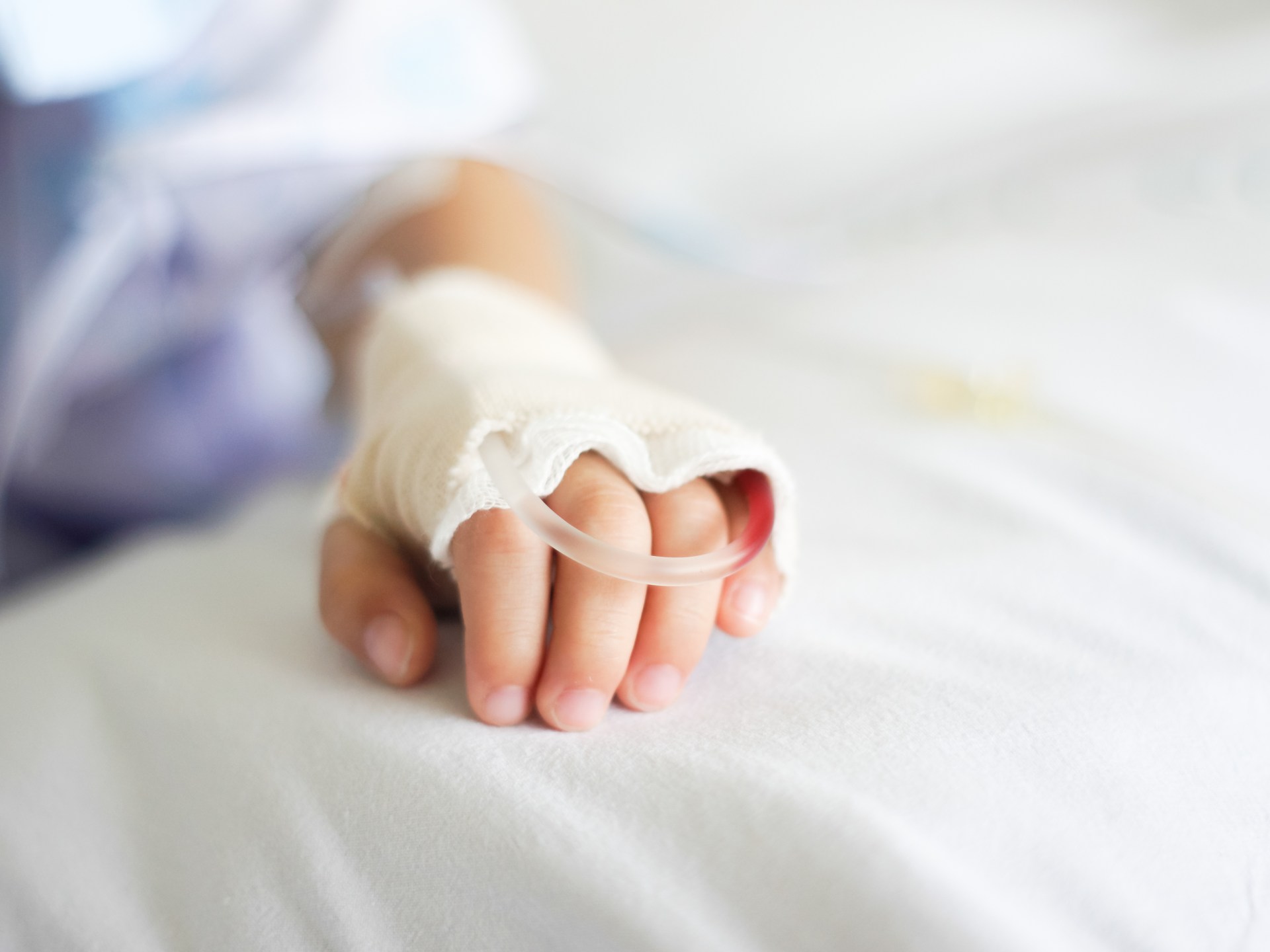
Cancer is associated in the minds of people with adults and the elderly, and the most stories that are narrated about it relate to the death of the grandfather, grandmother, or the great uncle to “that disease” as they symbolize it in their conversation, but what many do not know is that cancer can affect children as well, although it is less common.
Despite the cruelty of the idea, the news is not all bad; Science has made tremendous progress in this field, even if the rates of children’s recovery from some types of cancer today reach much higher levels than they were a few decades ago.
Cancer is one of the main causes of death among children and adolescents all over the world, which is one of the most urgent health challenges and anxiety. Estimates indicate the diagnosis of about 400,000 children (0-19 years) with cancer every year.
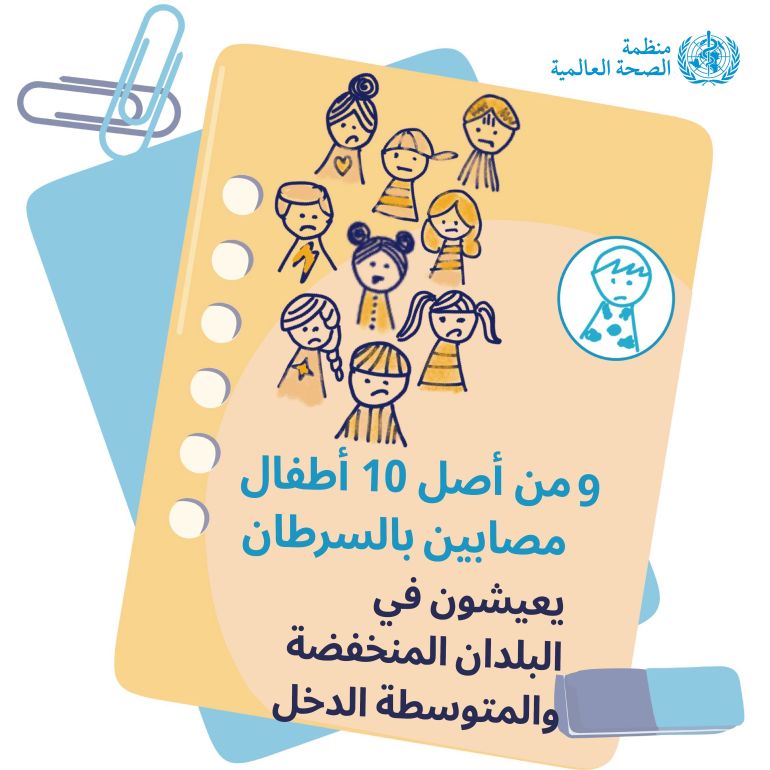
The rate of healing of children’s cancer depends on the country in which the child lives; In high -income countries, healing rates have exceeded the 80%barrier, thanks to careful diagnosis, timely treatment, and reaching the latest treatment protocols.
While the scene turns upside down in many low and medium -income countries, as healing rates hardly reach 30%.
This enormous gap with healing rates is due to reasons that can be treated, the most important of which are: delay in diagnosis, difficulty access to treatment, lack of basic medications, abandonment of treatment due to the high costs, and death due to the side effects of treatment that can be avoided.
In 2018, the World Health Organization launched an initiative to combat cancer in children with the support of St. Jude’s Child Research Hospital in the United States, and this initiative aims to raise the survival rate for all children with cancer all over the world to at least 60% by 2030.
Children did not get cancer?
Many adult cancers are associated with environmental factors such as smoking or lifestyle, but the situation varies in children; As the exact causes of most children’s cancer are still completely incomprehensible.
The disease begins with a single cell in which a genetic defect occurs that makes it divided abnormally, to form a tumor that may spread to other parts of the body if it is not discovered and treated early.
Some chronic infection, such as HIV, Epstein Bar and Malaria, are risk factors for child cancer, and are of particular importance in low and medium -income countries.
Some other types of infection can increase the risk of a child with adulthood, so it is important to vaccinate (against hepatitis B to help prevent liver cancer, and against the HPV to help prevent cervical cancer) and follow other methods such as early detection of chronic infection that may lead to cancer and treat it.
Current data indicates that about 10% of all children with cancer have a genetic willingness to infection, and scientists are currently focusing on improving early diagnosis methods and effective treatment, and research continues to discover the hidden causes behind these diseases.
The most prominent types of children’s cancer
Leukemia
Lemoper cancer represents about a third of cancer cases in children and is the most prevalent species, and it has two main types: the most common type is “acute lymphococcal leukemia”, while “acute pulling leukemia” is less widespread but more fierce.
The warning signs of these cancers include paleness of the face, the appearance of bruises or unjustified bleeding, frequent infections, enlarged lymph nodes. The recovery rate with appropriate treatment reaches more than 85% in high -income countries.
Brain and central nervous system tumors
Brain and nervous tumors come second in terms of spread. Among the common types of raomic aromatic tumor and glial tumors.
Warning signs include a frequent headache (especially in the morning), vomiting, vision or balance problems.
Its treatment is a challenge because it requires an accurate balance between tumor removal, radiotherapy and chemotherapy while trying to reduce the effect on brain growth and cognitive abilities.
Lymphoma
This type affects the lymphatic system and is divided into two main types: Hodgkin and Mafuma, not Hodgkin.
The warning signs appear as painful swelling in the neck or under the armpit, accompanied by continuous fever, weight loss, and night sweating, and its recovery rates are very high in the event of early diagnosis and correct treatment.
Wilms Tumor tumor
Relatively rare cancer, but it is one of the most common kidney cancer in children, often appears in small ages (3-5 years).
Parents discover swelling or lump in the abdomen by chance, and may suffer from abdominal pain, and sometimes it is noticed that there is blood in the urine, and the recovery rate reaches 90% or more with appropriate treatment.
Neuroblastoma
This tumor arises from immature neurons, and often affects infants and children under the fifth.
The warning signs are bone pain, the appearance of a block in the abdomen, weight loss, and in some cases the emergence of the eyes, and this cancer is often diagnosed in advanced stages, making its treatment more difficult.
Sarcomas
The term sarcoma summarizes a complex group consisting of more than 70 different types of cancers that arise from the tissues that form the organs of the body, regardless of its location.
These rare cancer constitute 1-2% of adult cancer in the world, and represent 6-15% of children’s cancer (less than 15 years) and 11% of teenagers and youth (15 to 29 years).
The most famous types of osteosarcoma and Ewing’s Sarcoma, often appear in the rapid growth stage during adolescence.
Constant pain in the bones that does not improve with comfort, swelling, and sometimes unjustified fracture may indicate sarcoma. This type of cancer is usually treated with a mixture of chemotherapy and surgery, which may require in some cases the eradication of the affected part of the bone.
Retinoblastoma
Cancer affects the retina in young children, often hereditary, and the appearance of white flash in the pupil in the photographs may form in the photographs instead of the usual redness, or the presence of around the eye is an indication of a dangerous indication of this cancer. Early detection of this cancer saves the child’s life and sight.
How does cancer treatment differ in children?
Treatment of cancer in children is clearly different from the treatment of adults, whether in terms of the severity of treatment or expected results.
Studies indicate that children’s cancer are usually more responsive to various treatments compared to adult cancers, with some exceptions.
This is partly due to the nature of the cancers themselves, and children often receive more intense treatment programs, and they usually do not suffer from chronic diseases that may face elderly people with cancer, which may increase the difficulty of treatment or the exacerbation of side effects.
Chemotherapy is a cornerstone in the treatment of children’s cancer, because it is often more effective against fast -growing cells, which is a common feature of most children’s cancer.
Child bodies usually bear higher doses of chemotherapy compared to adults, which gives doctors a greater opportunity to achieve complete recovery, but these high doses may lead to short and long -term side effects, including weak immunity, hair loss, digestive problems, and sometimes heart or nervous complications over time.
Radiotherapy is also used, but it is treated with greater caution in children, especially young people, as it may cause serious side effects on tissues and organs. Therefore, doctors always seek to balance the need to eliminate cancer while reducing side damage as much as possible.
Treatment plan
The treatment plan depends on several factors, the most important of which are the type of cancer, the spread of the disease, the speed of cancer cell growth, the child’s needs and family preferences.
The treatment often combines more than one way to achieve the best results, for example, chemotherapy or radiotherapy may be used to reduce the tumor before surgery, or after surgery to kill any remaining cancerous cells.
Surgery plays a major role in removing part or all the tumor, or taking a biopsy to examine it, and it can also be used to install auxiliary devices such as the nutrition tube to support the child’s nutrition during treatment.
Radiological therapy uses high -energy radiation to destroy fast -growing cancer cells, and is often given to reduce the tumor before or after chemotherapy or surgery, which is a painless treatment, and is very similar to X -rays, but the number of sessions and side effects depends on the location of the tumor and the amount of radiation used.
Chemotherapy is the most used therapeutic option to combat cancer, as the drugs used in it work to destroy fast -divided cells, and this treatment is mainly targeting cancer cells, but it may also affect some of the healthy, rapidly growing cells in the body, such as hair follicles and cells lining the mouth and the digestive system, and this side effect is what leads to the emergence of symptoms associated with treatment such as hair loss And nausea.
There are more sophisticated treatments such as treatment, and the treatment medications are designed to accurately target unique vital indicators – which are specific genes or proteins – within the cancer cells for each patient.
These treatments act as “smart missiles” that only target cancer cells, avoiding damage to healthy cells, unlike traditional chemotherapy that affects all fast -growing cells in the body.
Although the directed treatment may cause some side effects, it usually differs from those accompanying chemotherapy, as it tends to be less severe and more manageable.