

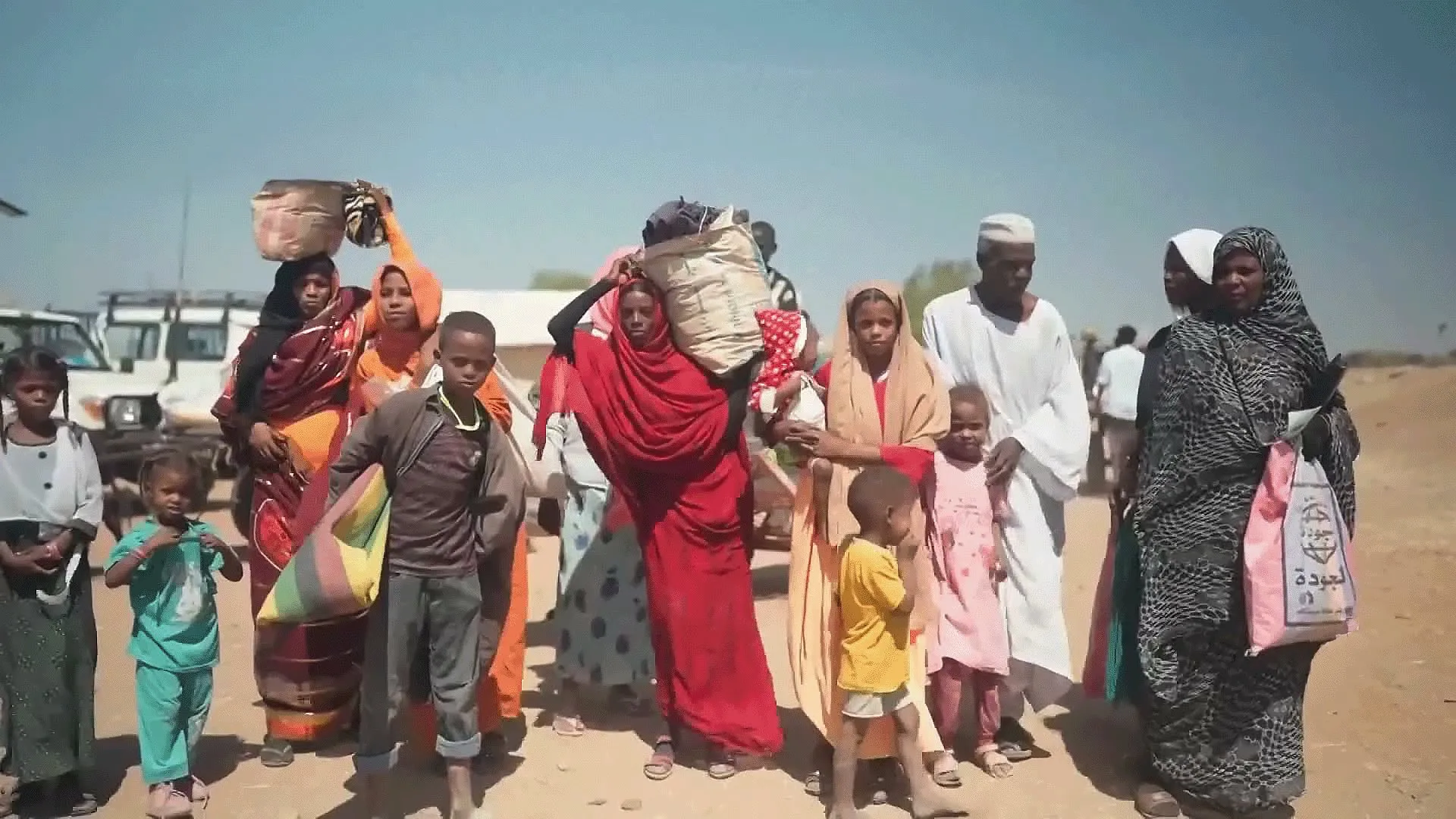
In Darfur and Kordofan, cholera is spreading amid a rainy season, a decline in health services, and difficulties in accessing aid. However, the announced infection numbers do not necessarily mean that they paint the complete picture, as a Sudanese doctor says that many areas do not have communications or reporting and monitoring networks.
The United Nations Office for the Coordination of Humanitarian Affairs (OCHA) warned of the outbreak of several diseases in Sudan with the intensification of the rainy season, and cholera came at the forefront of health concerns in Darfur and Kordofan. However, the danger is not limited to one disease, as simultaneous outbreaks put pressure on health facilities operating in an environment of displacement, fighting, and difficulty in accessing aid.
The OCHA office reported an outbreak of cholera in the Darfur and Kordofan regions. Blue Nile State also recorded about 800 new cases of dengue fever, and more than 3,500 cases of hepatitis and 38 deaths were reported in Blue Nile and Gezira states.
A recent UN briefing spoke of West Kordofan as the epicenter of a recent cholera outbreak, and said that the humanitarian presence in the state is still limited. She added that the roads in South Kordofan deteriorate during the rainy season, while fighting impedes the arrival of aid in other areas.
In North Kordofan, the representative of the United Nations Children’s Fund (UNICEF) in Sudan, Sheldon Yate, warned in early August of the continued outbreak of cholera, and said that population movement could push the disease to spread more widely. He linked his speech to the inability to provide clean water and the difficulties in reaching Al-Obeid and its surrounding areas.
The picture is bigger than the numbers
Dr. Ali Bashir, Vice President of the Preliminary Committee of the Sudanese Medical Syndicate, says that the humanitarian situation in the displacement camps and states located on the lines of contact and clashes is “tragic,” with cases of cholera, dengue fever, and hepatitis C virus increasing.
Bashir links this deterioration to overlapping factors, such as the difficulty of aid reaching areas of fragility and fighting, hospitals, facilities and basic health care centers being out of service, in addition to the migration of medical personnel.
The doctor does not deny that there are efforts to restore services. But he says that between 70% and 75% of health care delivery outlets have regained their work, according to his estimate, while the gap remains large and needs to be covered.
As for the monitoring complex, Bashir summarizes it by saying that the announced numbers do not reflect the reality of the situation on the ground due to poor communications and the absence of reporting and monitoring networks in several areas, describing what appears in the data as “the tip of the iceberg.”
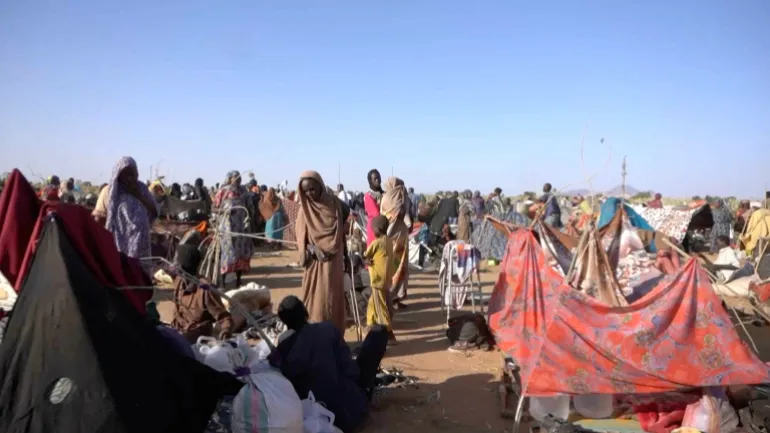
What do the concurrent outbreaks say?
The appearance of cholera alongside dengue fever and hepatitis does not mean that these diseases are spreading for the same reason or in the same areas. Each disease has different modes of transmission and risk factors. But their coincidence reveals the fragility of the environment that is supposed to monitor the disease, prevent its spread, and treat those infected.
In a briefing to the Security Council on August 24, Under-Secretary-General for Humanitarian Affairs Tom Fletcher said that fighting, drones, insecurity and bureaucratic obstacles were hampering the work of humanitarian teams in Sudan. He added that the response is lagging in the health, water, education and shelter sectors, despite reaching millions of people with various assistance.
Therefore, the importance of the bulletin’s numbers does not lie in being a final indicator of the disease, but rather in being an early warning. Cholera is present in Darfur and Kordofan, while other outbreaks coincide with it in different regions of Sudan, at a time when monitoring systems and services do not reach everyone.
In his intervention, Dr. Ali Bashir called for opening urgent humanitarian corridors and increasing funding to avoid further aggravation. In terms of the daily needs of the population, what is required is for safe water, care, medicines and means of prevention to arrive, and for health workers’ ability to report and follow up to be restored before unrecorded cases turn into an uncontainable spread. In the cholera crisis, the announced figure may be the beginning of knowledge, but it is not the end of it.