


A cup of tea or coffee may be a daily habit that is difficult to abandon, but the temperature of the drink when consumed may carry a danger that many people do not notice. While some people are preoccupied with the amount of caffeine or sugar, a recent scientific study indicates that the habit of drinking very hot beverages is linked to an increased risk of developing a type of esophageal cancer.
The study, conducted by researchers from the British University of Oxford and including about one million people, found that those who preferred to drink tea and coffee at very high temperatures were about three times more likely to develop squamous cell carcinoma of the esophagus, compared to those who preferred warm drinks.
These results do not mean that tea or coffee in and of themselves cause cancer, but rather indicate that repeated exposure to high temperatures may cause damage to the cells lining the esophagus, especially when this habit continues for many years.
Is the problem with the drink or its temperature?
Clinical nutritionist Dr. Aisha Saqr, in statements to Al Jazeera Net, says that tea and coffee contain multiple compounds, including antioxidants and caffeine, which acts as a stimulant for the central nervous system and helps increase alertness and attention.
She explains that tea contains polyphenols and catechins with antioxidant properties, while coffee contains compounds including chlorogenic acids, in addition to caffeine.
But the problem associated with esophageal cancer, according to research, is not related to these ingredients as much as it is related to the temperature of the drink the moment it reaches the esophagus.
In 2016, the International Agency for Research on Cancer (IARC), part of the World Health Organization, classified drinking very hot beverages as Group 2A, i.e. agents that are likely carcinogenic to humans.
The agency defined very hot drinks as those consumed at a temperature exceeding 65 degrees Celsius, noting that scientific evidence suggests that temperature, and not the type of drink itself, is the factor associated with an increased risk of esophageal cancer.
This classification does not mean that everyone who drinks hot liquids is at risk of developing cancer, but rather reflects the strength of scientific evidence of a possible relationship between repeated exposure to extreme heat and disease.
What does heat do to the esophagus?
When we drink tea or coffee, the liquid passes through the esophagus on its way to the stomach, touching the cells lining its inner wall.
With repeated ingestion of very hot liquids, these cells may be exposed to repeated thermal injury, with accompanying damage, inflammation, and ongoing tissue repair, changes that are thought to contribute in the long term to the development of cancer.
The American Cancer Society indicates that regularly consuming liquids with a temperature of about 65 degrees Celsius or more may increase the risk of squamous cell carcinoma of the esophagus, which is one of the two main types of cancer of this organ.
But this does not mean that drinking a hot cup from time to time causes cancer, as the concern is mainly related to repeated exposure to high temperatures over the years, with the presence of other known risk factors for esophageal cancer, most notably smoking and alcohol consumption.
A study of nearly a million people
A recent British study, published on September 8, 2026 in the International Journal of Cancer, provided additional evidence that beverage temperature is linked to the risk of esophageal cancer.
Researchers from the University of Oxford analyzed data from 977,282 participants in two large British studies, the Million Women Study and the UK Biobank project.
The researchers focused on the temperature at which participants prefer to drink tea and coffee, and the number of cups they drink daily, and then tracked the incidence of esophageal cancer.
The average follow-up was 14.2 years in the first study and 11.1 years in the second, during which the researchers recorded 2,348 cases of esophageal cancer, distributed between 1,045 cases of squamous cell carcinoma and 1,303 cases of adenocarcinoma.
The results showed that people who reported preferring “very hot” drinks were about 3.17 times more likely to develop squamous cell carcinoma, compared to those who preferred drinking them warm, even after taking into account the number of drinks they consumed daily.
On the other hand, researchers did not find a clear link between high beverage temperatures and the risk of esophageal adenocarcinoma.

Does a large number of cups increase the risk?
The study was not limited to the temperature of tea and coffee, but also examined the relationship between the number of daily cups and the risk of esophageal cancer.
The researchers found that drinking 6 or more cups of hot drinks daily was associated with a 71% relative increase in the risk of squamous cell carcinoma, compared to those who drank less than 6 cups, after taking into account the preferred temperature of the drinks.
This percentage does not mean that 71% of those who drink 6 cups a day will develop cancer, but rather it expresses an increase in the relative risk between two groups of participants.
Also, these results do not conclusively prove that a large number of cups or high temperatures directly cause cancer, because the study is observational and relied on following up on the participants and analyzing their habits.
One of the most notable limitations of the study is that the researchers relied on the participants’ description of the temperature of their drinks, and did not measure the actual temperature of each cup, which makes it impossible to definitively determine a safe temperature based on its results alone.
Benefits do not cancel out moderation
Dr. Aisha Saqr confirms that warning against very hot drinks does not mean abandoning tea and coffee, as each of them has components that may be beneficial when consumed in moderate quantities.
She explains that caffeine helps with alertness and improves attention, whether during study and work or before engaging in physical activity, but excessive consumption may have undesirable effects.
She points out that different types of tea, including green and black, originally come from the tea plant itself, but the difference in processing and manufacturing of the leaves leads to a difference in their content of active compounds.
The same applies to coffee, as the degree of roasting of the beans and the method of preparation affect their chemical composition, especially their content of chlorogenic acids, while caffeine remains relatively more stable during roasting.
In a clearer sense, the problem that the study discusses is not related to the presence of tea and coffee in the diet, but rather to the way in which they are consumed, primarily the temperature and the number of times exposure to them.
When does a drink become suitable to drink?
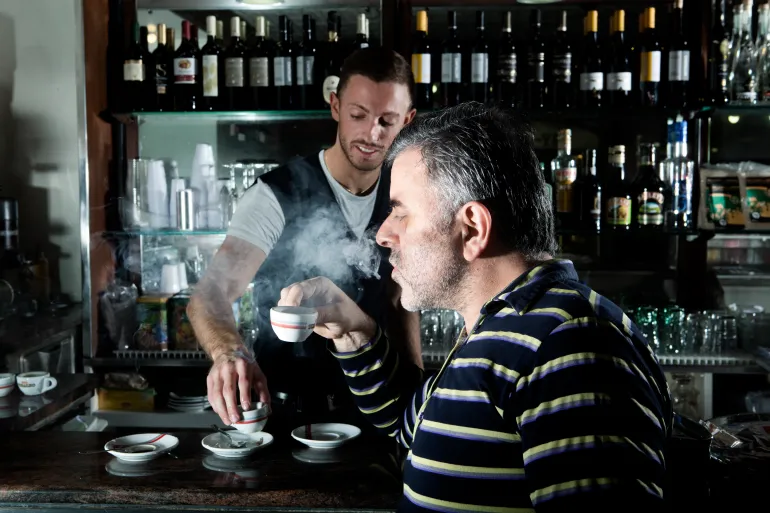
Dr. Aisha Saqr advises avoiding drinking tea and coffee immediately after preparing them while they are very hot, and waiting until their temperature decreases and they become comfortable to drink.
There is no fixed waiting time that can be generalized to all drinks, because the speed at which the temperature drops is affected by the amount of liquid, the size and material of the cup, and the temperature of the place.
Although the International Agency for Research on Cancer has adopted 65 degrees Celsius as a standard for classifying very hot drinks, this number does not represent a dividing line that guarantees complete safety when drinking at lower degrees.
The recent British study indicates that the risk of squamous cell carcinoma increased with preference for higher temperatures, even within the usual temperature range in Britain, which reinforces the importance of avoiding drinking very hot liquids.
Between the benefits of tea and coffee and the dangers of consuming them excessively, the practical advice remains simple: there is no need to give up your favorite drink, but it is better to give it some time to cool before consuming it.