

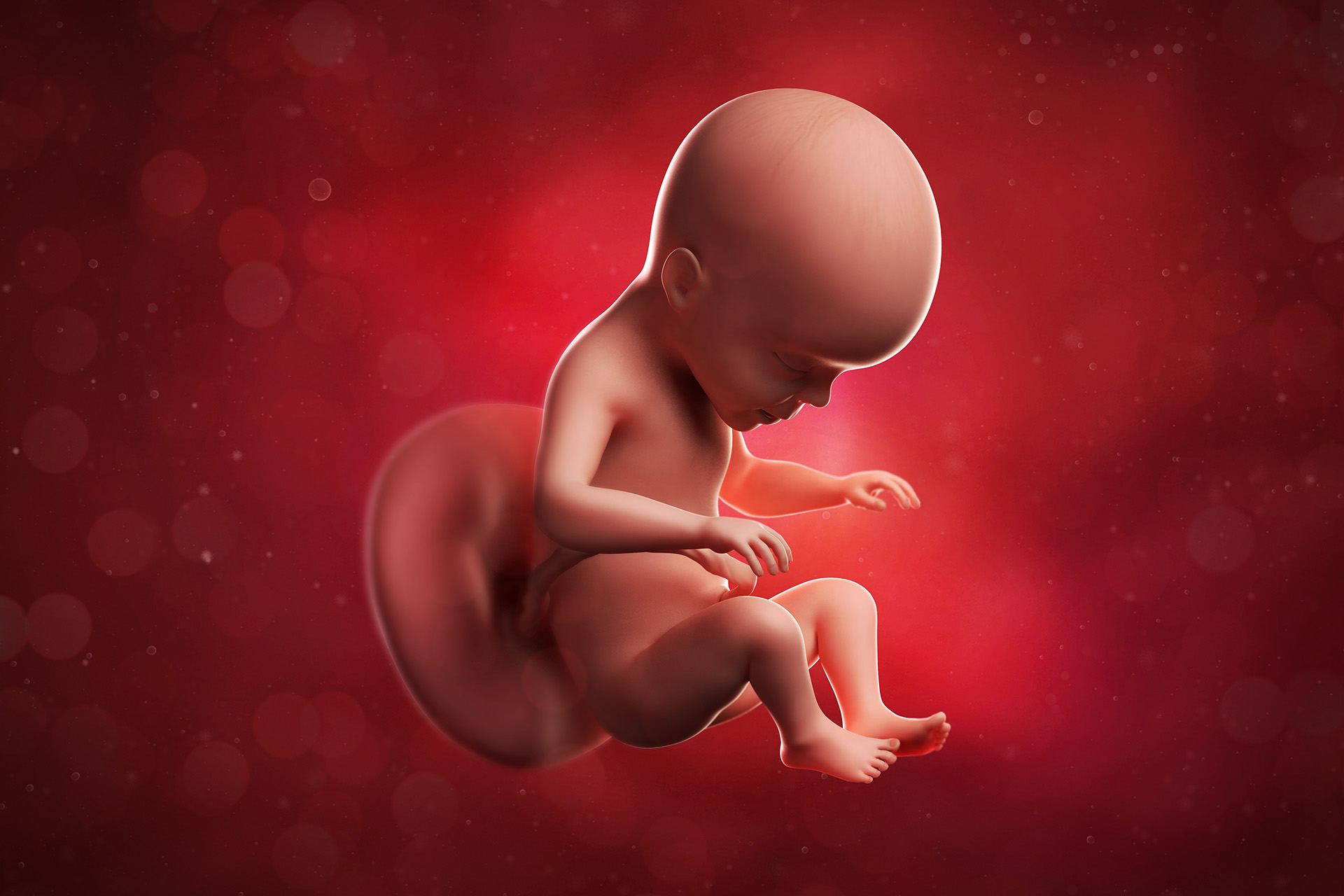
Doctors in India have found other two deformed fetuss inside the belly of Jenin, in a very rare condition.
Last month, a 32 -year -old woman visited the local hospital in India for a routine examination during pregnancy in week No. 35.
Although her previous examinations came natural, doctors discovered “an additional structure that contains bones” in the child’s abdomen, which has not yet been born.
Additional tests have revealed that there are other deformed fetuss inside the belly of the fetus.
This phenomenon is very rare, and the fetus is called FIFUS in Fetu and was only about 200 times in medical literature. It is not clear that the number of these cases involves multiple embryos.
The woman gave birth to her son in early February about the 35th week of pregnancy, and the doctors from the stomach of the two Jenin were removed from the stomach of growth at some point during pregnancy.
According to local reports, the mother and child are in good health.
However, it is believed that the other two fetuss were very deformed so that they could not survive.
An unusual thing
“I was lucky and awake enough to notice something very unusual with this child: a fetus grows very naturally with a few bones and a fetus -like structure in his stomach.”.
“He immediately came to me that this is not normal. It was a fetus inside a fetus, it’s one of the rarest cases in the world,” he added.
There is no clear reason specifically for the state of the fetus inside the fetus, although doctors know that they are generally occurring during growth inside the uterus as identical seasons.
The identical twins are produced when the sperm polls one egg and then divided into two separate fetuses.
Doctors believe that in cases of the fetus inside the fetus, the egg is not completely separated, then one of the twins is suspended inside the other and may continue to develop features such as nails, hair and ends.
In this case, a woman’s egg is likely to try to divide into 3 eggs and is not completely separated, which leads to the presence of one vibrant fetus and two fetuses inside the fetus.
In this case, the hands and feet of the two fetuss evolved inside the fetus.
However, the embryos are parasitic because it depends on the host to survive, and does not contain completely advanced vital organs. This means that it is not viable and must be eliminated.
The new case is one of 8 out of ten cases where the abdominal fetal tissues are installed, where doctors have a great opportunity to remove them without harming the mother or child.
At other times, it was found in the child’s mouth, scrotum, or brain.
For example, in 2015, Chinese doctors succeeded in removing a fetus that was found in the scrotum of a 20 -day -old child.
In one case, it was reported last year, a single -year -old girl in China suffered a delay in growth and a header than average when doctors found a fetus growing into her skull.
The tests have revealed a 5 -inch mass in its skull, slightly larger than the baseball ball. There were long pieces of bone built into the mass.
Although doctors managed to remove the fetus, the girl had severe damage to the brain and died after less than two weeks.
The fetus inside the fetus
The fetus inside the fetus – which was described for the first time, Johann Ferdrich Michael – is a mono or parasitic twin inside the body of a living child or sometimes in an adult, according to a study published in the Journal of Pediatric Surgery Case Reports.
The causes of the condition are still largely unknown, but during the development of the fetus the matter may happen.
Possible symptoms include:
- An infant suffers from a ventricular mass that shows calcifications or scattered organizations that appear on the ultrasound.
- The appearance of a congenital nervous aromatic tumor, which is the most common tumor in newborns, with the skin, liver or bones affected.
- Vomiting.
- malnutrition.
- Jaundice.
- shortness of breath.
- The presence of a pneumatic (air leakage from the lung to the area between the lung and the chest wall) with a family history of cystic fibrosis.
Treatment
Surgical treatment of the fetus inside the fetus is the follower because it is currently considered a benign disease, not a cancerous tumor. The main goal of eradication is to prevent or relieve symptoms of mass.
There were cases of a cancerous change after the fetus ’eradication inside the Fe I Fene, which prompted some surgeons to recommend complete eradication.
The fetus inside the fetus is currently classified as a benign condition. However, the controversy continues on the possibility of turning it into a malignant and associated malignant tumor.
And when the pressure of the mass becomes large, the child or adult can suffer from poor growth or development, infections, and even a lack of physical functions. With surgical treatment, normal anatomy, physiology can be restored and the possibility of turning it into a malignant tumor.
With the ability to monitor the signs of tumor and progress in radiography technology, genetic tests and pathological reviews, doctors should consider the possibility of follow -up for a period of not less than two years to avoid missing the appearance of malignant tumor.