

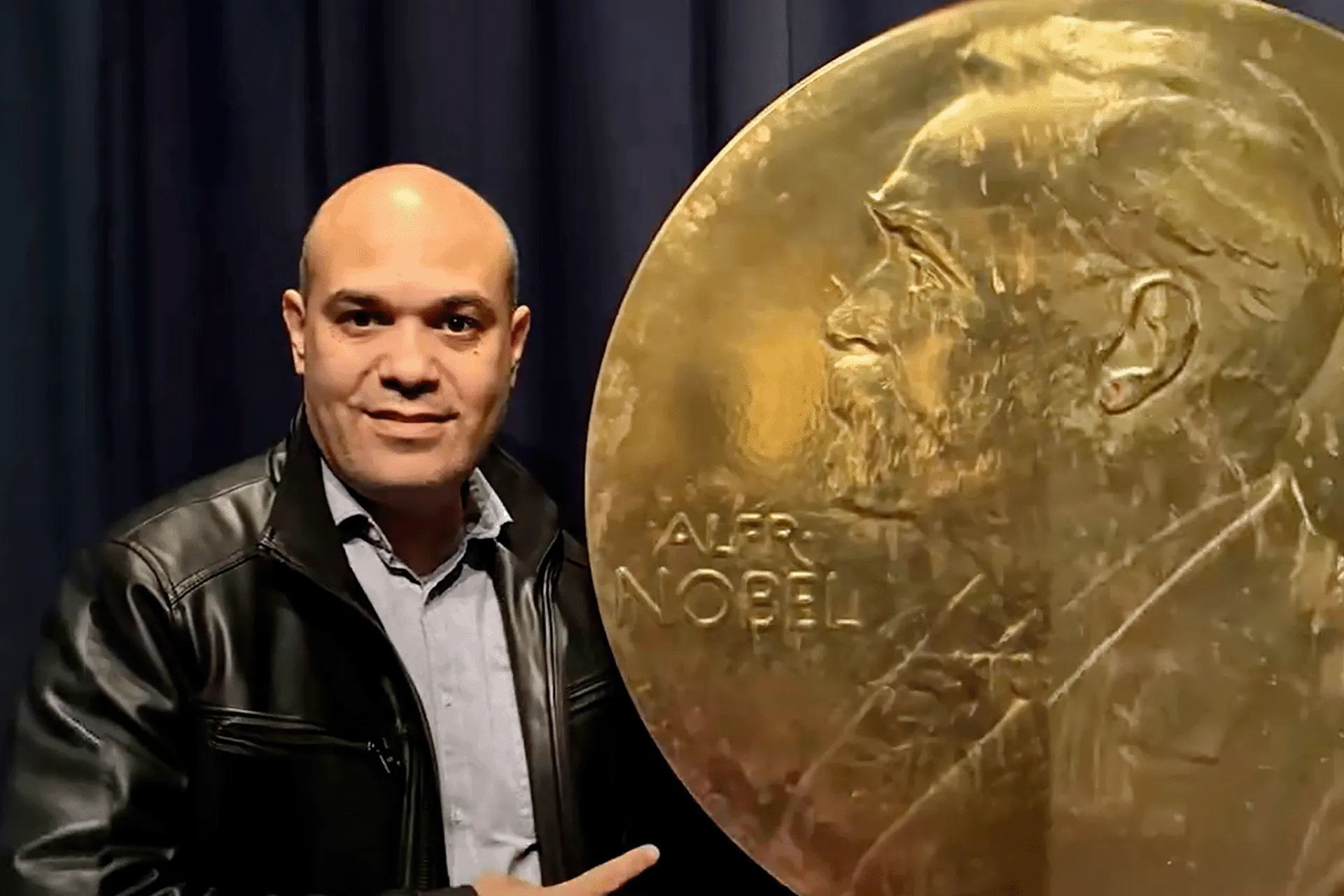
Egyptian scientist and physicist Dr. Ahmed El-Gendy changed the rules of magnetic treatment for cancerous tumors, moving from the “thermal heating” method that had been used for decades to inventing a nanotechnology based on “mechanical torque,” which allows cancer cells to be forcibly destroyed in complete biological safety without exposing the patient to burns or high doses.
El Gendy, an Egyptian physicist at the University of Texas, explained in an interview with Al Jazeera that the traditional method has relied for decades on injecting nanomaterials and then exposing them to high-frequency fields to generate heat of up to 42 degrees Celsius to destroy the tumor. This is a method that faces the dilemmas of exposing the patient to burns or very high doses of substances.
But the intellectual turning point, which began at the end of 2024 and whose equations were completed in 2025, came after experiments that proved the disappearance of tumors in experimental animals without any increase in temperature, as Al-Jundi says in his interview with Al-Jazeera.
He emphasized that physics led him to discover that a low magnetic field generates a mechanical torque that kills the cancer cell forcibly and without the need for high frequencies or large doses, which makes it safe for the healthy cells surrounding the tumor.
Double whammy and clinical prospects
The new innovation recorded a radical reduction in the size of solid tumors, especially in breast and prostate cancers. The work currently underway is directed at modifying the surfaces of nanoparticles so that they are captured exclusively by cancer cells, in addition to the possibility of loading them with chemical drugs to deliver a double “mechanical and pharmacological” strike that doubles the effectiveness and ensures complete safety for healthy cells.
Although no firm start date has been set, Al-Jundi believes that the current challenge lies in fully understanding the mechanism and applying it to larger numbers and meeting the requirements of the US Food and Drug Administration, with the hope of reaching clinical trials in the near future to constitute a glimmer of hope for patients with solid tumors, and radically change the usual treatment methods.
The culmination of a 20-year career
This scientific success comes followed by El-Gindy being crowned with the “Marie Curie 2026 Prize” for advanced materials in Sweden, the result of a research career that spanned more than 20 years in which he moved from Alexandria University to Germany and then the United States.
Al-Jundi expressed his pride in being associated with the name of a scientist who won the Nobel Prize twice and whose discovery is still being used to treat tumors, stressing that sciences are not isolated islands and that physics remains the basis for all medical devices, such as magnetic resonance imaging devices and electrocardiograms.