

In the June heat of northern Kenya, a dusty motorcycle races down a dirt road in Samburu County, driven by Eroy Lemarkat, speeding after a report of another child who had suddenly lost the use of one or both limbs. The cause may be polio, or it may be another disease, but in both cases he does not have the luxury of waiting.
Each report leads Lemarks to remote villages hours away from the nearest health facility. Although the polio virus has been eradicated across the African continent, and Kenya has not recorded any infection since 2013, a strain of the disease derived from the vaccine is still able to spread where the number of immunized children is very small, as this allows the weakened virus used in the oral vaccine to spread and mutate, a risk that is limited to under-immunized communities, especially in remote and nomadic areas of the country.
To stop the spread of the virus, Kenya relies on two integrated surveillance systems. In Nairobi, health officials check wastewater for traces of the virus, often detecting it before anyone shows symptoms. In this regard, Dr. Galem Jalelo, National Coordinator for Polio Surveillance at the Ministry of Health, told Al Jazeera, “The information collected by community health volunteers in high-risk counties, such as Turkana and Samburu, allows the Ministry to respond quickly with targeted interventions.”
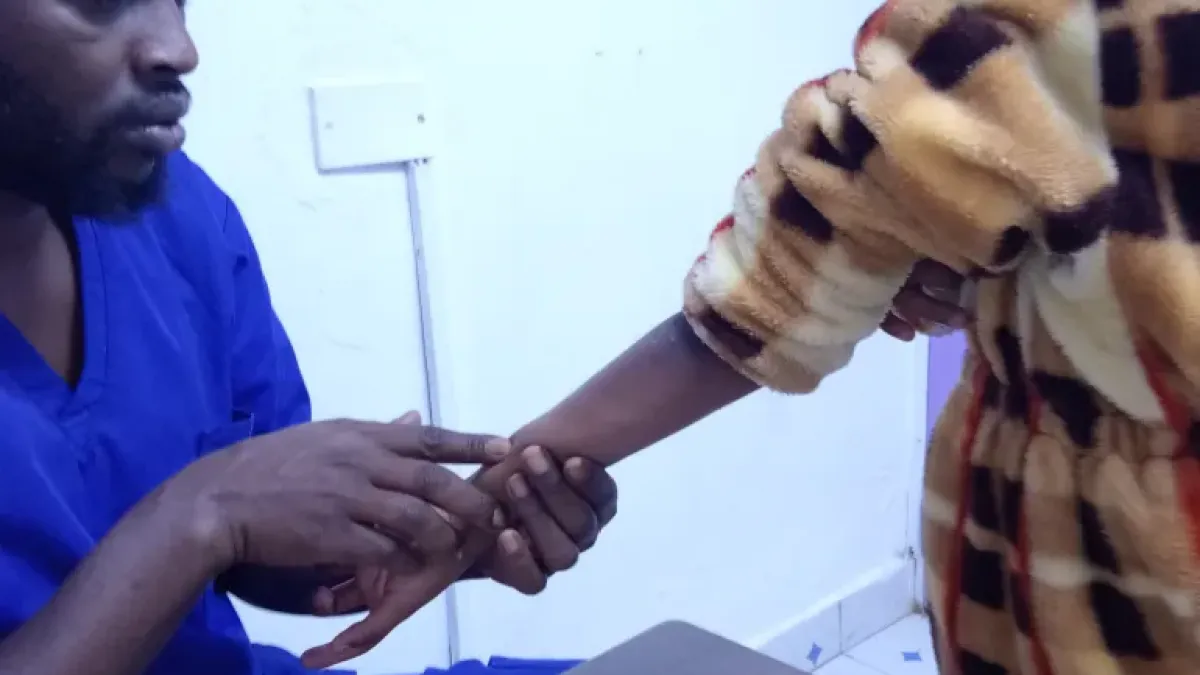
However, wastewater monitoring is limited, as it only works where there are sewage networks. In sparsely populated northern Kenya, where there are no wastewater sampling sites, research depends on community health volunteers. Instead of waiting for sick children to reach health facilities, volunteers investigate reports of acute flaccid paralysis and collect stool samples to determine whether the virus is spreading in communities rarely reached by formal health services.
A race against time to gain trust
For Lemarkat, every investigation begins with a rumour. Word of a child suddenly stopping walking or losing the ability to move an arm or leg spreads quickly through villages and Bedouin settlements, moving from neighbors to sheikhs and local leaders before reaching health workers. Lemarkat follows up on every report, riding his bike for hours to reach isolated families, and before approaching the families, he seeks the support of village elders, administrative leaders, or religious leaders to reassure communities and gain their trust.
Time is a crucial factor, as health workers must collect two stool samples within 14 days of the start of paralysis to increase the chances of detecting the virus. “It is a race against time,” Lemarkat told Al Jazeera. “If we arrive too late, we may miss the opportunity to confirm whether polio is responsible.” Also, any missed case may allow transmission to continue unnoticed, especially in communities whose children rarely reach health facilities.
Surveillance is also becoming more difficult along Kenya’s border with Somalia, which pastoralist families regularly cross in search of water and pasture. Dr. Emmanuel Okunga, director of disease surveillance at the Kenyan Ministry of Health, told Al Jazeera that “nomadic pastoralist communities are constantly moving back and forth across these invisible international borders, and are completely oblivious to regional health services.”
Gaining the trust of these communities is no less important than reaching them, as parents may be suspicious of strangers or unfamiliar medical procedures, which makes it difficult to convince them to allow stool samples to be taken from their children. Lemarkat has spent more than five years building relationships with families in the area, and knows how easily that trust can be lost. “If a volunteer doesn’t handle these conversations with complete respect and care, a family could pack up their tent and disappear into the bush before collecting a sample, which could leave a potential outbreak undetected and uncontained,” he said.
Containing the virus also depends on cooperation beyond Kenya’s borders. Dr. Pius Mutuku, from the Ministry of Health’s Public Health Emergency Operations Centre, told Al Jazeera that “teams on both sides of the international border must move in perfect harmony to ensure that no migrant child escapes detection.”
Each report Lemarkt investigates helps health officials determine if the virus is still spreading and respond before it expands further. Despite all the laboratory testing, wastewater monitoring and cross-border coordination, Kenya’s latest push against polio still depends on people willing to follow rumors across vast distances, often to places where roads end and phone signals cut off. “It’s a lot of work, but it’s worth the effort,” Lemarkat said. “We have to save every child. Children are our future.”