

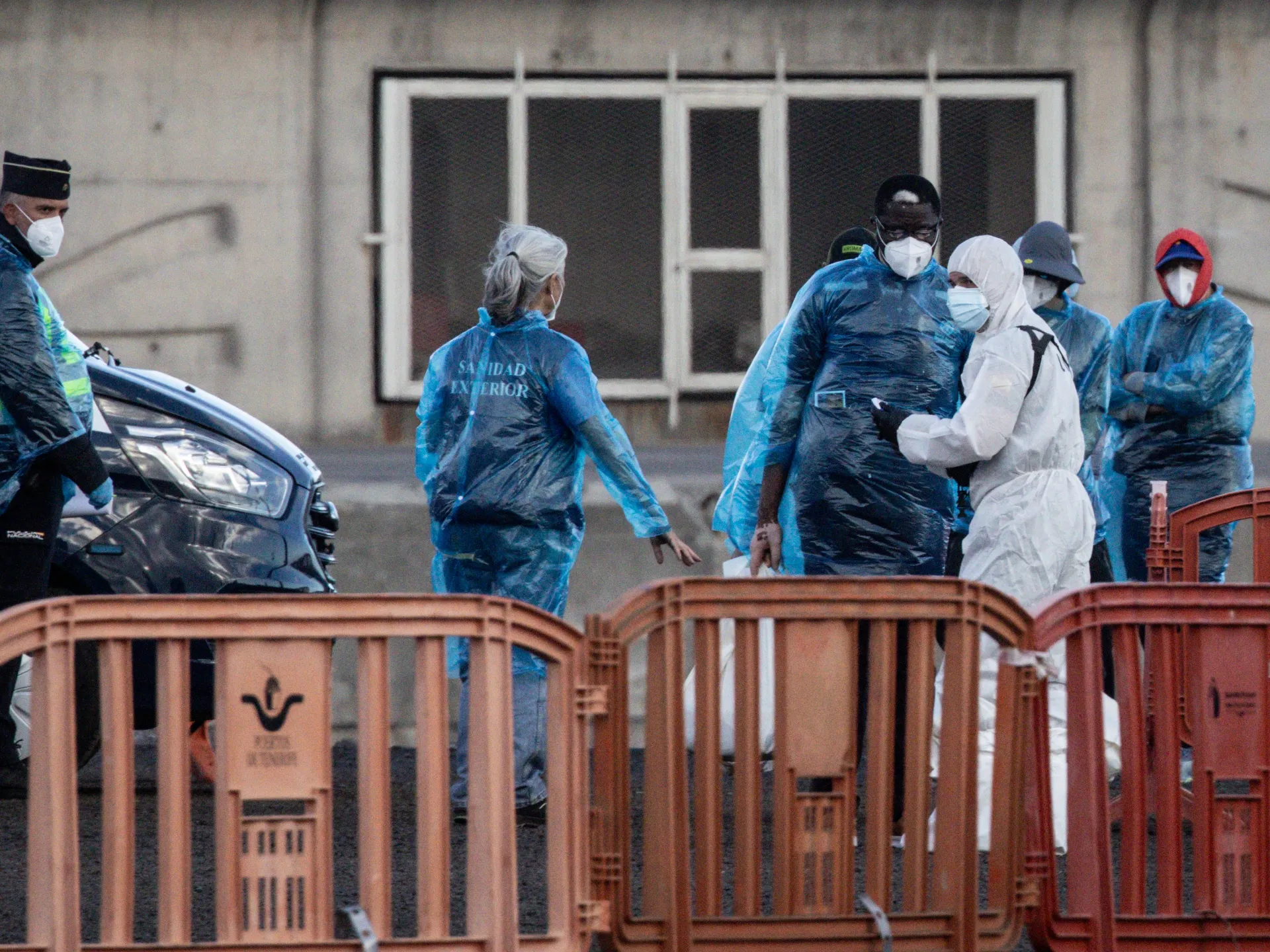
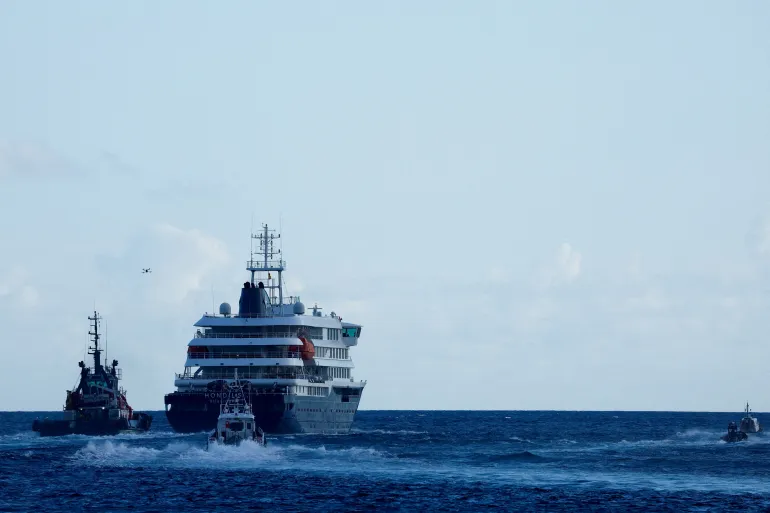
Health emergency measures continue in several countries following the outbreak of the Hantavirus on board the cruise ship MV Hondius, at a time when quarantine operations are expanding and epidemiological investigations are increasing to determine the source of the infection, amid official assurances that the risk of the virus spreading widely is still low.
In the latest developments, 6 passengers on board the ship arrived on Friday at a military air base in Western Australia, where they will undergo a strict quarantine that will last at least 3 weeks, after the cruise sparked international concern following the death of 3 passengers and the infection of others with the virus.
Australian Health Minister Mark Butler said that the six passengers – 4 Australians, a Briton residing in Australia, and a New Zealander – had negative test results before boarding the plane, and they will undergo new tests upon their arrival.
He explained that the passengers would be transferred to an isolation facility near the city of Perth that had been established during the Covid-19 pandemic, stressing that the quarantine measures implemented were “among the most stringent in the world.”
In the Pacific Ocean, the authorities of the British Pitcairn Islands announced that an American passenger who was on board the ship was placed in quarantine, even though she did not show symptoms, after she traveled via air and sea flights after leaving the ship on the island of St. Helena.
The health authorities in Taiwan also placed a New Zealand passenger on the ship in isolation in a hospital, even though his tests were negative and he did not show symptoms, and the quarantine will continue until next June 6.
“Status zero”
In Argentina, health authorities announced that a team of scientists had been sent to the coastal city of Ushuaia in the south of the country to verify whether the Hanta virus was present in the area from which the ship departed on April 1.
The authorities are trying to determine whether the city was the source of the first infection for the passenger who is believed to be “case zero,” after the World Health Organization suggested that the first infection occurred before the start of the flight, and then the virus was transmitted among the passengers on the ship.
Regional health official Juan Petrina said that a team from the Malbran Institute, which specializes in epidemiology, will collect field samples for laboratory analysis, expecting results to be issued within 4 weeks.
The Ushuaia authorities confirm that they have not recorded any infection with the Hanta virus in three decades, and they also indicate the disappearance of the type of rats known to transmit the “Andean” strain of the virus, which is the strain capable of transmission between humans.
Negative tests and continuous monitoring
In Europe, France announced that the test results of 26 people who had been in contact with possible infected people were negative, while the Dutch authorities confirmed that all passengers who arrived via evacuation flights from the ship had not proven to be infected with the virus.
Despite this, a French woman is still in serious condition in a French hospital after her infection was confirmed, while doctors continue to follow up on a number of contacts who traveled on the same flights used by the ship’s passengers.
In the United States, health authorities said that an American citizen had been subjected to isolation after a positive initial result. His final examination was later found to be negative, after the first result was considered “inconclusive.”
Hantavirus is usually spread by rodents, especially through urine, feces, or saliva, and may cause severe respiratory syndrome that may be fatal in some cases.
There is still no vaccine or specific treatment for the virus, while the World Health Organization recommends a period of observation and quarantine that may reach 42 days due to the long incubation period.
Despite the current state of alert, health authorities in the countries concerned stress that the risk of a widespread outbreak of the virus remains “very low,” with contact tracing continuing and isolation and health monitoring procedures being tightened.