

Oman- Some people suffer from thyroid gland disorders such as hyperactivity or shortcomings, which may lead to symptoms such as muscle spasms, heartbeat disorders, and weak bone. What are the thyroid neighbors? What are its most prominent diseases? How are these diseases treated?
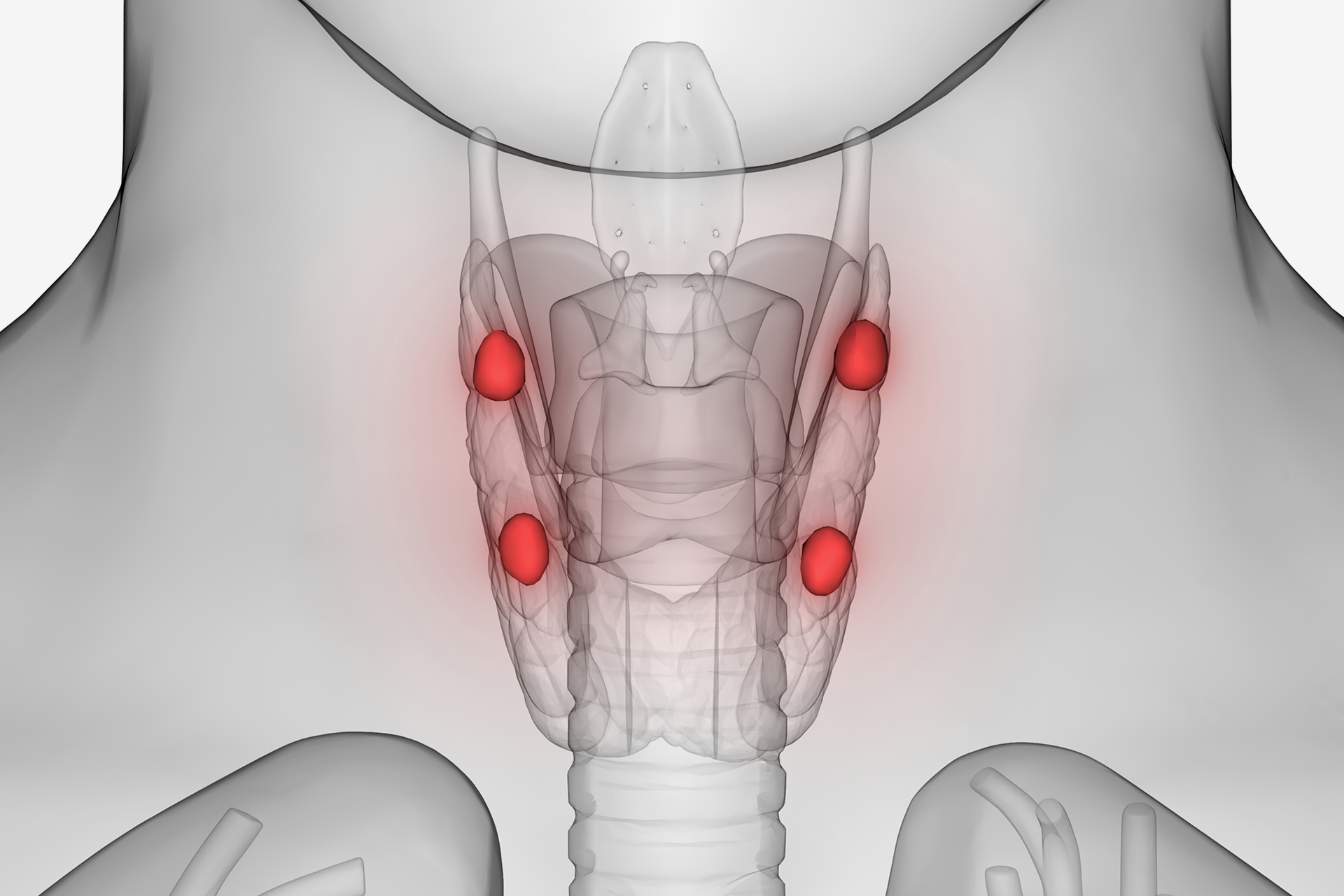
The thyroid neighborhood glands are located behind the thyroid gland in the neck, and the Parathyroid Hormone, which plays a pivotal role in maintaining calcium levels in the blood and bones.
What are the thyroid neighbors?
Endocrine and Diabetes Consultant, Dr. Fawzat Al -Shanak, said that the thyroid glands, Or what is known as germs or armored glands, are very small endocrine glands located in the back wall of the thyroid gland, and often 4. These glands secrete the dirki hormone, which plays an important role in maintaining calcium in the blood through its effect on bones, kidneys, and intestine. These glands have a very small size that does not exceed the size of the rice grain, as it weighs about 30 milligrams in men and 35 milligrams in women.
These glands sometimes develop disturbances that are reflected in their performance of their functions, and these disorders include hyperthyroidism and palaces, and the hangers explained that hyperparateroidism may be caused by several reasons, including: low level of calcium in the blood due to vitamin D deficiency, or calcium deficiency in the diet, or bad Calcium absorption in the intestine. The cause may also be disturbances in kidney function or the use of some medications that affect the bones or liver. Another causes of this is the presence of a tumor (the tumor is often benign) in one of the glands (Hyperplasia), which leads to an increase in the secretion of the hormone. In rare cases, the cause may be hereditary, as in the case of multiple heat tumor syndrome, which is accompanied by the appearance of other endocrine tumors.
With regard to hypopraathyroidism, Al -Shanq mentioned that one of the most prominent causes of thyroid glands is to perform surgeries in the neck, especially thyroid removal or the treatment of sore throat and neck. The shortcomings can also occur due to autoimmune diseases, as the immune system attacks the glands as if they were strange bodies, which stops the secretion of the thyroid hormone.
Other causes include genetic deficiencies as a result of the birth of the child without these glands, as well as the low level of magnesium in the blood due to its importance in the secretion of the hormone. Added to this exposure to radiotherapy to face or neck tumors, or radioactive iodine therapy, which may be damaged by thyroid glands.
Symptoms associated with thyroid glands
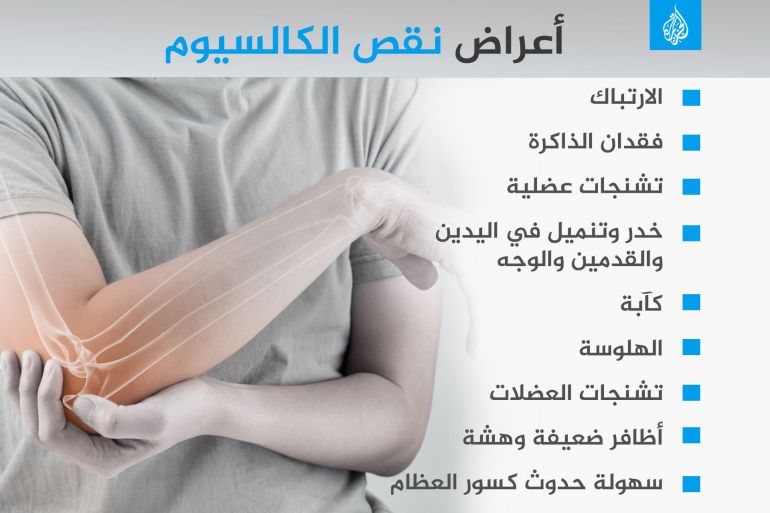
Al -Shanqa explained that hyperactivity leads to a significant increase in the level of calcium in the blood, which causes osteoporosis, kidney stones, fatigue and fatigue, joint and bone pain, heartbeat disorders, dryness, severe thirst, increased urination, and the condition may be associated with neurological and mental disorders.
In contrast, the palaces lead to a decrease in calcium and the height of phosphorous, because the hormone responsible for regulating these proportions is low. Symptoms such as tingling or numbness appear in the lips and fingertips, and muscle spasms, especially in the mouth, hands and arms, along with general fatigue. Other symptoms such as fragility, hair loss, dryness and roughness may appear, depression, anxiety, and menstrual pain in women.
Al -Shannaq indicated that the diagnosis of gland defects is carried out through a clinical examination that may reveal cramps, in addition to laboratory analyzes that show low calcium, phosphorous height, and decrease in the dirham hormone in the event of shortcomings. The level of magnesium is also measured to determine its effect. In the case of hyperactivity, the analyzes appear an increase in the hormone and calcium, low phosphorous, and the height of the alkaline phosphatase (alp). The presence of a tumor or enlarged glands is diagnosed with Ultrasound Scan or Sestamibi Scan.
Al -Shannaq emphasized that the failure to treat gland defects, whether in the event of shortcomings or hyperactivity, may lead to severe complications such as cramps, osteoporosis, heart disorders, kidney and nervous system problems.
As for treatment, he pointed out that hyperactivity is often treated with surgery to remove the enlarged gland. And if surgery is not possible, Cinacalect is used that inhibits the secretion of the hormone. As for the palaces, it is treated by giving calcium supplements and the effective vitamin D hormone (alfacalcidol), and in some rare cases, the ROCOCALANT PTH, despite its high cost, is given to be given using subcutaneous injection.
Al -Shunaq stressed the need for early diagnosis and immediate treatment to avoid complications, wishing everyone healthy and well -being, and for patients for a speedy recovery.

When does patients need surgery?
Thyroid and endocrine surgery specialist, Dr. Suhail Yusef Bakkar, said that the hyperemia of the neighbor’s neighbor’s hormone is one of the cases that require surgical intervention in some types, specifically in the case of “initial hyper”, where the cause is often the presence of a benign tumor in one of the four glands responsible for organizing calcium in the body.
Bakkar pointed out that the surgery becomes necessary when there is a preliminary secretion of the hormone, as the affected gland secretes the hormone excessively due to a benign tumor. This occurs in 90% of cases due to only one gland, while two-7% of cases may be affected, and the four glands are rarely infected, and the cause is then excessive growth of secretion cells, not tumors.
He said: “In the case of initial hyper, drug therapy is not sufficient, and the surgical removal of the affected gland is the only solution.”
Types of operations
Bakkar explained that there is a major development in the types of surgeries in this field. After the operations were performed with a complete exploration of the neck, which requires a wide surgical opening, it is possible today thanks to the television and nuclear photography, determining the affected gland with an accuracy of up to 85%, allowing the conduct of limited intervention operations.
Bakkar added: “Today we can perform surgery through a small cosmetic wound in the neck, or even through the endoscope across the mouth or neck, which reduces the size of the scar, and speeds up the recovery significantly.”
Bakkar explained that the surgery is very safe and its success rate exceeds 98%, especially if it was performed by an experienced specialist. However, he alerted some rare complications such as: the acoustic nerve infection (a temporary hoarseness by less than 1%), bleeding (very rare), and a temporary decrease in calcium as a result of what is known as hungry bone syndrome.
The recovery period
“If the surgery is limited to intervention, the patient can return to his normal life in just two days, without the need to stay in the hospital, provided that the level of calcium is stable,” Bakkar said.
Bakkar added that one of the most important steps after the operation is to monitor the level of calcium, with the possibility of describing calcium and vitamin D supplements temporarily. Follow -up to kidney and bone function is necessary to ensure complete recovery.
Bakkar explained that the possibility of frequent hyperactivity is very low, except in rare genetic cases, which may require additional surgeries if other glands are infected.
Bakkar pointed out that dealing with any complications takes place according to its type, such as giving venous calcium in the event of a severe shortage, or re -surgery in the event of the first operation.
Bakkar stressed that this condition is a rare cases in which the patient notes an immediate improvement after surgery, and he said: “The patient notes as soon as he wakes up from anesthesia, the disappearance of bone pain and improves his mental condition, which makes this surgery decisively and effectively in improving the quality of life.”