


Social media platforms are no longer just a space for entertainment or exchanging photos and short clips. Rather, they have become, in part, a daily mirror through which many people measure their appearance, their lives, and their relationships.
With the widespread spread of clips of celebrities and content makers showing off athletic, sculpted bodies in gyms, or carefully edited photos with filters, some followers began to look at their bodies with greater anxiety and less satisfaction.
This anxiety does not always remain within the boundaries of the relationship between the individual and his wife, but may extend to his relationship with his life partner, affecting self-confidence, emotional reassurance, marital satisfaction, and even the quality of the intimate relationship.
Body image is not a passing formal detail, but rather a deep psychological factor that interferes with self-esteem, a sense of acceptance, and the ability to communicate with others without fear or comparison.
What is body image?
The NHS defines ‘body image’ as the way a person thinks about, feels about, and sees their body, or the way they believe others see them. This image may be positive, negative, or neutral, depending on the person’s view of his appearance and how he feels about it.
In this sense, body image is not just an external evaluation of appearance, but a complete psychological experience; It includes feelings of satisfaction or shame, acceptance or rejection, confidence or anxiety.
The more positive thoughts about the body and the fewer the negative thoughts associated with it, the better this is reflected in a person’s relationship with himself and those around him.
Body image and emotional satisfaction
An analytical review that included 56 studies, published by the Journal of Social and Personal Relationships in September 2022, indicates that there is a clear relationship between satisfaction with body image and satisfaction with a romantic or marital relationship. The review found that people with higher levels of dissatisfaction with their bodies often report less satisfaction with their relationships, while higher body satisfaction is associated with better degrees of emotional and marital satisfaction.
The study noted that body mass index, a measure used to evaluate the symmetry of weight with height, was one of the factors influencing this relationship. The higher the index for some individuals, the greater the likelihood of body dissatisfaction, which may be reflected in the feeling of satisfaction within the relationship.
This does not mean that body shape alone is what makes a relationship successful or unsuccessful, but it reveals how the internal image a person has of his body can become a factor influencing his feeling of security and acceptance within the relationship.

Shared responsibility
In a study published by the American Psychological Association on the development of self-satisfaction and its impact on marital relationships, it appeared that satisfaction within marriage is not an individual experience for one party alone, but rather a “joint process” formed through continuous interaction between the two partners.
A person who has higher confidence in himself and his appearance is often more capable of positive interaction within the relationship, and this is reflected in his partner. Over time, improving one party’s view of themselves may help improve the way the other party communicates with them, which supports the social, emotional, and marital relationship.
When the body image is shaken, the person may enter the relationship while he is preoccupied with what he sees as flaws in his appearance, so his psychological presence declines, his interaction weakens, and he becomes more sensitive to the partner’s words, looks, or even silence.
When anxiety reaches intimacy
The impact of body image does not stop at the limits of emotional satisfaction only, but in some cases it may reach sexual health and intimate satisfaction between spouses. A study published by Elsevier magazine in 2020 indicated that there is a link between different levels of dissatisfaction with body image and problems related to orgasm during a marital relationship, whether in terms of its frequency of occurrence, difficulty, or degree of enjoyment.
A systematic review published by Springer Nature in February 2026 also examined the relationship between self-esteem, body image, and sexual satisfaction in adults, by reviewing controlled quantitative studies published between 2013 and 2024.
The review concluded that self-esteem and body image are positively associated with sexual satisfaction, with mediating factors such as gender, sexual orientation, and sexual communication between partners.
These results indicate that body satisfaction can be a protective factor for sexual health, because it gives a person greater reassurance and confidence, and reduces anxiety associated with evaluation, comparison, or fear of rejection.
Phobia of the perfect appearance
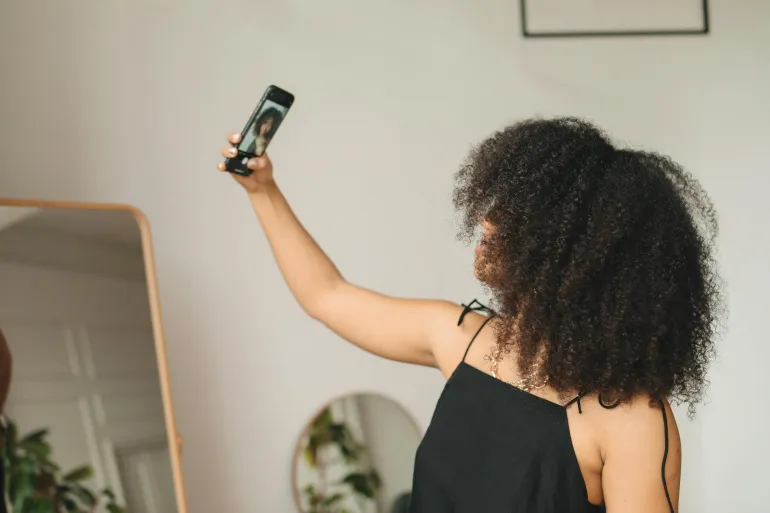
With the increasing presence of social media platforms in daily life, the user no longer only follows ordinary moments from the lives of others, but is constantly exposed to carefully selected images; Athletic bodies, modified faces, perfect lighting, calculated shooting angles, and a life that always seems more beautiful and harmonious than it actually is.
Over time, some may feel that these images are the normal norm, and that any body that does not resemble what is shown in celebrity clips or content creators needs to be fixed or hidden. Here begins the harsh comparison, not only between the person and others, but also between the person and an unrealistic version of the human body.
In a recent study entitled “Social Media and Body Image Concerns,” published by the ScienceDirect platform, it was shown that the use of social media is associated with an increase in negative body image, and that these concerns may worsen over time. Appearance comparisons play an important role in the relationship between exposure to digital content and anxiety about body image.
Correlational studies show that use of social media, especially Facebook, is associated with body image concerns among young women and men. Longitudinal studies also suggest that this association may strengthen over time, while some experimental studies show that brief exposure to a Facebook profile does not necessarily have a direct negative impact on young women’s appearance concerns.
When the filter becomes a standard
The spread of self-portrait applications such as Snapchat and Instagram has contributed to changing the concept of body image for many. With filters that smooth skin, change facial features, and adjust lighting and details, the user is no longer just comparing himself to others, but rather comparing himself to an enhanced digital version of himself.
A research paper referred to a phenomenon called “Snapchat Dysmorphia,” which is a state of mental preoccupation with minor or imagined defects in appearance, driven by the desire to imitate edited or filtered images. In this case, the person does not see himself as he actually is, but rather as he thinks he should be according to the ideal digital image.
In some cases, this may be linked to body dysmorphic disorder, which is a form of severe dissatisfaction with appearance, which may affect self-confidence and the relationship with a life partner, whether on the social, emotional, or marital level.
Although social media may be a useful source of knowledge, support, and encouragement for healthy living, its danger appears when it turns into a space that focuses on unrealistic aesthetic standards, and pushes the user to passive browsing and constant comparison.
When is the impact of social media positive?
Dr. Rania Qassem, a mental health consultant, says that social media has greatly influenced standards of body acceptance, but it is not negative in all cases. Its impact may be positive if it prompts the person to pay attention to his health, appearance, and weight, follow a healthy diet, and exercise in order to improve health first, and enhance acceptance of body image.
She added, speaking to Al Jazeera Net, that the problem begins when some people try to keep up with models that may not be realistic, or may present an ideal image for the purpose of appearing, or because interest in appearance represents part of their owners’ professional identity, such as actors, football players, and fashion models.
In this case, the impact may turn into psychological pressure, either in the form of an obsession with appearance that leads to unnecessary surgical or medicinal interventions, or in the form of dissatisfaction with oneself that may develop into symptoms of anxiety, depression, or an eating disorder.
Qasim believes that building self-confidence begins at a young age. By avoiding negative comments on appearance within the family, avoiding comparisons between children, and setting clear boundaries for bullying within schools. It also stresses the importance of developing the child’s personality, skills, and talents, supporting a healthy lifestyle, encouraging sports and proper nutrition, teaching him how to respond to bullies, and listening to his concerns before the problem worsens with age and affects his social, emotional, and marital relationships.
Emotional withdrawal and fear of closeness
Body image plays a pivotal role in interpersonal relationships, social anxiety, and fear of intimacy. In a study published by the Journal of Social and Clinical Psychology, 103 male and 125 female college students participated in standardized assessments of body image dimensions, along with social anxiety, fear of intimacy, and general and romantic attachment.
The results showed that there were statistically significant correlations between body image assessment, concern for it, and its influence on the one hand, and social anxiety among both sexes on the other hand. A correlation also appeared between body image disorders and anxiety about intimate relationships among women. Body image disturbances were also associated with decreased feelings of security in general attachment, and increased anxiety about intimate and romantic relationships.
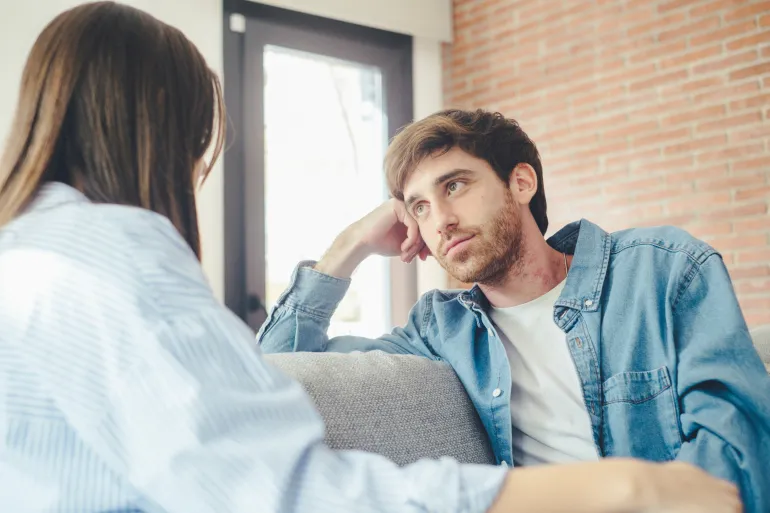
This means that a person with a negative body image may find it more difficult to become emotionally close, not because he does not want a relationship, but because he fears evaluation, rejection, or comparison. This fear may turn into withdrawal, apparent coldness, or excessive sensitivity towards the partner.
Low confidence and sensitivity to rejection
The US Office on Women’s Health believes that a negative body image may lead to low self-esteem, which may affect many aspects of life. These include a lack of desire to interact with others, eating disorders, or depression. Researchers believe that body dissatisfaction may be one of the factors that explain higher rates of depression in women compared to men.
In 2023, Science Direct published a study on individual differences, personality, and the relationship of appearance-related rejection sensitivity to aspects of romantic relationships. The results showed a negative relationship between this sensitivity and relationship status and satisfaction, perceived satisfaction with the partner, closeness of the relationship, romantic expression, and participation in sexual activity.
Rejection sensitivity was also positively associated with relationship concerns, conflicts, self-repression, and jealousy within romantic relationships. There were also relationships with experiencing or experiencing domestic violence, frequent dating and risky sexual behavior, and a tendency toward sexual addiction.
Despite the sensitivity of these results, they reveal an important aspect: anxiety about appearance does not always remain a silent, individual feeling, but rather it may turn into a disturbed interaction pattern within a relationship, increasing suspicion, jealousy, and fear of abandonment.

When the body becomes a barrier
Dr. Basant Al-Mohammadi, a specialist in psychiatry and rehabilitation, says that marital relationship disturbance due to lack of confidence in the body image of one or both spouses has become one of the most common problems presented to psychiatrists recently.
She explained in her interview with Al Jazeera Net that marital therapy sessions, whether individual or joint, often begin by dealing with the distorted mental image of oneself, which is an image that is not necessarily realistic, but it affects the person’s interaction within the relationship. He may be physically present, but psychologically he is in a state of reception and anxiety, not of interaction and reassurance, which creates an imbalance in marital communication.
Al-Mohammadi adds that weak self-confidence may lead to a constant feeling of emotional insecurity, so the person begins to suspect that his partner may be looking for a more beautiful or more attractive alternative. Over time, these internal fears turn into anxiety, repression, emotional distance, bickering, constant criticism, a constant need for self-defense, and perhaps withdrawal from the relationship.
In such cases, resorting to a specialist may be necessary to help the couple return to a point of balance, and repair what has been damaged by the negative self-image and its psychological and emotional consequences.
How do we build a healthy relationship with the body?
Most people are not completely satisfied with every detail of their body, and this is normal. But the problem begins when dissatisfaction turns into a lens through which a person views themselves, their relationship, and their partner. The more positive thinking about oneself increases, and the less harsh thoughts about the body, the better the individual’s feeling about his appearance and presence within the relationship.
Restoring trust requires shared awareness between both partners, not blame or pressure. The issue is not related to passing phrases such as “Be confident of yourself,” but rather a calm plan that restores the person’s ability to see his body as part of his personality, not a single criterion for his value.
Al-Mohammadi suggests a set of practical steps, starting with reducing digital comparisons, and understanding that Instagram and other photos are often moments made with lighting, filters, photography angles, and high-quality devices, and not the natural or realistic image of people.
It also stresses the importance of paying attention to health, physical strength, and a balanced lifestyle, not with the aim of chasing an ideal image, but rather in order to achieve a healthy appearance that enhances confidence and gives a person a better feeling about his body.
The relationship between the spouses remains a crucial factor in recovery. Creating a calm atmosphere of communication, mutual praise, expression of love, and building a safe private space between the two partners can relieve fear and anxiety, and open the door to a closer and more reassuring relationship.
Between the body and acceptance
The problem does not lie in caring about appearance, exercising, or wanting to improve your appearance, all of which may be healthy and beneficial. The problem begins when the body becomes an arena for constant comparison, when images of others turn into harsh judgment on oneself, and when a person enters a relationship while silently apologizing for his appearance.
A healthy marital relationship does not require a perfect body as much as it requires trust, reassurance, honest communication, and a more compassionate view of oneself. Between filters and reality, the real challenge remains for a person to reconcile with his body, not as an image for display, but rather as a home in which he lives, loves, communicates, and reassures himself.