

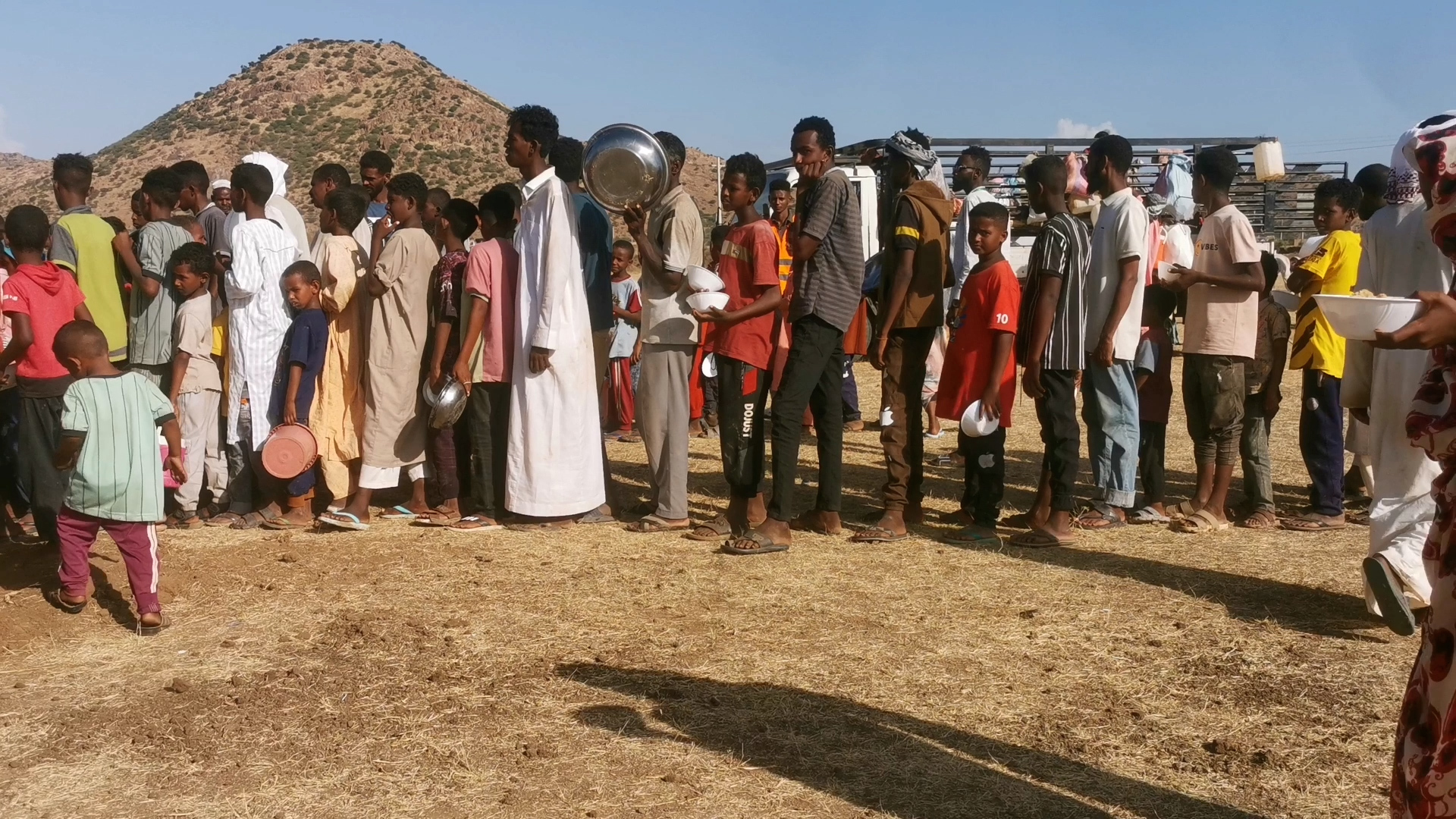
Umm Muhammad catches her breath with difficulty as she recounts a chapter of their suffering as refugees in Libya, where she arrived after a long journey after leaving Sudan.
She told Al Jazeera Net, “After the outbreak of the war, we went to Egypt, but we could not stay there, so we decided to go to Libya. All the refugees here are sick and infected with tuberculosis. We do not have the money for food and need medicine. Some refugees walk for days hungry and on their feet, and others go To Tunisia, adding, “You don’t have money, you’re nothing.”
Sudan refugees
With more than a year having passed since the war that broke out in mid-April 2023, the number of Sudanese refugees has reached two million and 200 thousand people, according to the International Organization for Migration.
Sudanese refugees face a number of challenges on their way to seek protection, which sometimes puts them in risky situations. A number of children are separated from their families during the refugee journey and arrive in dire need of medical and psychological support, according to the United Nations High Commissioner for Refugees.
Asylum journey
At a time when the path to asylum seems fraught with dangers on a journey of hope to escape the repercussions of war, but the suffering is not over yet. From Libya, Dr. Adlaa Tawfiq, who established a center to shelter Sudanese refugees, which includes about 3,000 refugees, says that the most common disease is hepatitis C. (Hepatitis virus) and anemia, in addition to the presence of a number of psychological patients.
Speaking to Al Jazeera Net, Adlaa indicated the provision of aid from Libyan officials, and spoke of the occurrence of a thousand deaths per month among refugees on the road between the Triangle and Kufra, according to the security authorities, in addition to a number of missing people in the desert.
For his part, the Secretary-General of the Sudanese Communities Coordination Council in Libya, Mahjoub Al-Fadlabi, said that malnutrition diseases are spreading among Sudanese refugees, and two cases of death of children due to malnutrition have been recorded, and in the city of Sabha, more than 50 families live in a rented house where there are more than 150 young people sleeping in the open. They spread out on the ground and cover the sky.
Speaking to Al Jazeera Net, Mahjoub said: “Food and medical aid was provided by some organizations to refugees in the city of Benghazi, Kufra, and Ajdabiya, but interventions from organizations in the south are weak, with the exception of some.
He added: “We received promises of aid from the Libyan Relief Authority and the Red Crescent.”
Refugees in Chad
As for Chad, which received about 67,000 Sudanese refugees, lawyer and human rights defender Jamal Abdullah Khamis says that the health conditions of the refugees there are deteriorating, with high cases of malnutrition among children and the elderly, deaths and infections, in addition to chronic diseases for which their owners cannot find care. Medical necessary.
Speaking to Al Jazeera Net, Jamal said that the medical staff present in a number of organizations are not qualified, and a number of deaths were recorded as a result of the deterioration of medical services, in addition to a severe food shortage despite the efforts of the World Food Organization.
He added: “There is no food diversity and pure drinking water, with cases of malnutrition on the rise, in addition to a number of psychological patients and cases of insanity as a result of the psychological trauma that occurred to them and without the presence of treatment.”
Health and living challenges
In Uganda, Sudanese refugees live under health and living challenges, according to the head of the Sudanese refugee community in Uganda, Saleh Idris Adam.
Speaking to Al Jazeera Net, Saleh said that refugees suffer on a daily basis from outbreaks of chronic diseases such as cholera, diabetes, malaria, and skin diseases, as a result of poor sanitation and polluted water, in addition to children suffering from malnutrition due to lack of food and housing, which greatly affects their health and development.
Saleh said that the camps lack integrated health services, due to the lack of medical clinics and hospitals, and a number of refugees in Kampala are unable to obtain treatment in a timely manner due to the lack of capabilities to purchase medicines in light of the difficult living conditions they face.
Increasing needs
The number of Sudanese refugees in Uganda is more than 8,000, with constant deaths due to preventable diseases such as cholera and diabetes, if appropriate health conditions are available, according to a statement by the head of the refugee community in Uganda to Al Jazeera Net.
He added: “Our situation as refugees is tragic. We call on humanitarian organizations and the international community to increase support to improve conditions in the camps urgently, and we appreciate the role played by some international and local organizations, but aid is still insufficient.”