

Oman- How has leukemia treatment changed over the past years? How does the disease occur and develop? What are the most prominent current treatments for leukemia?
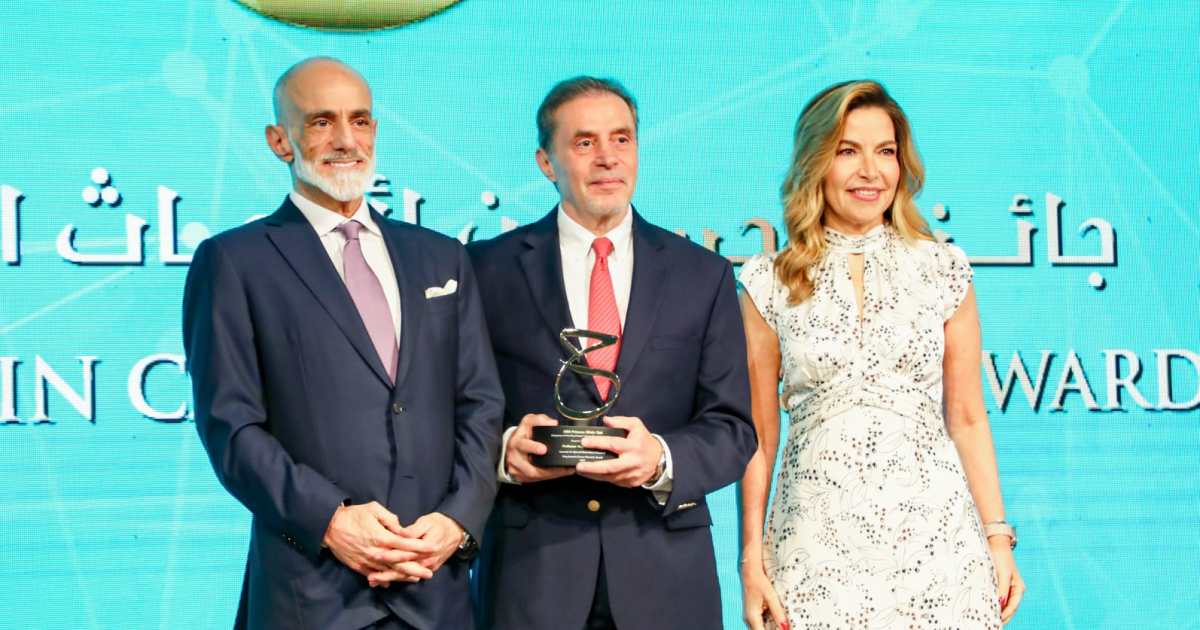
We discussed these and other questions in a special interview with Professor Hagop Kantarjian, as part of his honor at the 2025 Hussein Cancer Research Award ceremony held in the Jordanian capital, Amman, by granting him the “Special Excellence in Scientific Research” award in recognition of his outstanding contributions to understanding and treating leukemia.
Professor Kantarjian is a professor in the Department of Hematological Oncology at the MD Anderson Cancer Center at the University of Texas in the United States of America.
His career spans more than 4 decades, during which he worked as a researcher in the field of hematological oncology. His research focused on translational clinical treatments in hematological oncology. He made many contributions that developed diagnostic and survival methods for patients with chronic myeloid leukemia, which resulted in increasing 10-year survival rates from 20% to 90% in acute lymphoblastic leukemia.
His research also constituted a reference for obtaining approval from the US Food and Drug Administration for more than 20 medications to treat blood tumors. He is the author of more than 2,400 peer-reviewed scientific publications and has played an important role in shaping health care policy, pricing cancer drugs, and asserting that health care is a basic human right.
-
In the past, a diagnosis of leukemia was a death sentence. How has that changed today?
When I began my career in 1981, chronic lymphocytic leukemia (CLL) and chronic myelogenous leukemia (CML) were incurable. Acute lymphoblastic leukemia (ALL) and acute myelogenous leukemia (AML) were 20-30% curable with highly toxic chemotherapy. Today, it is possible to control CML effectively with pill-shaped treatment, of which 6 types have been approved, called (BCR::ABL1, which are tyrosine kinase inhibitors (TKIs). There is also an opportunity to overcome chronic lymphocytic leukemia (CLL) by using two types of pill-shaped medications given for two years, namely the proton tyrosine kinase inhibitor (BTK) and the drug (Venetoclax).
For adult acute lymphoblastic leukemia (ALL) patients, 5-year survival has increased from approximately 30% to 85-90% thanks to new targeted therapies that have also reduced the number of chemotherapy sessions needed. As for patients with acute myeloid leukemia (AML), the probability of survival for 5 years increased from 20% to 60-75% when some targeted therapies were added to chemotherapy.
-
How does leukemia occur?
Most of the causes of leukemia are unknown. There are factors that can contribute to its occurrence, such as advanced age and exposure to radiation therapy, toxic chemicals, and some chemotherapy drugs. 10% of cases of acute myelogenous leukemia (AML) may occur in certain families, but as for chronic myelogenous leukemia (CML), there are no known risk factors that may contribute to its occurrence.
-
Which groups are most at risk of contracting the disease?
Chronic lymphocytic leukemia (CLL) and acute myeloid leukemia (AML) occur more commonly with age. Acute myelogenous leukemia (AML) can occur when exposed to toxic substances and chemicals. As for acute lymphoblastic leukemia (ALL), it is more common in the Middle East and Latin America than in the United States for reasons that are not yet known, and this may be related to environmental factors.
-
What are the most prominent current treatments for leukemia?
In chronic myelogenous leukemia (CML), BCR::ABL1 inhibitors (TKIs) have functionally overcome the disease. So far, 6 of them have been approved, and work is underway to develop 4 others, namely (Olverembatini), (ELVN001), (TGRX678), and (TERN-701).
As for chronic lymphocytic leukemia (CLL), the combination of BTK inhibitors and the drug Venetoclax has brought about a qualitative leap in the treatment of the disease, especially since both are oral treatments that are easy to adhere to and continue to be received for two years, thus transforming the disease from an incurable condition to one that can be cured at a high rate, as the 5-year survival rate in recent studies reached 97%, which is an impressive result. More advanced BTK inhibitors are also being developed, in addition to a new class of them known as BTK degraders.
Target-directed therapies (cancer target analyzers) are an innovative form of cancer treatment, and represent the sixth arm of various treatment methods after surgery, radiotherapy, chemotherapy, targeted therapies, and immunotherapy. These technologies are expected to contribute to raising cancer cure rates.
As for acute lymphoblastic leukemia (ALL), a real medical revolution has occurred in its treatment method, after combining targeted therapies such as (Blinatumomab) and (Inotuzumab) with reducing or reducing the number of doses of chemotherapy, in addition to the use of T-cell therapy (CART) during the tumor stabilization phase.
As for acute myelogenous leukemia (AML), cases have shown significant improvement when using targeted medications such as (Venetoclax), (FLT3) inhibitors, (IDH) inhibitors, (Menin) inhibitors, and others. The probability of survival for 5 years increased from 20-30% to 65-75% when used while reducing the number of chemotherapy doses.
Most of these advances are relatively recent, having only emerged within the past 10 years, and many were pioneered by the leukemia team at MD Anderson Cancer Center.
-
What role does the Hussein Award for Cancer Research play in fighting the disease?
Thanks to the inspiring leadership of Her Royal Highness Princess Ghida Talal, the King Hussein Cancer Foundation and Center has become the premier cancer treatment center in the Middle East and North Africa region. This annual ceremony is held on November 14 of each year, which coincides with the birth anniversary of King Hussein bin Talal, may God have mercy on him, to honor pioneering scientists around the world in the field of cancer research, especially those of Arab origin. Whether their careers are just beginning or they are close to achieving the milestones they aspire to, this encourages all scientists to dedicate their efforts to cancer research. Therefore, there is a pivotal role for the award in creating and expanding the base of academic researchers of Arab origin, whether in Arab countries or around the world.