

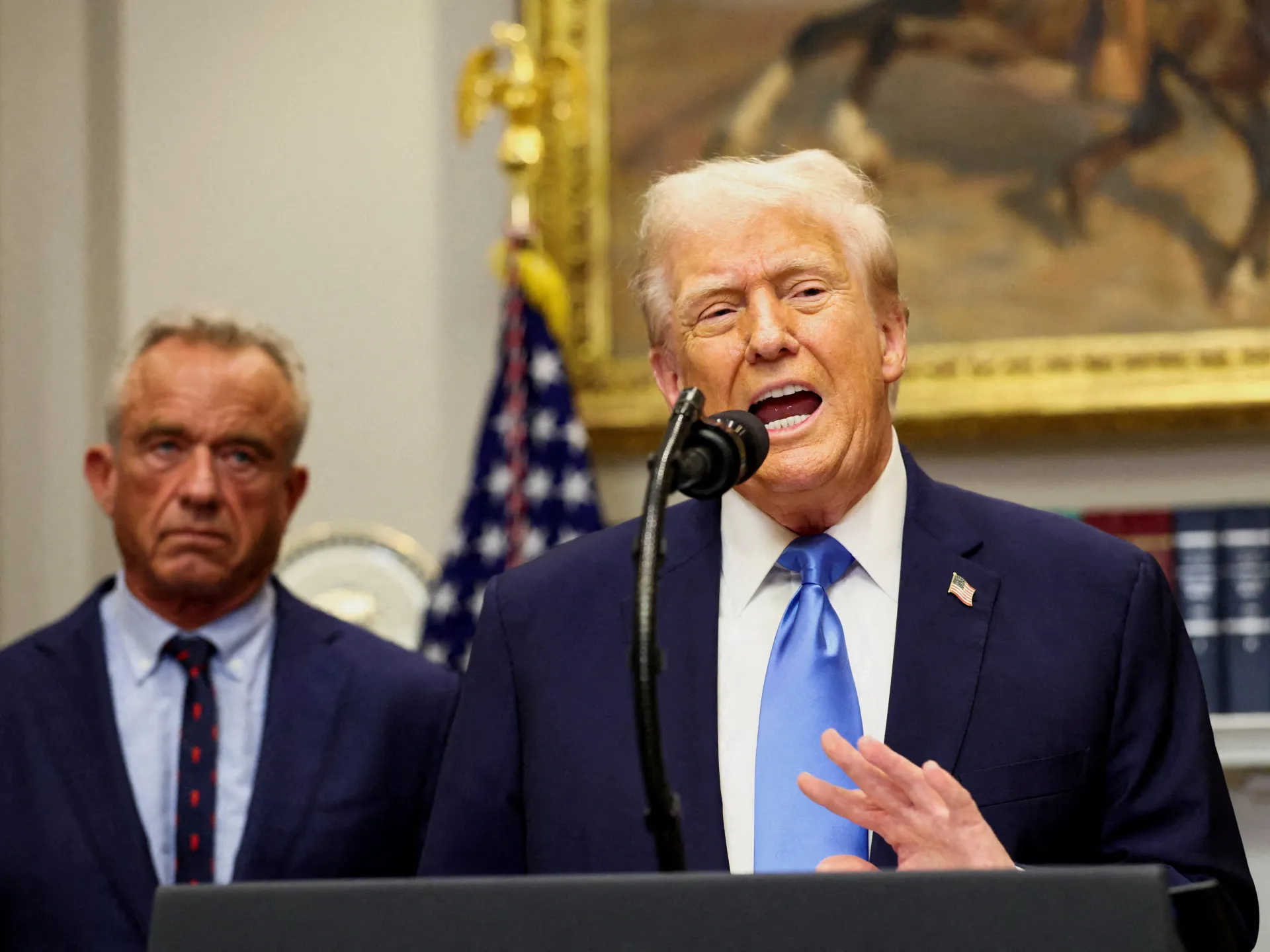
US President Donald Trump has returned the issue of childhood vaccines to the forefront of political and health debate in the United States, after he signed an executive order calling for reducing the number of vaccines recommended for children, and reconsidering the method of administering them, including separating the measles, mumps, and rubella vaccine into 3 separate doses.
This step comes at a very sensitive time, with the United States recording a significant increase in measles cases, which prompted American and British media to warn of the potential health repercussions of the new policy, even if the angles of approaching it differed.
In its report, the British newspaper The Guardian places the decision in its scientific and health context, and asks about the impact of Trump’s recommendations inside and outside the United States.
The newspaper quotes public health experts that the change may lead to confusion among parents and delay vaccination of children, especially since giving vaccines during separate medical visits may cause some families not to return for subsequent doses.
The Guardian believes that the problem is not limited to reducing the number of vaccines, but rather in the possibility of prolonging the period during which children remain vulnerable to preventable diseases, noting that measles cases in the United States have already reached the highest level in about 3 decades.
Declining confidence in vaccines
The Guardian expands the scope of the warning outside the United States, noting that other countries may not copy American policy due to the high health and economic costs of disease outbreaks, but the greatest danger may come from the transmission of doubts and misleading information about vaccines.
Scientific voices reported by the newspaper warn that a decline in confidence in vaccines, even in countries that do not adopt the American changes, could lead to a decline in vaccination rates and the return of diseases that were previously controlled, especially since the World Health Organization stresses the need for vaccination schedules to be based on independent scientific evaluations away from political influence.
Vaccines have been among the most successful interventions in the history of public health, and reducing children’s access to them may expose millions of them to serious and potentially fatal diseases.
As for the New York Times, it presents a more severe position, in an opinion article entitled “Reducing childhood vaccinations is inexcusable,” as the writer believes, based on his medical experience, that vaccines have been among the most successful interventions in the history of public health, and that reducing children’s access to them may expose millions of them to serious and perhaps fatal diseases.
The article places the decision in direct confrontation with the allegations repeated by Trump and Secretary of Health Robert Kennedy Jr. regarding the existence of a link between vaccines and autism, stressing that this relationship is not based on scientific evidence and has been repeatedly refuted.
The article is based on the historical development of preventive medicine, noting that infectious diseases were among the main causes of child death before the advent of modern vaccines, and that vaccination programs contributed to preventing hundreds of millions of cases of the disease.
From this standpoint, the author warns that reducing vaccinations is not merely an administrative adjustment to a medical schedule, but rather a retreat from fundamental gains achieved by public health over the past century.
In a similar vein, but with a different political and health tone, a Wall Street Journal editorial criticizes Trump’s policy under the headline “Trump deals a blow to childhood vaccines,” considering that the president is fueling public anxiety about vaccines at a time when “measles is spreading unchecked.”
The newspaper says that the new plan reduces the number of vaccines recommended for most children, and reclassifies some vaccines, such as hepatitis, influenza, Covid-19, and rotavirus vaccines, so that they become allocated to high-risk groups or subject to what is called a “joint medical decision” between the doctor and the parents.
The Wall Street Journal specifically considers the proposal to separate the measles, mumps and rubella vaccine into 3 separate injections, and believes that the step may require changes in the production process that will take years, in addition to that it will impose additional visits to the doctor, which may practically lead to a decline in vaccination rates.
The newspaper also questions the comparisons made by the Trump administration between the United States and European countries regarding the number of vaccines, explaining that the differences in the spread of diseases and the composition of the population and health systems make this comparison more complex than the administration suggests.
Legal confrontation
The repercussions of the decision do not stop at the medical side – according to the newspaper – as the executive order may open a legal confrontation with states that impose different requirements for vaccination before enrolling in schools, and it could also reignite the political and cultural division over vaccines, an issue that has become highly polarized since the Covid-19 pandemic.
The editorial believes that Trump may also face a political cost, as the decision could alienate voters who do not share this approach, while the most obvious health risk remains the possibility of an increase in measles cases.
The three newspapers intersect – despite their different editorial orientations – at a key point related to fears that changing vaccination policy will weaken confidence in vaccines, delay children’s access to them, and thus increase the risks of preventable diseases.
The Guardian focused on the scientific and global dimension, and the New York Times treated the decision as a dangerous retreat from public health achievements, while the Wall Street Journal added a political and legal dimension, warning that the decision may exacerbate the division over vaccines and at the same time lead to adverse health outcomes.
What is noteworthy is that the controversy is not only about the number of vaccines, but rather about who determines American health policy and on what basis: Are the recommendations the product of an independent scientific evaluation based on evidence, or are they influenced by political choices and doubts promoted by elected officials?
This question becomes increasingly important in light of the measles outbreak, and in light of the warnings of doctors and health organizations that delaying or missing doses may leave children without protection for longer periods, especially since independent reports, medical experts, and health organizations criticized the executive order and warned of the possibility of an increase in preventable diseases.
Export doubts
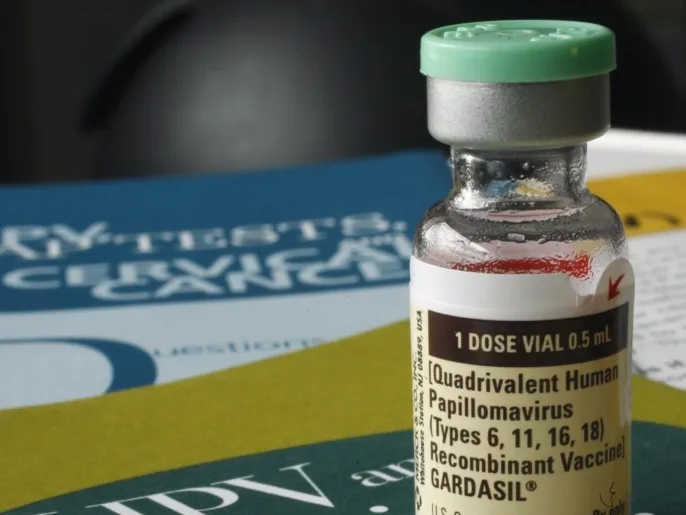
At the international level, the potential repercussions may be less related to other countries adopting the American schedule and more related to the export of doubts. Even if health systems in other countries refuse to imitate American policy, the decline in confidence in vaccines and the spread of scientifically unproven claims may affect parents’ decisions and vaccination rates.
Hence, Trump’s battle against childhood vaccines may not remain an internal American battle, but rather turn into a broader test of the ability of health and scientific institutions around the world to maintain public confidence in vaccination, especially at a time when diseases that were thought to be under control are returning.
In sum, the Guardian, the New York Times, and the Wall Street Journal present three different angles to one decision, but they agree in warning of its potential cost.
While Trump and his administration present it as a reset of American health policy, the three newspapers believe that reducing or delaying vaccinations may have consequences that go beyond policy, related to increasing children’s susceptibility to infection, declining immunization rates, the possibility of expanding measles outbreaks, and weakening public confidence in science and health institutions.
In a world where diseases and information move quickly across borders, the most important question may not be whether other countries will copy Trump’s policy, but rather whether they will succeed in preventing its spillover effects from reaching their children and communities.