

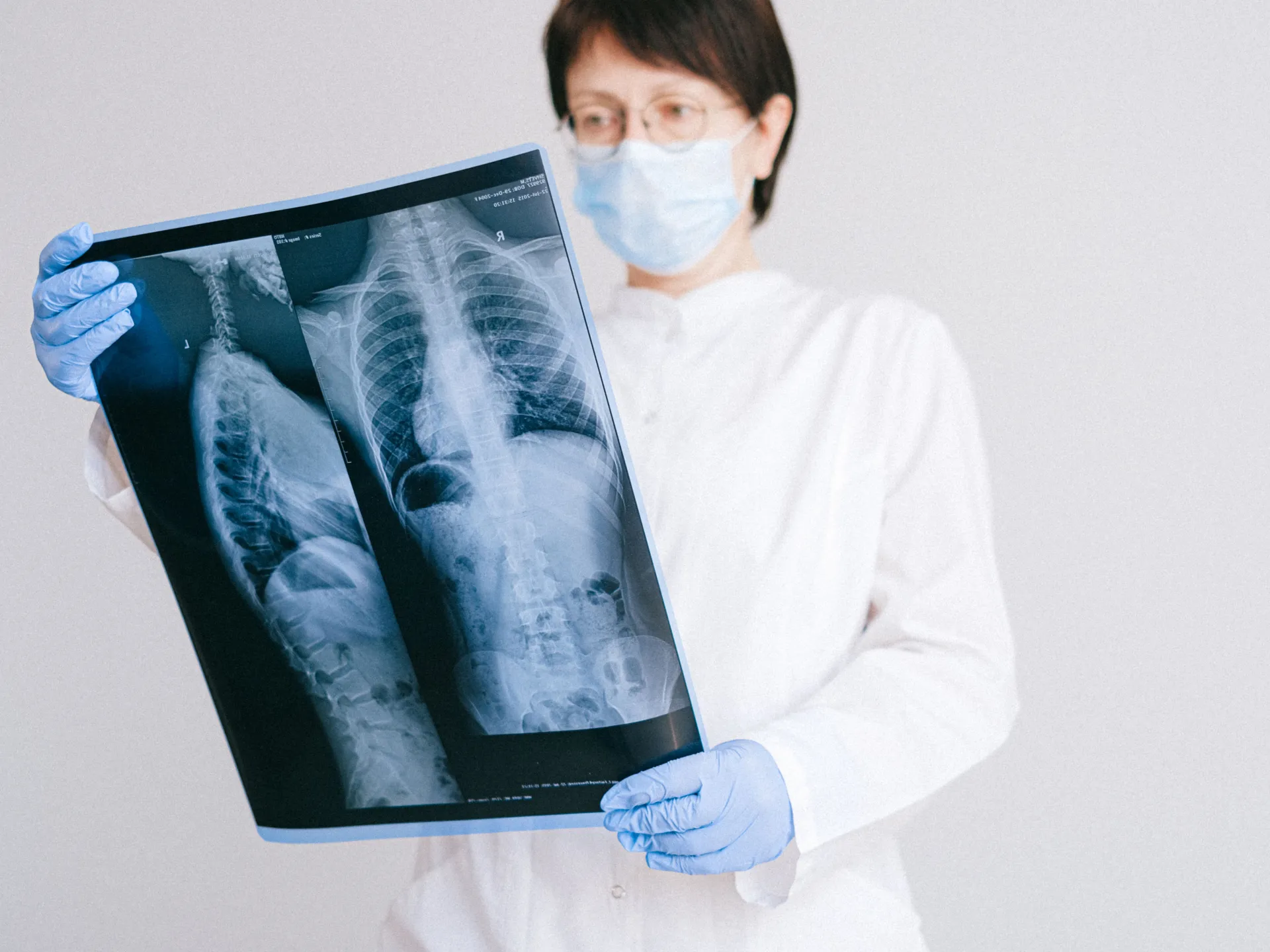
We breathe thousands of times every day without paying attention or feeling what is happening inside our bodies. Air enters the lungs, oxygen is transferred to the blood to reach the body’s cells, while carbon dioxide exits with exhalation in the opposite direction.
The journey of oxygen…the journey of life
The air reaches millions of alveoli, which are tiny microscopic sacs located deep in the lungs, surrounded by a dense network of blood capillaries. Between the air inside the alveoli and the blood in the capillaries there is an extremely thin barrier, the thickness of which in its thinnest areas does not exceed about 0.2–0.5 micrometers. Through this barrier, oxygen (O₂) passes from the air into the blood, while carbon dioxide (CO₂) moves from the blood to the alveoli and is later exhaled.
Next comes the role of hemoglobin, which binds to oxygen and carries it through the blood to various parts of the body, until it reaches the cells that need it to produce energy and perform their functions. In return, the blood collects carbon dioxide resulting from the work of the cells, and transports it back to the lungs, where it is eliminated with each exhalation.
Millions of molecules move in specific paths and in perfect harmony, so each part takes what it needs, and what the body does not need is returned to the lungs to get rid of it. A precise and continuous process that occurs within us at every moment, without us realizing it, but it is necessary for the continuation of life.
Cells that make respiration possible
- Cells lining the alveoli: They form the thin surface across which O₂ and CO₂ are exchanged.
- Surfactant-producing cells: They keep the vesicles open and prevent their shrinkage.
- Immune cells: They guard the lungs and resist microbes and particles that enter the air.
Thus, the lung is not merely a mechanical organ for breathing; It is also an advanced immune barrier.
Surfactant…the amazing class
Surfactant is a fine substance consisting of phospholipids and proteins. It covers the inner surface of the alveoli, preventing them from closing and keeping them open with each breath. A substance that we do not see, but which is essential for life; They must be present in the right place, in the right amount, and at the right time, so that millions of alveoli remain open and oxygen continues to be exchanged with each breath.
Respiratory diseases…a global problem
- asthma
Chronic inflammation of the bronchial tubes that causes bouts of coughing, wheezing, and shortness of breath, controlled with bronchodilators and anti-inflammatory treatments, especially inhaled corticosteroids, while avoiding triggers (dust, smoke, perfumes, cold air…)
- Chronic obstructive pulmonary disease
Persistent narrowing of the airways, often associated with smoking and air pollution, causing coughing, phlegm, and progressive shortness of breath. Treatment depends mainly on bronchodilators and respiratory rehabilitation, and the patient is advised to quit smoking.
- Tuberculosis
A bacterial infection that often affects the lungs and is transmitted through the air. It may cause a persistent cough, fever, night sweats, and weight loss. It is diagnosed by sputum and imaging tests, and is treated with a combination of antibiotics for several months.
- Occupational lung diseases
It results from repeated exposure to dust, fumes, and chemicals, and may cause asthma or hardening tissue diseases. Symptoms include coughing and shortness of breath, and protection begins with stopping exposure and using preventive measures, along with treating the resulting disease.
- Pulmonary fibrosis
It may result in pneumonia, which makes the lungs stiffer and impairs oxygen transmission, causing shortness of breath and a dry cough. Treatment depends on the cause, and anti-fibrotic medications may be used in certain types.
- Pulmonary hypertension
High pressure in the vessels that transport blood to the lungs, often due to narrowing or pathological changes, which strains the right side of the heart, causes shortness of breath and fatigue, and is treated according to the cause and type with specialized medications.
- Lung cancer
It may develop silently at the beginning, then cause a persistent cough, blood in the sputum, or shortness of breath. Treatment depends on its type and stage, and may include surgery, radiotherapy, or medication.
Lung cancer represents a major global health challenge. According to the World Health Organization, about 2.5 million new cases of lung cancer and 1.8 million deaths due to it will be recorded in 2022, hence the importance of early diagnosis, and smoking remains the most prominent risk factor.
How do we diagnose lung diseases?
- Lung function tests: It measures the amount of air that the lungs can absorb, and the speed of its exit and flow.
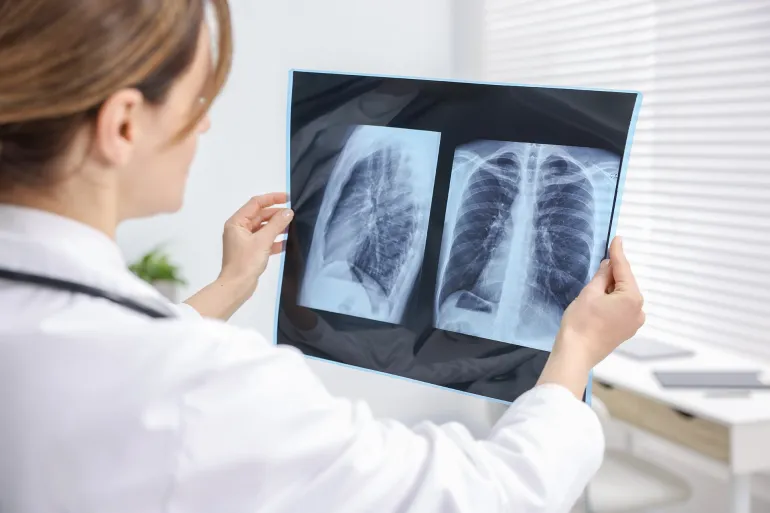
- Chest X-ray: It helps detect inflammation, congestion, and abnormal changes in the lungs.
- CT scan: It gives more detailed and accurate images of lung tissue and bronchi.
- Ultrasound or pulmonary ultrasound examination: It helps in evaluating some lung conditions, especially fluid and changes near the surface of the lung.
- Bronchoscopy: Allows the doctor to see the inside of the bronchial tubes, and may be used to take samples when needed.
- Blood gas analysis: Measures oxygen and carbon dioxide levels, and helps evaluate the efficiency of the lungs in exchanging gases.
Artificial intelligence…an extra eye
Artificial intelligence has entered the world of lung diseases, and has begun to offer promising capabilities in analyzing radiology and CT images, and helping to monitor some subtle changes that may be difficult to detect with the naked eye.
Studies also indicate its growing role in supporting diagnosis and analyzing huge amounts of data quickly and accurately. However, the doctor remains the focus of the diagnostic process; He doesn’t just read the image, he looks at the whole patient, and links the imaging results to symptoms, clinical examination, and medical history.
Smoking: toxic chemicals that reach deep into the lungs
Tobacco smoke contains nicotine, carbon monoxide, tarry substances, and toxic and carcinogenic compounds. Nicotine causes addiction, carbon monoxide reduces the blood’s ability to carry oxygen, while toxic substances harm the bronchi and alveoli, causing inflammation and damage to their cells.
It also disrupts cilia and mucus, which are the first line of defense for the respiratory passages. Mucus traps harmful particles, and cilia push them out. With chronic exposure, the alveoli are damaged and the lungs lose their elasticity, increasing the risk of chronic obstructive pulmonary disease and lung cancer.
In indirect smoking, the non-smoker inhales tobacco smoke and the toxic substances it contains, which reach the bronchi and alveoli, causing inflammation and harming lung cleaning mechanisms, even though he did not smoke himself.
The smoker has a question that doctors ask, which may be stronger than any advice: Are you free or is the cigarette controlling you? What irony is greater than a person spending his money to buy something that might lead him to illness? If the disease was offered for free, would anyone ask for it? So why do we pay for it willingly?
Sports.. when the lung learns to meet the needs of the cells
When exercising, the cells’ need for oxygen increases, breathing speeds up and becomes deeper, and blood flow through the capillaries surrounding the alveoli increases. O₂ moves from the air inside the alveoli to the blood, while CO₂ moves from the blood to the alveoli to be exhaled.

With regular training, the breathing system adapts to this increased demand; The efficiency of gas exchange improves, and the body becomes better able to deliver oxygen and get rid of carbon dioxide during effort.
Therefore, the benefit of exercise does not mean that the lungs become larger, but rather that the respiratory system becomes more efficient: delivering O₂ and getting rid of CO₂ more efficiently, and the ability to continue the effort for a longer period before feeling tired and short of breath.
Here lies the beauty of training: it does not change lung volume as much as it improves its ability to perform its task more efficiently and for a longer period.
Correcting concepts… when the medicine scares us more than the disease
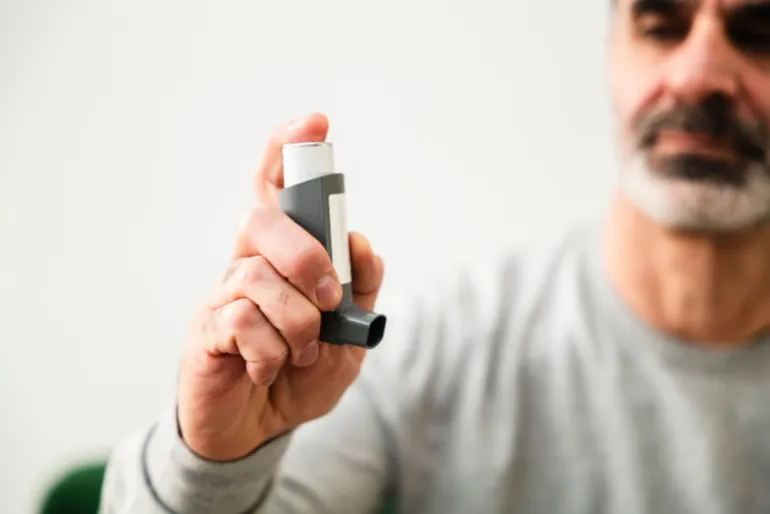
Some asthma patients fear the inhaler, thinking that it is a “dangerous and addictive” drug, while its main function is to quickly expand the bronchial tubes and relieve their constriction. Repeated dependence on it is not addiction, but rather it may be an indication that asthma is not controlled and treatment needs to be re-evaluated.
As for inhaled corticosteroids, some patients may refuse them for fear of “bone thinning.” But the inhaled doses prescribed for asthma mainly reach the bronchial tubes in small doses, so its effect on the bones is very limited.
Even when a doctor prescribes corticosteroids in the form of tablets for several days, such as six days during an asthma attack, this short period does not automatically mean osteoporosis; Important side effects are more associated with high doses or frequent or long-term use, and therefore the patient should not stop the prescribed treatment for fear of its effects without consulting his doctor.
Fear of medicine should not deprive the lung of the treatment that protects it. The right medicine, in the right dose, is part of prevention and not a source of fear.
conclusion
We do not feel the lungs doing their work, we do not hear the millions of alveoli opening with each inhalation, and we do not see the oxygen crossing into the bloodstream to reach the furthest cell in our bodies. We do not see that microscopic layer of surfactant, which keeps the alveoli open, breath after breath. Perhaps the greatest thing about breathing is that it does not ask us to do anything except to take a breath… while, with every breath, it gives us a new lease on life.