

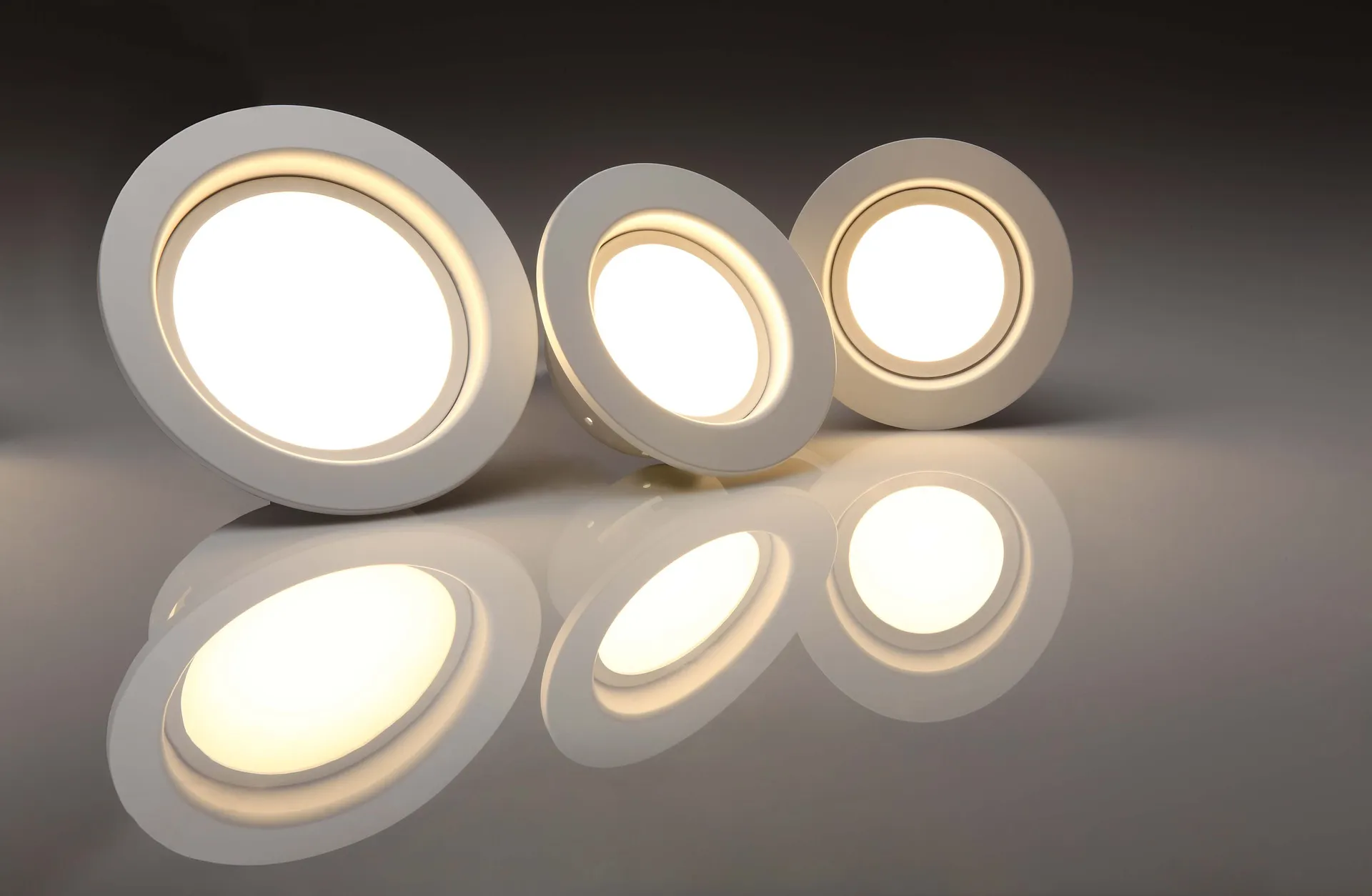
Over the past two decades, LED lamps have become the preferred choice for home and commercial lighting thanks to their high energy efficiency and long lifespan, but this transformation has been accompanied by depriving our bodies of some of the spectral components naturally present in red light (sunlight, the glow of a campfire, and incandescent lamps), according to a report published by the “New Scientist” website.
These results were based on research in which scientists participated, including Glenn Jeffrey from University College London, who studied the effect of red wavelengths on cells and mitochondria, which are located inside most of the body’s cells and are responsible for producing a large portion of the energy that cells need in the form of the adenosine triphosphate molecule.
In a human trial published in 2024 in the Journal of Biophotonics, 30 healthy people were exposed to red light with a wavelength of 670 nanometers for 15 minutes, and then underwent a glucose tolerance test.
The researchers found that exposure to red light was associated with a 27.7% reduction in blood sugar spikes after glucose ingestion compared to baseline, with a reduction in peak blood sugar spikes by about 7.5%.
The researchers believe that one explanation is the effect of red light on mitochondria, which may lead to changes in energy production and glucose consumption.
This study was small and included healthy people, and used controlled exposure to light of a specific wavelength, so it does not prove that a lack of red light in daily life causes diabetes or that LED lights directly lead to metabolic disorders.
The clearest accusation against LED systems
But another study published by Glenn Jeffrey and others in January 2026 in the journal Scientific Reports compared narrow-spectrum lighting with broader, daylight-like lighting.
The researchers proposed the hypothesis that some modern LED systems are largely concentrated in short visible wavelengths, and lack a portion of the longer wavelengths found in sunlight, and that this difference may affect some visual and mitochondrial functions.
During that study, the researchers exposed participants for two weeks to broad-spectrum lighting extending from about 400 to more than 1,500 nanometers, instead of being limited to the usual spectrum of LED-based indoor lighting. Then they tested their color contrast sensitivity, that is, the eye’s ability to distinguish subtle differences between close colors.
The results showed a noticeable improvement in contrast sensitivity after a period of exposure to broad-spectrum lighting. Interestingly, the improvement remained apparent until about two months after removing the additional lighting.
The researchers suggest that the effect is not necessarily limited to the area exposed to light, as their results indicate the possibility of systemic communication between mitochondria and various tissues of the body after local exposure to light.
They believe that this effect may be related to changing patterns of certain cytokines in the blood, which are proteins that cells use to communicate and regulate immune and inflammatory responses.