

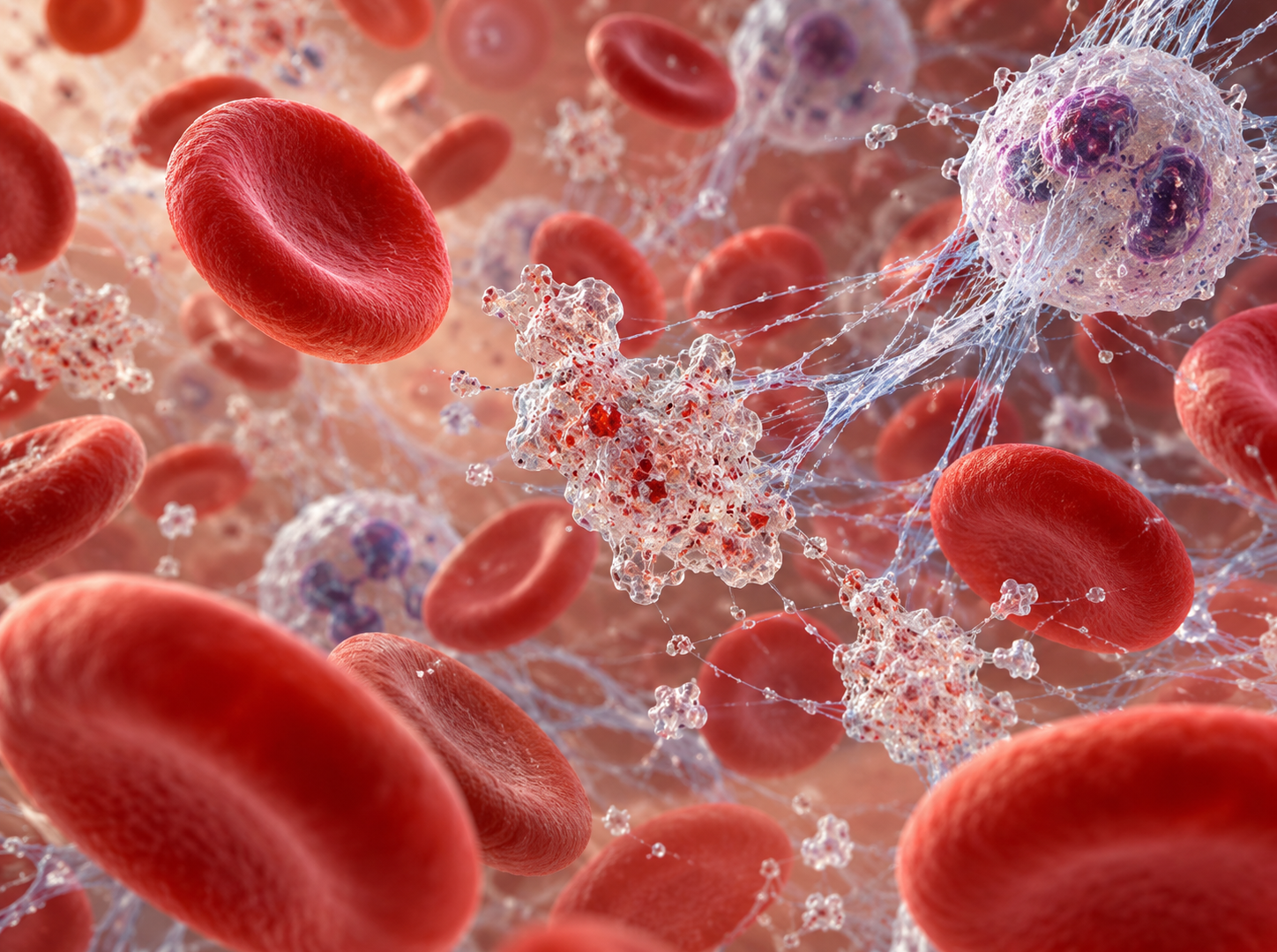
Years after infection with the Coronavirus, some recoveries are still suffering from persistent symptoms, most notably extreme fatigue, shortness of breath, and concentration and memory disorders, without doctors always being able to determine a clear explanation for them.
Recent scientific studies indicate that there may be a relationship between these symptoms and disorders of blood clotting, the immune system, and microvascular systems, after researchers observed abnormal changes in blood samples taken from patients suffering from what is called “long Covid.”
Research has shown the presence of microscopic protein aggregates that bind to components secreted by the immune system, in addition to indications of microvascular dysfunction and continued stress and inflammation in some cells.
But these discoveries, despite their importance, have not yet determined whether these changes are a direct cause of the symptoms or are one of the consequences associated with the disease, and they have not yet turned into a diagnostic test or approved treatment.
The World Health Organization estimates that about 6 out of every 100 people who have been infected with Covid-19 may develop a “post-Covid” condition, with estimates varying between studies and time periods.
This condition is defined by the continuation of symptoms of the disease or the appearance of new symptoms, usually during the first three months of infection, lasting at least two months, and cannot be explained by another diagnosis.
Microscopic aggregates and immune networks
On October 2, 2025, the Journal of Medical Virology published a study that examined the relationship between microscopic blood aggregates and immune components known as neutrophil extracellular networks.
The study included 50 patients with “long Covid” along with 38 healthy people, distributed into two comparison groups in France and South Africa.
The researchers observed an increase in the number and size of minute protein aggregates in the patient group, with a correlation between these aggregates and indicators of the activity of neutrophil networks, in addition to monitoring components of these networks within some of the examined aggregates.
Neutrophils are a type of white blood cell that participates in defending the body against pathogens of infection, and they can release networks consisting of DNA, proteins, and enzymes that help trap microbes and deal with them.
But the continued abnormal activation of these networks may contribute to inflammation and interference with blood clotting mechanisms, which prompted researchers to study their possible role in the persistent symptoms of “long Covid.”
The team hypothesized that increased activity of neutrophil networks may help stabilize tiny protein aggregates and make them more difficult to get rid of, but the study did not prove that this process is directly responsible for the symptoms.
Dr. Abdullah Sami, Assistant Professor at the Faculty of Medicine Research Center at Ain Shams University, says that recent studies reveal possible links between immune disorders, coagulation, and microvascular disorders, but there is still a long way to go before these results are transformed into approved diagnostic or treatment methods.
He explains – in statements to Al Jazeera Net – that some studies deal with aggregates discovered in blood or plasma samples using specialized laboratory techniques, and they may contain proteins with properties that make them more resistant to natural degradation.
Blood is more likely to clot
Another preliminary study, published on the medical research platform medRxiv on August 23, 2026, has heightened interest in the possibility of persistent clotting disorders in some “long Covid” patients.
The study included 20 patients and 19 healthy people, and the researchers used tests to measure the speed of clot formation and its characteristics, in addition to imaging techniques to analyze the clusters present in the plasma.
The results showed that the patients’ samples were faster in starting and developing the clotting process compared to the group of healthy people, and an increase in protein aggregates with abnormal characteristics was detected, with different compositions and sizes.
The results indicate that some changes in the clotting system may persist after the acute infection ends.
However, the study is small, and has not yet been subject to peer review, which is an essential step for evaluating scientific research before adopting its results in peer-reviewed journals. Some of its researchers also participated in the study published in 2025, and therefore it cannot be considered an independent confirmation of the hypothesis.
Intramicrovascular disorders
Research was not limited to studying blood and clotting, but also extended to small blood vessels that transport oxygen and nutrients to the body’s tissues.
In a study published by the journal Microcirculation in September 2026, researchers examined microvascular function in 36 patients with “long Covid” and compared it to the results of 47 participants from the healthy group.
The team used a technique based on measuring fluorescent changes in the skin during decreased blood flow and then its return, with the aim of assessing the microvascular response.
The results showed the weakness of some vascular responses and delayed recovery after the return of blood flow in patients, coinciding with changes in indicators of chemical balance within cells, especially the ratio between two compounds that have a role in energy production processes and cellular interactions.
Researchers believe that disruption of this balance may be related to the weak ability of microvessels to respond to changing tissue needs for blood and oxygen.
In a recent direction, a study published electronically in July 2026 in The Journal of Allergy and Clinical Immunology revealed changes in some immune and endothelial cells, which are the cells that line blood vessels from the inside.
The study included 73 patients with “long Covid” and 41 people who recovered from the infection without continuing symptoms.
The researchers observed an increase in some indicators of cellular stress and regulated cell death pathways, in addition to clusters between platelets, immune and endothelial cells.
One of the indicators of stress and endothelial cell death was also linked to the severity of symptoms and disorders of the autonomic nervous system, which is responsible for regulating involuntary functions such as heartbeat and blood pressure.
These results support the possibility of an overlap between immune disorders and vascular function, but they do not yet determine whether these changes are a cause of the disease or a result of it.
Do the clusters clog blood vessels?
Despite what studies have revealed, Dr. Sami warns against confusing the discovery of microscopic aggregates in blood samples with proof of the presence of clots blocking capillaries inside the body.
The clusters that some researchers call microclots are not necessarily similar to the conventional clots known clinically, and their discovery in plasma does not automatically prove that they impede blood access to organs.
This particular point was the focus of a scientific review published by the Cochrane Collaboration in July 2023.
The review concluded that the evidence available at the time was not sufficient to prove that these particles caused “long Covid,” noting that aggregates containing amyloid proteins and fibrin or fibrinogen could also be found in healthy people and those with other diseases.
The researchers also objected to describing these particles as clots, and suggested using a more accurate nomenclature that reflects their protein composition.
In May 2024, the journal Research and Practice in Thrombosis and Haemostasis published a critical scientific article that questioned the strength of the evidence linking clotting disorders to “long Covid” symptoms.
But these reviews preceded research published in 2025 and 2026, and therefore do not represent a final assessment of what the most recent results have added, but rather clarify the scientific questions that still need answers.
What does this have to do with fatigue and brain fog?
Extreme fatigue, poor concentration, shortness of breath, and intolerance to exertion are among the symptoms that most concern researchers into “long Covid.”
Dr. Sami explains that disruption of microvascular function may theoretically affect the ability of tissues to increase blood flow and meet their oxygen needs, especially during physical activity.
But fatigue may also be associated with inflammation, sleep disorders, autonomic nervous system, and metabolic changes, and cannot be attributed to clotting disorders alone.
Brain fog, which includes difficulty concentrating, poor memory, and slow thinking, may interfere with immune, nervous, and circulatory system disorders.
Dr. Sami confirms that monitoring tiny clusters in the blood does not prove the presence of blockage in the cerebral vessels, nor does it mean that these clusters are responsible for the cognitive symptoms.
The same caution applies to shortness of breath, which may result from pulmonary, cardiovascular, or vascular problems, or changes in the regulation of the breathing process.
He points out that some patients suffer from a noticeable worsening of symptoms after physical or mental exertion, which is a phenomenon that requires independent evaluation and cannot be automatically explained by clotting disorders.
Are scientists close to a cure?
Despite promising results, markers of microglial aggregates and neutrophil networks have not yet become an approved diagnostic test for long Covid.
Dr. Sami explains that adopting any vital indicator requires proving that it can be measured accurately, and its ability to distinguish between patients, healthy people, and similar cases, with the results being replicated between different laboratories.
Current research faces challenges related to the small sizes of some studies, different methods of collecting and preparing samples, imaging techniques and measuring clusters, as well as the possibility of similar indicators in other diseases.
These results have not yet proven that the use of anticoagulant medications or plasma purification procedures treats persistent symptoms of “long Covid.”
The Cochrane review had warned against using plasmapheresis to remove these aggregates outside the scope of controlled clinical trials, due to insufficient evidence of its benefit and the possibility that patients would be exposed to unjustified risks.
What is missing in research?
Dr. Sami believes that progress towards understanding this phenomenon requires standardizing methods for measuring microaggregates and neutrophil networks, and conducting larger studies that include different groups of patients, healthy people, and those with other inflammatory or vascular diseases.
It also emphasizes the importance of following patients over a period of months, to determine whether biological changes precede the appearance of symptoms, coincide with them, or decline when the condition improves.
The most decisive step is to conduct controlled therapeutic trials to test whether interfering with one of the suspected biological pathways actually leads to improved vascular function and a reduction in symptoms.
He points out that searching for a single explanation for all cases of “long Covid” may not be realistic, as several disease mechanisms may overlap, the importance of which varies from person to person.
Thus, recent studies add new evidence to understand the possible relationship between coagulation, immunity and microcirculation, but they do not yet provide a final answer as to the reasons for the persistence of symptoms.
The decisive step that researchers are waiting for is no longer simply monitoring these changes in blood samples, but rather proving their direct role in the disease, and determining whether dealing with them can improve the lives of those infected.