

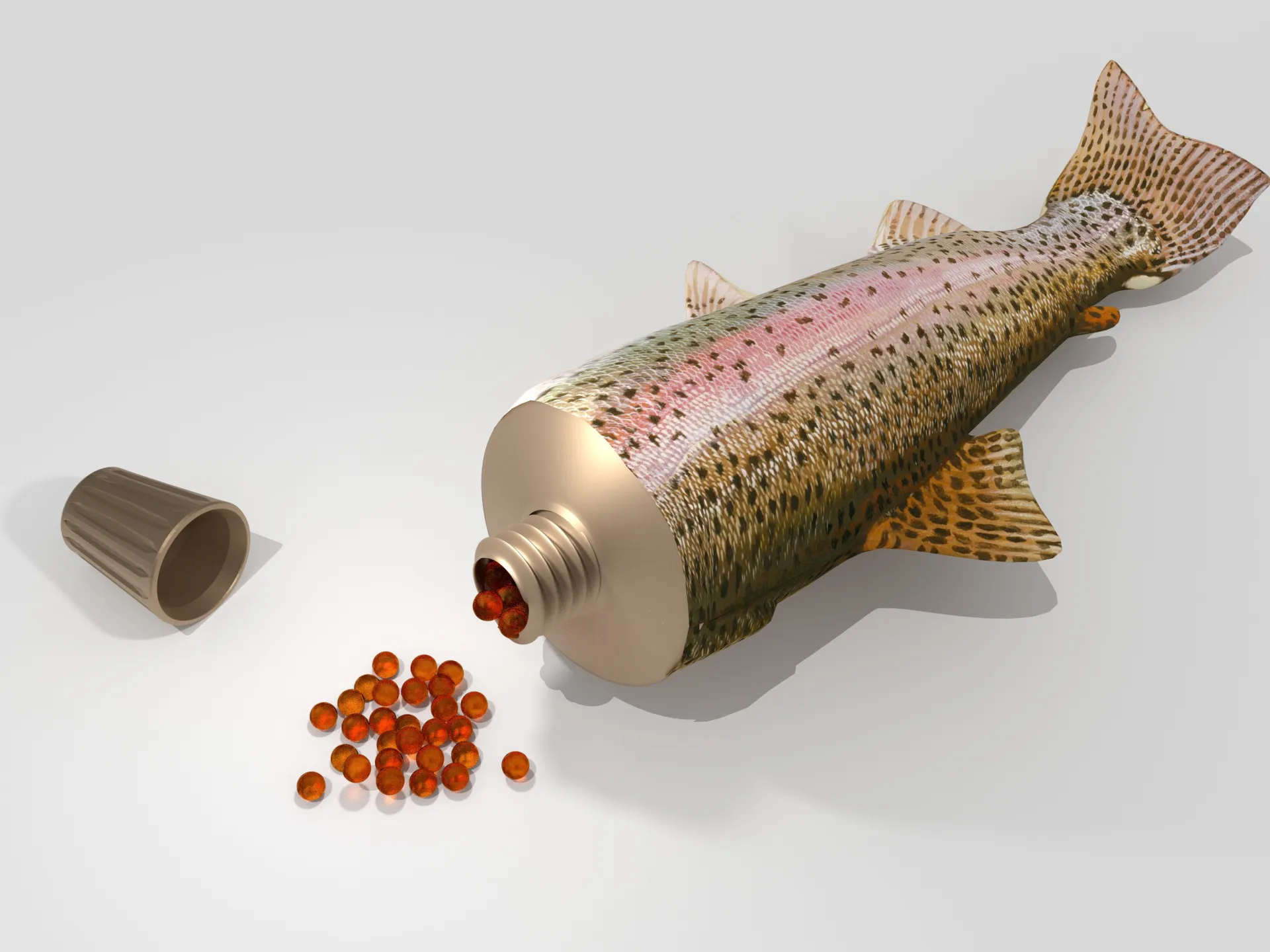
Caviar has long been associated with the tables of the wealthy and luxury restaurants, but in recent years it has begun to make its way to a completely different place, in the packaging of skin care products and supplements that promise to fight wrinkles and restore hydration and elasticity.
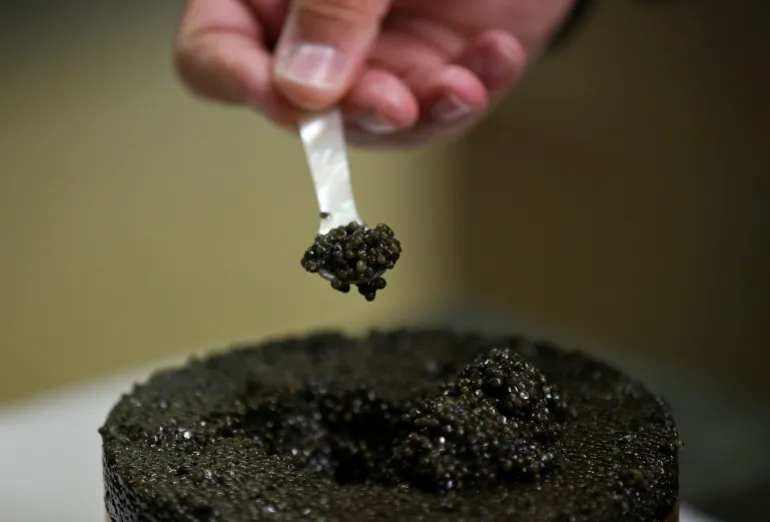
Caviar, or “black gold,” is the unfertilized roe of sturgeon, a group of fish that faces major environmental threats, as the International Union for Conservation of Nature classifies sturgeon as one of the species groups most at risk of extinction.
The price of some types of beluga caviar may reach thousands of dollars per kilogram due to its scarcity and the long period it takes for female sturgeon to reach maturity.
After decades during which Russian and Iranian caviar were linked to the Caspian Sea, aquaculture farms changed the map of the industry, and China became the largest producer of sturgeon and one of the most prominent producers and exporters of caviar in the world.
But apart from its nutritional value and high price, does caviar actually have properties capable of slowing down the manifestations of skin aging, or is the luxury surrounding it greater than the scientific evidence?
Why caviar?
Caviar contains proteins, amino acids, minerals and lipids, including omega-3 fatty acids such as docosahexaenoic acid (DHA) and eicosapentaenoic acid (EPA), compounds that have been studied for their potential roles in processes associated with inflammation and skin health.
Extracts prepared from caviar also contain amino acids and small peptides, which prompted researchers to test their ability to influence the production of collagen and hyaluronic acid, resist oxidative stress and some of the pathways responsible for the deterioration of skin structure.
However, there is a necessary difference, as most studies do not test eating traditional caviar as food, but rather concentrated extracts, treated with enzymes, or oils that are included in supplements and preparations designed with specific formulations.
Human experience
The most notable human evidence to date is a randomized, double-blind, placebo-controlled trial conducted by researchers in South Korea and published in the journal Nutrients at the end of 2023.It included 45 adults suffering from dry skin and wrinkles.
The participants were distributed into 3 groups for a period of 8 weeks, where the first group took 500 milligrams daily of caviar extract treated with enzymes and extracted using supercritical fluid technology, while the second group received 10 milligrams of the extract in a formula that also contained fish collagen, hyaluronic acid, vitamin C, biotin, and other ingredients, and the third group took a placebo.
After 4 weeks, the researchers observed an improvement in some indicators of skin hydration in the two groups that received caviar extract, while after 8 weeks, improvements appeared in indicators of skin elasticity and wrinkles compared to the placebo group.
The melanin index also decreased in both caviar groups, and the 500 milligram group recorded an improvement in a number of metrics greater than the group that took the combined formula.
The researchers linked these results to the ability of the extract – according to previous experiments on cells and animals – to influence pathways related to the production of hyaluronic acid and collagen and resistance to oxidative stress.
But the study is relatively small and only lasted 8 weeks. The caviar used in it was provided by a company working in this field, and the company that manufactured the extract registered a patent with the supplying company related to its use to combat skin aging. This does not invalidate the results, but it makes the need for independent, larger, and longer trials necessary before the effect is considered conclusive.
From capsules to face creams
Interest in caviar has not been limited to oral supplements. In another study published in 2023, researchers from South Korea tested the effect of caviar oil on skin aging through several stages, starting with laboratory cells and then human skin tissue outside the body, leading to experiments on a topical preparation in humans.
The researchers used a preparation containing 15% caviar oil along with other ingredients, and 102 people participated in 5 separate clinical studies to evaluate wrinkles, hydration, elasticity, skin density and other indicators. Participants in the extended-use trials were asked to apply the product 3 times daily for 4 weeks.
Laboratory experiments showed an increase in the formation of type I and III collagen and elastin in skin tissue, with a decrease in some enzymes associated with the breakdown of extracellular matrix components.
The researchers also recorded an improvement after 4 weeks in a number of indicators, including skin hydration, elasticity, shine and density, in addition to a decrease in water loss through the skin and some measures of wrinkles.
But the result does not mean that caviar oil alone was responsible for all the effects. The preparation used also contained other ingredients such as ceramides, adenosine, and cranberry extract, which makes it difficult to separate the effect of caviar from the rest of the composition.
Resistance to photoaging
In a more recent step, scientists in China investigated the ability of caviar extract to combat “photoaging,” which is changes that affect the skin as a result of chronic exposure to ultraviolet rays.
In the study, which appeared electronically in late 2024 and was published in the 2025 issue of the journal Photochemistry and Photobiology, the researchers used a caviar extract treated with an acid protease enzyme and tested it on skin cells and mice exposed to ultraviolet radiation.
The results showed decreased levels of proteins associated with inflammation and breakdown of skin components, including NF-κB, MMP-3, and MMP-9, compared to an increase in other indicators associated with tissue protection.
In mice, the extract alleviated some of the tissue changes caused by ultraviolet rays. It also increased the activity of an antioxidant enzyme and increased the content of hydroxyproline, an amino acid linked to the collagen structure.
These results provide a possible biological explanation for how the extract affects the skin, but they remain pre-clinical evidence, and it cannot be assumed that the results that appeared in cells and mice will be repeated to the same degree in humans.
Is caviar safe for the skin?
In the clinical trial that tested taking 500 milligrams of caviar extract daily for 8 weeks, no serious side events were recorded, and no clinically significant changes appeared in blood, biochemical, and urine tests, according to the researchers.
But this may be sufficient to judge the safety of the product used during the study period only, and not all caviar extracts or supplements and cosmetics containing it are proven to be safe in the long term.
Products also vary widely in their concentrations, method of extraction and added ingredients, so the results of a tested extract should not be transferred to any cream or supplement that says “caviar” on the packaging.

Is “black gold” worth all the hype?
Preliminary evidence suggests that caviar is more than just a fancy name added to cosmetics to attract consumers. There are laboratory, animal, and some small human studies that suggest potential for hydration, elasticity, collagen, and the appearance of wrinkles.
But the distance is still large between “promising potential” and “proven treatment,” as the number of human studies is limited, sample sizes are small, and follow-up periods are short, and some studies have tested products that include other ingredients in addition to caviar.
Therefore, caviar may find a place for itself among the promising ingredients in the world of skin care, but the research available so far does not prove that it is able to turn back the clock, nor that the high price of the product necessarily means a better result.