


Some women suffer from a clear deficiency in iron stores while hemoglobin remains within the normal range, a stage that may go undiagnosed if the examination is limited to the blood picture alone.
Blood loss during the menstrual cycle, pregnancy, and childbirth, in addition to a lack of iron in food or poor absorption, are among the most prominent causes of depletion of stores in women.
A review published by the Canadian Medical Association Journal-CMAJ in 2025 indicates that iron deficiency – whether accompanied by anemia or not – is more common in women, and that a complete blood count and measurement of ferritin (an intracellular protein that stores iron and releases it when the body needs it) are important initial tests when deficiency is suspected.
It also confirms that blood loss with menstruation and the body’s high needs during pregnancy and postpartum are the main causes of iron depletion.
Women are more susceptible to iron deficiency
Nehad Ahmed, professor of medical parasitology at the Faculty of Medicine at Assiut University, says that blood loss during the menstrual cycle, especially when menstruation is heavy, is one of the most important causes of iron deficiency in women.
She added to Al Jazeera Net that pregnancy and breastfeeding increase the body’s iron needs, as during pregnancy the body needs to meet the needs of the mother and fetus, while childbirth and the accompanying blood loss may also contribute to depleting the reserve.
She explained that iron deficiency may also be associated with poor absorption, as in celiac disease and some diseases of the digestive system, or after obesity surgeries such as gastric sleeve and gastric bypass, in addition to diets poor in iron, especially when the intake of animal sources that contain heme iron is low, which is a form that the body absorbs more efficiently.
The CMAJ review confirms that treating heavy menstruation is an essential part of treating iron deficiency in women, because continuing to replace iron without reducing the source of the loss may lead to the problem continuing or returning.
Ferritin decreases before hemoglobin
Dr. Nihad explains that it is possible for the hemoglobin level to be within normal limits while ferritin decreases, because the body first begins to consume its iron stores to maintain the production of red blood cells and hemoglobin.
She added that this stage is known as iron deficiency not accompanied by anemia, during which symptoms such as fatigue, poor concentration, hair loss, and decreased ability to exert effort may appear, despite the fact that anemia does not appear in the traditional analysis.
Ferritin measurement is used to estimate iron stores in the body, but the interpretation of this measurement requires – according to the World Health Organization – to take into account the presence of inflammation or infection, because ferritin may rise in these cases despite the presence of iron deficiency.
Studies support the possibility of symptoms appearing before anemia occurs. In a randomized trial published by the Canadian Medical Journal (CMAJ) that included 198 women suffering from fatigue with normal hemoglobin and ferritin less than 50 micrograms per liter, taking oral iron for 12 weeks led to a greater improvement in reducing fatigue compared to the group that received a placebo.

Pills or intravenous iron?
Iron pills are the first line of treatment in many cases of mild and moderate iron deficiency, according to Dr. Nihad, who stressed the need to ensure the ability of the digestive system to absorb iron and the patient’s ability to tolerate and adhere to treatment.
She added that digestive side effects, including constipation, nausea, and stomach upset, may cause some patients to stop treatment, so the doctor chooses the preparation, dose, and method of use according to the patient’s condition and tolerance.
As for intravenous iron, Dr. Nihad explains that it may be appropriate when the patient cannot tolerate oral treatment, absorption is poor, or an adequate response does not occur, as well as in some cases that require faster iron replacement.
The American Gastroenterological Association (AGA) recommends intravenous iron when oral iron is intolerant, iron stores do not improve after an appropriate trial, or there is a condition that makes absorption of iron through the gastrointestinal tract unlikely.
Dr. Nihad warns against giving intravenous iron without medical supervision and a place equipped to deal with allergic reactions when they occur. The CMAJ review notes that serious reactions are rare, and that true anaphylaxis following intravenous iron is very rare, while the majority of severe infusion-related reactions are less serious.
Why does iron deficiency return after treatment?
What is noteworthy is that raising the level of ferritin or hemoglobin does not necessarily mean that the problem has ended, as iron may decrease again if the reason that led to its loss remains, according to Dr. Nihad, who added that among the reasons for the return of the deficiency are continued bleeding, such as heavy menstruation or some uterine problems, and failure to complete treatment until the reserve is restored, or the presence of an undetected problem that affects the absorption of iron.
The American Gastroenterology Association stresses that dealing with iron deficiency should not be limited to compensating for it, but rather includes searching for the underlying cause and treating it whenever possible, especially in cases of chronic bleeding, celiac disease, inflammatory bowel diseases, and after some bariatric surgeries.

When are the tests repeated?
Dr. Nihad explained that the response to treatment is monitored through hemoglobin, iron indicators, and ferritin, but the timing of retests varies according to the severity of the deficiency, the treatment used, and the patient’s condition.
The CMAJ review notes that in patients with hemoglobin greater than 100 grams per liter, blood counts and ferritin can be restored after about 2 to 3 months, while cases with lower hemoglobin may need closer follow-up. Rebuilding iron stores with oral treatment may take about 3 to 6 months. After intravenous iron, ferritin should not be measured during the first four weeks because the result may be temporarily high and misleading.
Dr. Nihad emphasized that the success of treatment is not measured by an increase in one number only, but rather by the improvement of hemoglobin, the restoration of iron stores, and the decline of symptoms, in addition to ensuring that the cause that led to the deficiency in the first place is treated.
Before performing iron tests
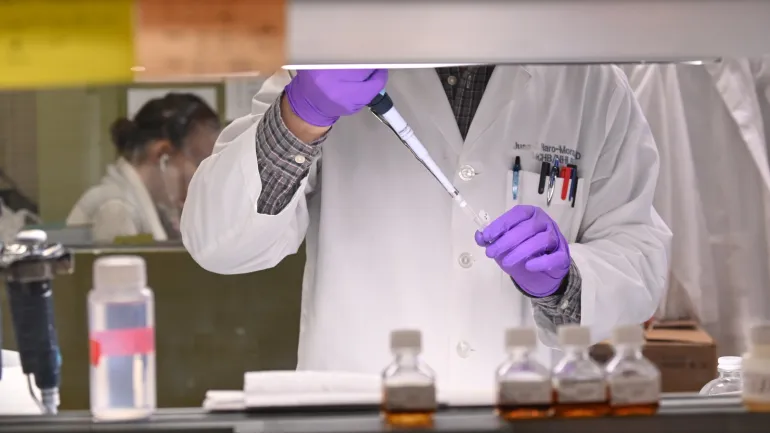
In turn, Ahmed Abdullah Tawfiq, director of a medical analysis laboratory in Egypt, advises adhering to the instructions of the doctor and laboratory before performing iron tests, and informing the laboratory of the supplements and medications that the patient uses, especially preparations containing iron.
He added to Al Jazeera Net that the tests may include a blood picture, hemoglobin, and ferritin, in addition to iron in the blood, the total iron binding capacity, and transferrin saturation when needed, and one should not rely on one result in isolation from the rest of the tests.
He explained that preparation varies according to the required tests. Ferritin alone is not significantly affected by recent diet, while blood iron measurements are affected by the timing of sample collection, food intake, and supplements.
When conducting iron tests, laboratories recommend that the withdrawal be in the morning, preferably after an 8-hour fast, while avoiding iron-containing supplements for 24 hours before the withdrawal in accordance with the instructions of the doctor and laboratory, and not stopping any treatment on your own.
Is food enough to compensate for iron deficiency?
Paying attention to food helps support iron stores, as iron exists in two forms: Heme iron, found in meat, poultry, and seafood, is the highest absorbable, and non-heme iron, found in legumes, vegetables, nuts, and fortified foods. Eating sources of vitamin C, such as citrus fruits, tomatoes, and peppers, with plant sources of iron helps improve its absorption.
Modifying the diet alone is usually not enough to treat proven iron deficiency, especially in women who suffer from continuous blood loss with menstruation or whose iron needs increase during pregnancy. The CMAJ review indicates that an iron-rich diet remains a helpful factor in addition to replacing iron and treating the underlying cause of deficiency.