

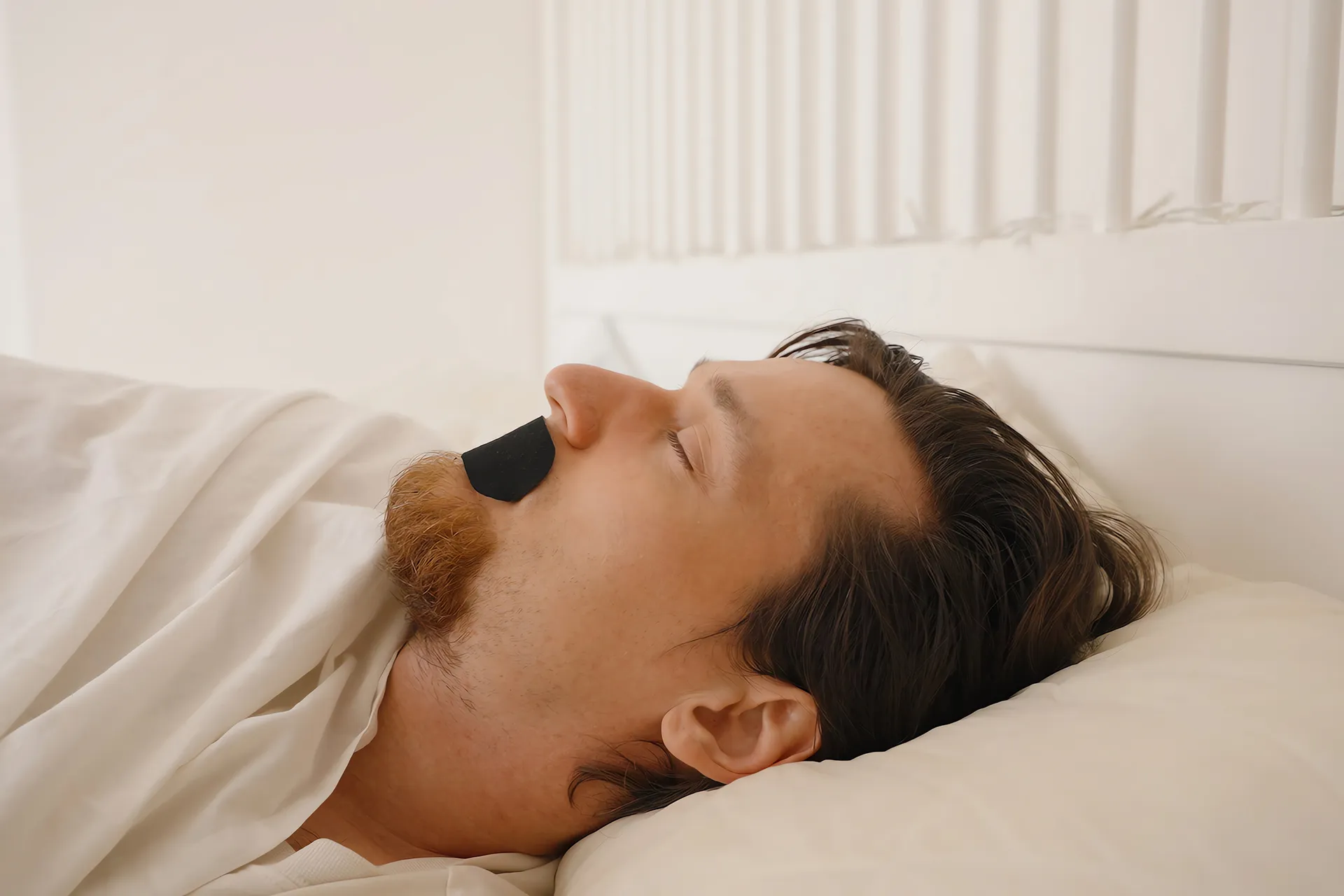
Mouth breathing during sleep occurs transiently in some people, especially with a cold or stuffy nose, but in others it may turn into a recurring pattern associated with nasal or airway problems or breathing disorders during sleep.
Dr. Ahmed Al-Hajj, an ear, nose and throat consultant, says that repeated mouth breathing at night should not be considered just a habit, especially if it is accompanied by dry mouth, snoring, disturbed sleep, or daytime sleepiness, as these signs may be a gateway to detecting the cause and treating it.
Al-Hajj added to Al Jazeera Net that the nose is the natural path for air, as it purifies, moisturizes and warms it before it reaches the lungs. When the passage of air through the nose becomes difficult, the body automatically resorts to the mouth to obtain its need for air, indicating that nasal allergies and chronic rhinitis are among the most common causes. Colds and sinusitis may also lead to congestion that makes breathing through the nose more difficult, whether temporarily or repeatedly.
Al-Hajj explains that some people suffer from anatomical causes that impede the passage of air, such as a deviated nasal septum or the presence of nasal polyps, while enlarged tonsils or adenoids are a well-known cause, especially in children. Obesity may also contribute to narrowing of the upper airway during sleep.
It is noteworthy that mouth breathing may accompany obstructive sleep apnea, which is a disorder in which there is repeated narrowing or blockage of the airway during the night.
A study published in 2025 in the journal “Clinical Cosmetics and Investigational Dentistry”, which included 343 children in Indonesia, draws attention to this sign, as breathing disorders during sleep were found in 41.1% of children who breathe through their mouths, compared to 9.7% of others.
The researchers confirmed that mouth breathing is a sign associated with these disorders, and not evidence that it is a direct cause of them.
How do you know that you are breathing through your mouth?
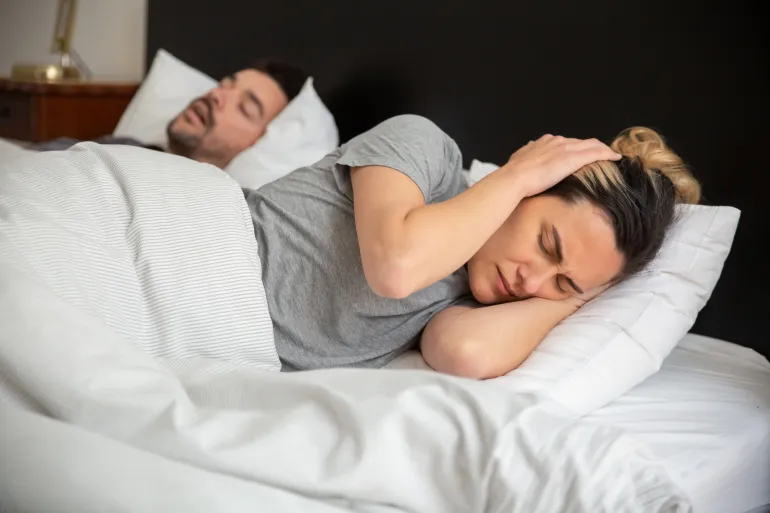
It is difficult for a person to know how he breathes during sleep, but Al-Hajj explains that a number of signs may attract attention, most notably waking up with dry mouth, lips, or throat pain, bad breath in the morning, snoring or audible breathing, frequent awakenings at night, and the feeling that sleep was not comfortable, in addition to morning headaches or drowsiness during the day.
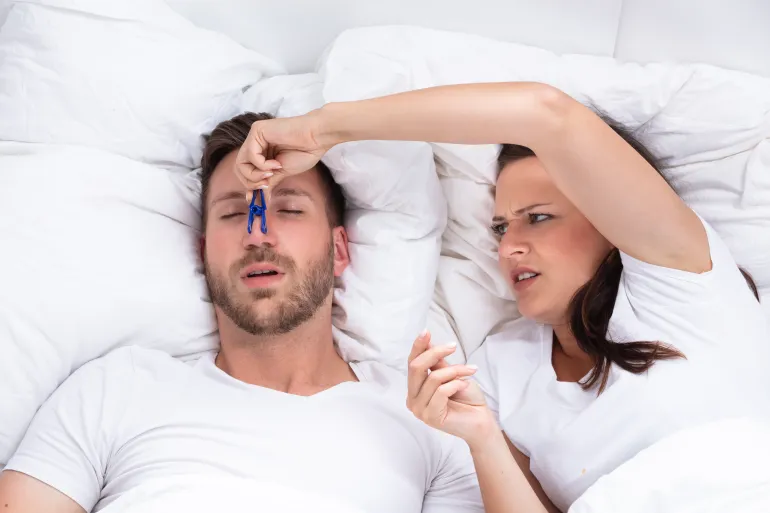
A family member may notice that the person sleeps with his mouth open, or that he snores frequently, and in cases accompanied by apnea, he may notice that breathing stops for a moment or he wakes up with a feeling of suffocation.
Dry mouth or headache alone do not mean that a person is breathing through his mouth, as dehydration may occur due to lack of fluid intake or some medications and other reasons. Headaches and fatigue may also result from various sleep disturbances.
A study published by the Journal of Clinical and Experimental Dentistry found that dry mouth upon waking appeared in 45% of adults with sleep apnea syndrome, compared to 20.4% in healthy people, which makes dryness a sign worth paying attention to when combined with snoring or other symptoms, but it is not sufficient alone for diagnosis.
The presence of saliva on the pillow may seem contradictory to waking up with a dry mouth, but the two conditions can occur together, as opening the mouth allows saliva to escape during sleep, especially when sleeping on the side or stomach, and at the same time the passage of air through the mouth increases the loss of moisture and the feeling of dryness upon waking.
The Cleveland Clinic states that drooling during sleep may be related to mouth breathing, with other causes such as allergies, sinus and tonsil infections, reflux, and some swallowing disorders.
The presence of saliva on the pillow or sleeping with an open mouth alone does not prove that a person breathes through his mouth, but they become more indicative when combined with dry mouth, snoring, or a stuffy nose.
Al-Hajj explains that children may have additional signs, such as frequent snoring, restless sleep, mouth breathing, and difficulty concentrating at school, and he advises paying attention to them, especially if they recur and are not related to a passing cold.
He adds that continued mouth breathing in children may be associated with changes in the growth of the face and jaws, and obstructive apnea may also be accompanied by effects on mental and cognitive development and quality of life.
What happens to the mouth and sleep?
Al-Hajj explains that saliva secretion naturally decreases during sleep, and breathing through the mouth increases the feeling of dryness. Because saliva helps protect teeth and gums and limit bacterial growth, dry mouth may be accompanied by bad odor and problems with the gums and teeth.
He points out that the evidence is still inconclusive regarding the existence of a direct relationship between mouth breathing and tooth decay, so it is not correct to consider tooth decay an inevitable consequence of it, as many factors interfere with dental health.
Al-Hajj points out that opening the mouth may change the position of the jaw and tongue during sleep, and may make the airway in some people more susceptible to constriction, leading to increased snoring and interrupted sleep, which may be reflected in the form of fatigue, drowsiness, or poor concentration during the next day.
Do you lose more fluids during the night?
A study published in the Biomedical Journal indicates that mouth breathing during sleep may be associated with increased fluid loss at night in some people with obstructive apnea, which provides a possible explanation for feeling extremely dehydrated upon waking.
The study compared 60 patients with obstructive sleep apnea to 15 healthy people, and monitored mouth opening and airflow during a sleep study. The researchers found that patients recorded greater water loss during the night, and estimated a decrease in plasma volume of about 5.5% compared to 3.7% in the healthy group. Increased mouth breathing was also associated with increased fluid loss.
These results do not mean that everyone who wakes up with a dry mouth suffers from a significant lack of fluids or apnea, but they do show that morning dehydration may be linked in some people to the way they breathe during sleep, and not just the amount of water they drank the day before.
Is oral plaster a solution?
Al-Hajj warns against taping the mouth during sleep before knowing the reason for breathing through it, with clips spreading on social media platforms promoting this practice as a way to force a person to breathe through the nose, explaining that the mouth may be the alternative path that the body resorts to due to a blockage in the nose, and therefore closing it without diagnosing the cause may be dangerous.
This warning is supported by a systematic review published by the journal PLOS ONE in May 2025, which reviewed 10 studies that included 213 people on taping or closing the mouth during sleep. Only two studies showed a significant improvement in some indicators of apnea, while other studies discussed the possibility of harm, including the risk of suffocation in the presence of nasal obstruction. The researchers concluded that the available evidence does not support the indiscriminate use of this practice.
When does it need treatment?
Al-Hajj is advised to see a doctor when mouth breathing continues most nights for several weeks, or when it is accompanied by loud snoring, a noticeable cessation of breathing or suffocation during sleep, severe daytime sleepiness, or recurring morning headaches.
It also calls for medical evaluation if nasal congestion, allergy symptoms, or sinusitis persists, or recurring dry mouth and gum and tooth problems, in addition to conditions that appear in children and are accompanied by snoring or disturbed sleep.
The doctor usually examines the nose, mouth and throat to look for a reason preventing normal breathing through the nose, and a sleep study may be required if signs of obstructive apnea appear.
Al-Hajj confirms that treatment depends on the cause. The patient may need to treat allergies or inflammation, or treat an anatomical obstruction or enlarged tonsils or adenoids, while cases of apnea require specialized treatments that may include a continuous positive airway pressure (CPAP) device. It may also be beneficial for those who need it to reduce excess weight and pay attention to oral and dental health.
Opening the mouth during sleep does not necessarily mean the presence of a disease, but its recurrence, along with dry mouth, snoring, interrupted sleep, or other symptoms, makes it a sign worth searching for its cause, instead of treating it as just a nighttime habit.