


About ten years ago, a family experience prompted Jordanian MP Dima Tahboub to make a decision to donate her organs after death, after one of her relatives needed a corneal transplant. This coincided with the death of a young man in an accident, so his family decided to donate his cornea, to reach their relative and make, as they described it, a major change in his life.
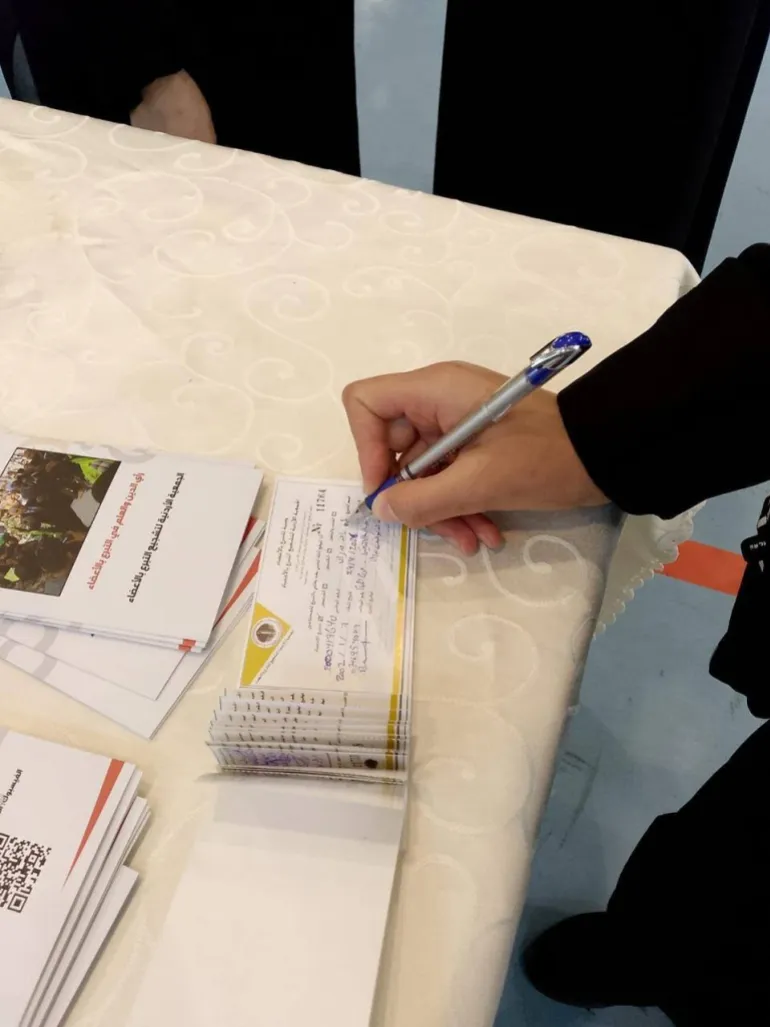
Tahboub told Al Jazeera Net that this experience left a deep impact on her, explaining that she then began reading the fatwas of scholars and jurisprudence councils in Jordan and abroad regarding organ donation, so she was reassured by the matter and wrote her will to donate in 2016, and registered her desire with the Jordanian Association for Promoting Organ Donation and the Eye Bank.
About a decade later, Tahboub returned to confirm the same decision, but this time digitally through the “Sanad” application, after providing the service for registering the desire to donate organs after death, considering that the presence of the legal fatwa within the application constitutes an important factor in reassuring those wishing to donate and encouraging them to do so.
The Jordanian Council of Ministers decided to add the organ donation service to the “Sanad” application, with the aim of encouraging the expansion of donation and facilitating it, as citizens can access the service, view information related to it, and then confirm their desire electronically.
A national project within weeks
The Jordanian Minister of Health, Ibrahim Al-Badour, reveals to Al-Jazeera Net that the inclusion of the donation service through “Sanad” represents the first step within an integrated national project for organ transplantation, which is being worked on by a national committee that includes representatives of various medical sectors, and advanced stages have been completed in preparing a unified protocol to organize donation and transplantation operations and link the concerned parties.
Al-Badour explains that the ministry already had a platform for organ donation, but its use was not as widespread as desired, which prompted the transfer of the service to “Sanad,” as it is the electronic portal with the broadest reach to citizens.
According to the minister, the committee is working to put the final touches on a national protocol that regulates mechanisms for dealing with donors and patients in need of transplantation, and enhances coordination between the various health sectors, in preparation for launching the project in the coming weeks.
The plan includes linking government and private hospitals electronically with donation data, so that when a case of brain death is registered, it is possible to know whether the person has registered his desire to donate, and inform his family of this, in conjunction with reaching patients in need of the organ.
He points out that about 4,900 people are undergoing dialysis in Jordan, and that expanding kidney transplantation could reduce the number of people in need of dialysis and reduce the medical and economic burdens. He stressed that the project is not limited to registering desires, but rather includes awareness, electronic connectivity, and the provision of qualified cadres, in addition to training specialized cadres and sending them abroad to gain experience in kidney, liver, and lung transplantation.
More than 30 thousand registered
It seems that the new service is attracting early interest. According to an official source in the Ministry of Digital Economy and Entrepreneurship who spoke to Al Jazeera Net, the number of those who registered their desire to donate through “Sanad” has exceeded 30,000 people since the launch of the service, with demand continuing to rise.
The citizen can register his desire after reviewing the information and the legal fatwa related to the donation, then confirm his decision, so that the desire appears in the family book associated with it, allowing family members to know it in advance. The registrant can also withdraw or change his decision through the services of the Ministry of Health.
A gap between need and donation
In contrast to this demand, the numbers reveal the size of the gap that the new system seeks to address.
Dr. Muhammad Hassan Al-Thneibat, a consultant in diseases, organ transplantation and blood pressure at the Hashemite University, told Al Jazeera Net that an unpublished feasibility study prepared by doctors at the Jordanian Physicians Association of America (JAPA) estimates the number of patients in need of solid organ transplants in Jordan at approximately 3,376 patients, including 2,728 who need kidney transplants, 528 liver, 90 heart, and 30 lung transplants.
The Secretary of the Jordanian Society for Promoting Organ Donation, Dr. Rania Jabr, presents other numbers that reflect the expanding need. She tells Al Jazeera Net that more than a thousand people need a corneal transplant, while the number of people undergoing dialysis is estimated at about 6 thousand people or more. She believes that about half of them could improve their conditions significantly if they were given the opportunity to have a kidney transplant, in addition to hundreds of patients in need of a liver transplant.
Jordan started early…so where is the problem?
The irony is that Jordan has a long history of organ transplantation. Al-Thunaibat says that the first kidney transplant in the Kingdom was performed in 1972, the first heart transplant in 1985, and the first liver transplant in 2004, and the legal framework for organ donation and transplantation dates back to 1977.
The number of kidney transplants from living donors in some years reaches about 300 cases, a number that Al-Thanibat considers an indication of the existence of medical expertise and competencies capable of performing transplants.
But the challenge is clearly evident in post-mortem solid organ donation, as he says the rate of deceased donors is still less than one donor per 10 million.
Al-Thanibat refuses to reduce the problem to a weak donation culture, citing that the Jordanian Eye Bank receives on average about 210 corneas annually from local donors, which is equivalent to approximately 100 deceased donors annually if two corneas are counted for each donor.
Religion, law, and fair distribution of organs
Dr. Rania Jabr says that the most prominent questions facing those wishing to donate relate to the religious and legal aspects and the fairness of organ distribution, noting that the legal fatwa is available within “Sanad” and that Jordanian law permits donation.
She explains that Jordanian legislation in this field is not new, as the law on the use of the eyes of the dead was issued in 1956, then the law on the use of human body organs in 1977, and subsequent amendments were made to it until the year 2000, with there being a trend to make amendments that regulate and encourage the donation process and ensure its legal and legislative discipline.
As for the fair distribution of organs, Jabr explains that obtaining an organ does not happen simply by registering the patient’s name, but rather is governed by medical and legal procedures that take into account the compatibility of tissues, condition, age, suffering, and chances of successful transplantation, in a way that determines the priority of the beneficiary.
80 million dinars
In addition to the humanitarian cost, the issue carries an economic dimension. According to Al-Thanibat, the JAPA study estimated the cost of treating dialysis patients over ten years at about 1.26 billion dinars, compared to 1.18 billion dinars in the kidney transplant scenario. That is, a difference of approximately 80 million dinars in favor of agriculture.
Behind these calculations is the difficult daily life of thousands of patients. Jabr explains that a kidney failure patient needs a dialysis session that takes about 4 hours, 3 days a week, in addition to the time it takes to get to and return from the dialysis session, which is reflected in work, study, and daily life.