


Rabat – Every Friday, the Moroccan intends to Najat with the architecture of the Cancer Cancer Hall in the November 16 clinic in Rabat, wearing a white overpowering and paying a table full of cosmetics products and creams. She stands with her calm smile next to a cancer patient who receives a chemotherapy share, to give her a face care session and massage hands, but in the depth she gives her much more valuable: hope.
It moves from one bed to another, and the patients offer free and modern cosmetic shares, while the medicine moves to their bodies a drop after another.
Since 2021, Najat has chosen to return to the place where she fought with cancer, not like treatment of this time, but as a path for women who are facing the same fear. She moves from one bed to another. Patients offer free cosmetic shares and shares with patients with her experience, and open with them a honest newly, in which he weighs with their burden and anxiety, while the medicine moves to their bodies a drop of drop.
Najat’s story with the disease began in 2013, she was in the fifth month of her pregnancy and she was preparing like all women in her condition to receive a new baby before he was surprised by her bleeding, which made her knock on the doors of doctors in search of an explanation until the diagnosis came shocking: cervical cancer.
She found herself in front of a harsh decision: eradication of the uterus with the fetus. Najat says, “I was hoping to postpone the process until the birth of my child, but the doctor said to me clearly, that the disease is spreading quickly and it is not possible to wait.”
Thus, her life turned upside down, she performed the operation, then entered a long path of chemotherapy and radiotherapy, describing the experiment as “physically, psychologically and financially”.
The disease revealed to her the truth of the surrounding faces, as she says.
Between physical and psychological
The treatment sessions were not easy. “It was not difficult in treatment as physical pain, but he surpassed psychological pain, in certain moments I had a harsh sense of weakness and frustration and I wonder whether I will return to my previous era? Will I go beyond this period?” But during her confrontation, she discovered the weaknesses of her strength.
Today, after she finished her treatment classes for years, she did not forget to save the lessons that cancer left in her life, she chose to be a support for others, and her message to them is that this cancer, although it appears to be fatigue, can be tamed with patience, faith and human support.
“Cancer stole a lot from me, but it gave me a new look at life, I no longer get full and not waste my time with those who do not deserve, I learned to live honestly, and with those who give me sincere love,” she says.
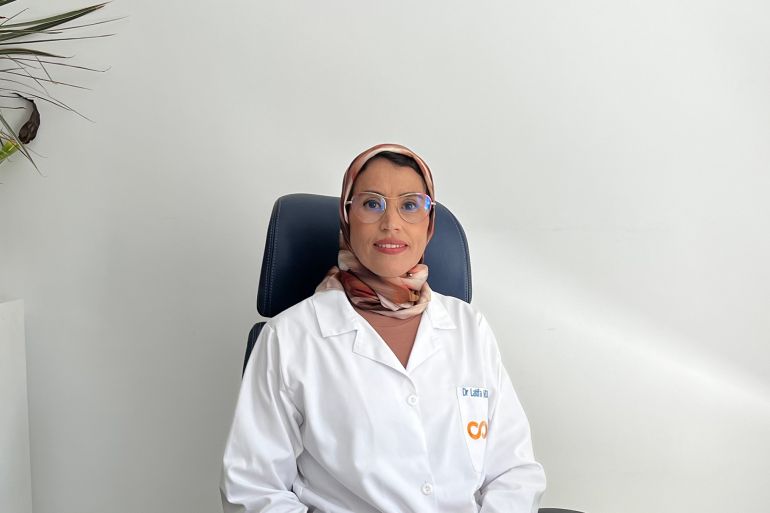
Dr. Latifa Mesbah, a specialist in the treatment of x -rays, one of the medical team who supervised the Najat treatment plan. For her, dealing with a cancer patient is not limited to diagnosing his medical condition only, but begins first from trying to understand his psychological condition.
You see that when the patient discovers his injury usually passes through different stages, begins with denial and lack of ratification, then the stage of anger and rejection, in which he asks, “Why am I?”, And he may express this by rejecting treatment or excessive fear or collapse and isolation from his surroundings, while few come to treatment and I absorbed the disease and accepted it from the beginning.
She pointed out that the mission of the medical team is to help the patient reach the stage of accepting the disease, because the treatment cannot be effectively launched if the patient remains stuck in the case of depression.
She added that this psychological aspect is not easy, especially since the patient is in a state of severe anxiety and wants to accelerate the treatment, while it is necessary to conduct accurate tests to determine the type of cancer and its stage and develop the appropriate plan.
Dr. Latifa advises many of her patients to resort to a psychiatrist, but this faces real obstacles, including cultural obstacles, as many patients do not recognize their mental illness despite their suffering from insomnia, loss of appetite, isolation and other symptoms.
Exaggeion of concerns and anxiety
To overcome these obstacles, the clinic in which Dr. Latifa is working to organize parallel workshops and activities that help patients to accept their condition and overcome their fears and anxiety, such as workshops in drawing, choir, yoga, walking, jewelry, triko, etc., in addition to opening the way for those recovering from the disease to communicate with the patients and provide what they can support within the so -called “therapy with” therapy “, the patient, as Dr. Latifa says, does not need only To drug and physical treatment, but rather to care and attention that accompanies his therapeutic path.
Najat Badamara was in her illness benefiting from the drawing workshop, remembering those days and saying that during which she built positive relations with the rest of the patients, as they were in the drawing share, forgetting the disease and immersed in the world of feather and colors.
“Initially, all the paintings I drew depended on dark colors such as black, brown and blue. After that, I understood that Miley of these colors was caused by my psychological state, but then I went to choose cheerful colors in the drawing,” she says.
The beneficiaries of the drawing workshop display their paintings in exhibitions organized inside the clinic, and their proceeds go to finance the workshops and parallel activities.
Dr. Latifa and a group of doctors founded the “Moroccan Association for Cancer Cancer”, which works to ensure the right of patients to supportive treatments, including psychological support, proper nutritional follow -up and the provision of painful drugs. “We believe that the disease is the amount of the patient, but it should not suffer, but rather to provide him with appropriate treatment that provides the quality of life as a right of his rights,” she said.
Morocco records about 50 thousand new cases annually of cancer, and the breast cancer is the most common among women by 36%, after which cervical cancer comes by 11%. In men, lung cancer is 22%most common, then prostate cancer by 12.6%.