

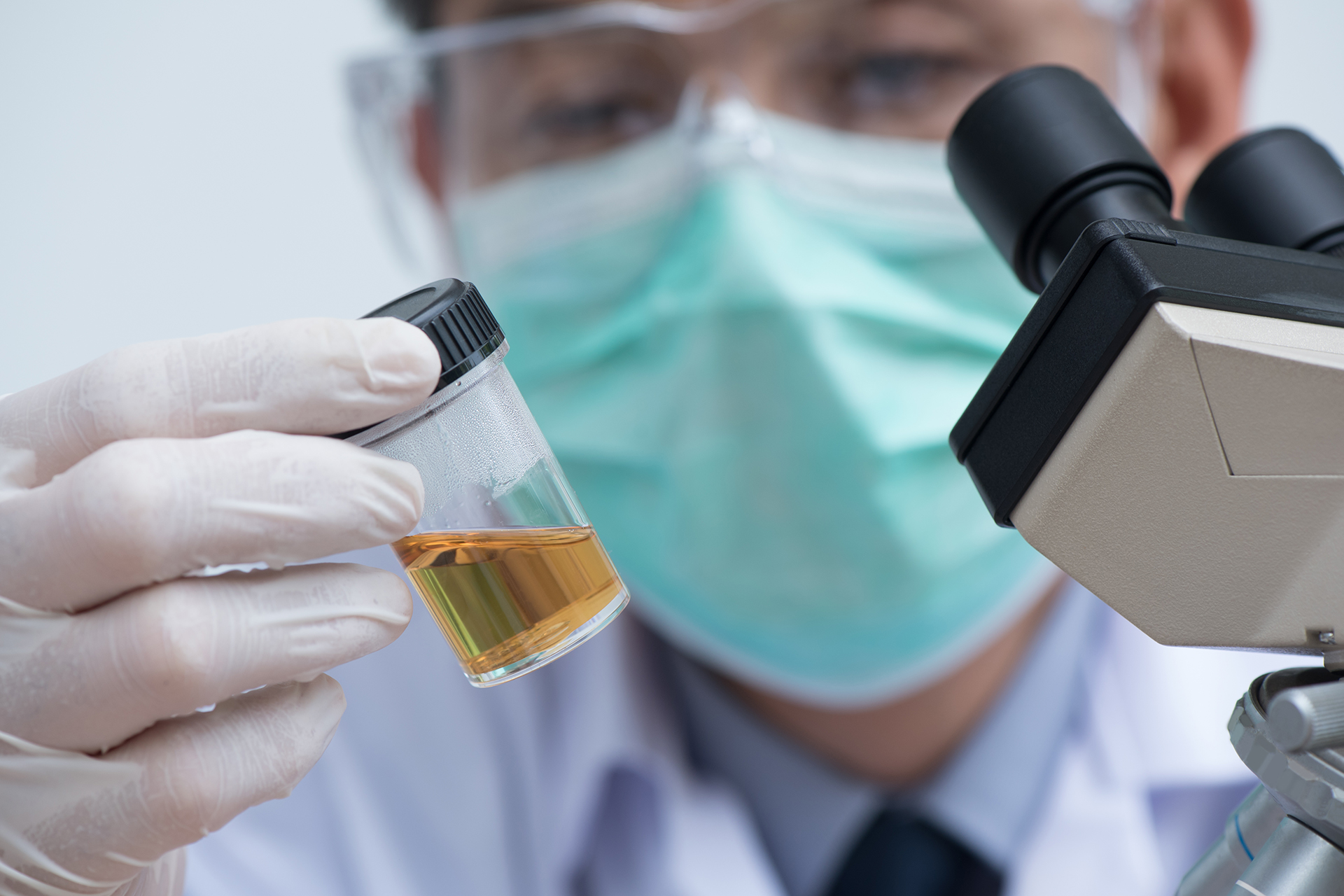
Researchers have created a new way to detect prostate cancer using urine samples, and this approach is expected to significantly reduce the need for biopsies, which are often painful.
The Johns Hopkins Kimmel Cancer Center participated in innovation, Johns Hopkins Children’s Hospital in the United States and other institutions, and their results were published in EBIOMICINE on September 3, and wrote about Yurrick Alert.
Prostat cancer is one of the main causes of death among men in the United States, and it is usually discovered through blood tests to measure the level of Prostate-Specific Antigen, a protein produced by cancerous and non-cancerous tissue in the prostate.
The level of qualitative prostate antigen in most men is more than 4.0 ng per milliliter is an abnormal milliliter, and it may recommend a biopsy of the prostate, as multiple samples of tissues are taken using precision needles.
The qualitative prostate antigen test is very inaccurate, which means that the prostate bioppers are often necessary to confirm the diagnosis of cancer, says Dr. Ranjan Pereira, the main researcher in the study and director of the RNA RNA at Jones Hopkins Hospital in St. Petersburg, Florida, and a professor of oncology and neurosurgery at the Faculty of Medicine at Johns Hopkins University.
Pereira adds that in many cases, the results of these biops are negative, and may cause unintended complications.
Specific prostate antigen tests can also lead to an unnecessary treatment for prostate cancers that are unlikely to grow and spread within a short period of time.
The new examination
Of the 815 gina, the prostate was identified in the urine of men with prostate cancer, the researchers gave priority to the most important 50 gina, then the 9 most important genes, and from there they chose the 3 most important genes for more analysis.
The researchers identified a group of 3 genetic vital indicators, “TTC3), H4C 5 (H4C5) and” EPCAM “, which carefully reveals the presence of prostate cancer by analyzing urine samples of prostate cancer patients before and after prostatectomy, as well as healthy individuals.
TTC3 plays a role in the asymmetric cell division in cancer cells, H4C 5 plays a role in adjusting the structure of chromatin (a group of DNA and proteins in the cells), and expresses the protein EBCAM (the epithelial cells molecule) excessively in many human cancers that arise in the epithelial tissues that lredure the surface of the organs And structures throughout the body.
These vital indicators were present in patients before surgery, but they were almost absent after surgery, which confirms that they originated in the prostate tissues.
“This new group of vital indicators provides a promising, sensitive, specific and non -surgical diagnostic test for prostate cancer. It has the ability to accurately detect prostate cancer, reduce unnecessary biopsies, and improve the accuracy of diagnosis in patients whose specific prostate antigen levels are negative, and constitute a basis for both diagnostic tests developed in laboratory and laboratory.”
The researchers found that this group of genes are able to detect prostate cancer even when the level of specific prostate antigen is within the normal rate, and it can distinguish between prostate cancer and conditions such as prostate inflammation and benign prostate enlargement.