

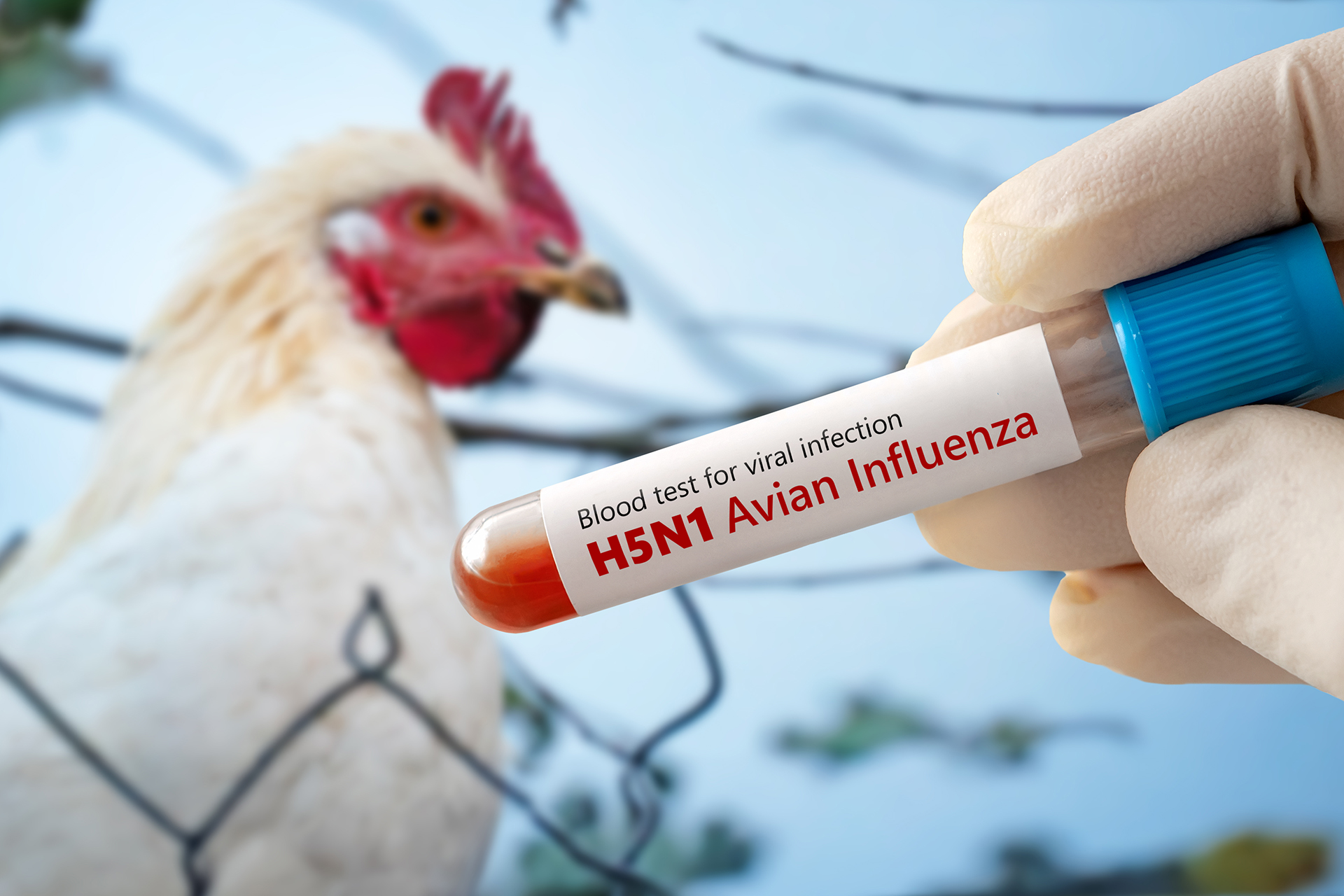
The German Friedrich-Loeffler Institute (FLI), which specializes in animal health research, announced that bird flu is currently spreading widely among wild birds and poultry in Germany.
The nationwide institute for animal health research, which is based in the city of Greifswald in northeastern Germany, explained that the number of outbreaks of the disease on poultry farms rose sharply during this October.
In its latest risk assessment, the institute raised the risk level in poultry farms from “low” to “high,” and in wild birds from “medium” to “high.”
The institute considered that what is striking is that several states in eastern Germany reported a few days ago an increase in the death rate of cranes, as last week more than 100 dead cranes were found in Lake Kalbra, located on the border between the states of Saxony-Anhalt and Thuringia. Dozens of dead cranes were also recovered over the weekend at Lake Müritz in the state of Mecklenburg-Vorpommern, the Mecklenburg Lake District reported.
The Friedrich-Loeffler Institute has now confirmed suspected infections with the highly pathogenic avian influenza virus (H5N1) subtype HPAI – known as the avian influenza virus – in samples of cranes sent from the states of Mecklenburg-Vorpommern, Brandenburg, Saxony-Anhalt and Thuringia.
Institute spokeswoman Elke Reinking said that the large number of infected poultry farms is linked to the current density of wild birds and their seasonal movement. This month alone, more than 15 infected poultry farms were recorded, while the number did not exceed…
Last September, there were only four cases, according to data from the institute, which stated that it is still not known what is behind the significant increase in cases this season. The institute explained that it is currently conducting a genetic analysis of the virus.
The institute stated that it should be expected that there will be a further spread of HIV infection during the coming period, and perhaps on a large scale, noting that the affected birds will not only be cranes, “as other types of wild water birds, such as ducks and geese, may show milder symptoms of infection with the HIV virus, perhaps because they have already been able to develop partial immunity to the virus.”
Avian influenza, also known as poultry plague, is a highly contagious and often rapidly fatal disease in many species of birds and poultry. According to experts, the disease does not pose a danger to humans.