

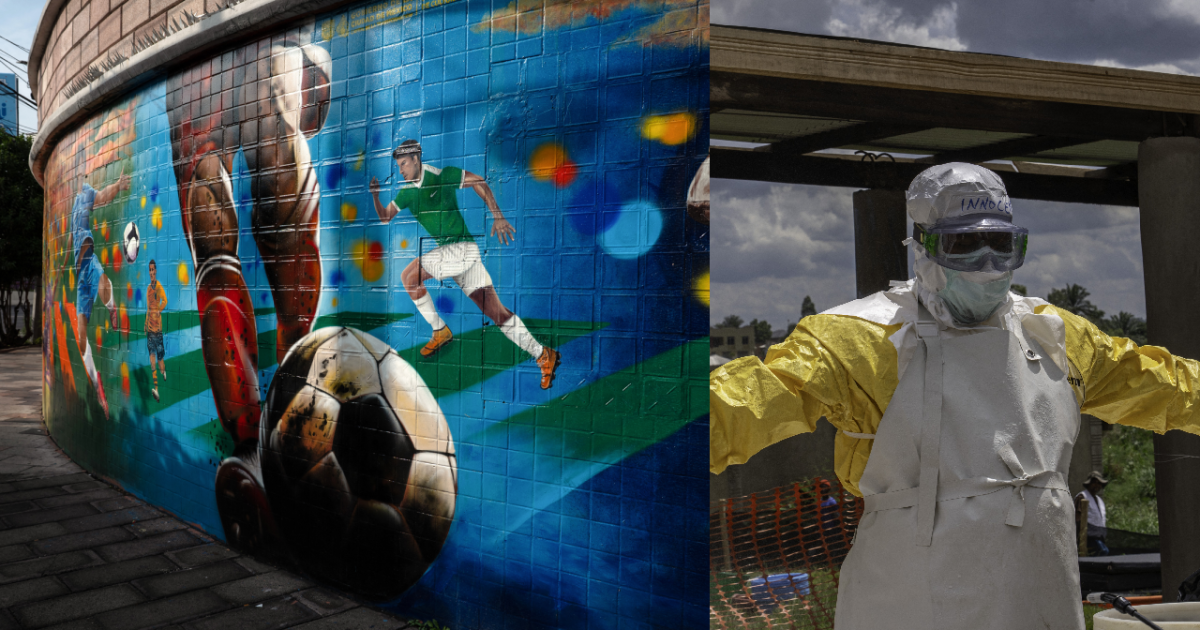
When the United States, Canada, and Mexico submitted the bid to host the 2026 World Cup, the region was described as a safe environment with no “major endemic infectious diseases” in any of the host countries.
This was before the Covid-19 pandemic, before public health became a fixed part of the calculations of major sports, and before the World Cup, scheduled to start in 4 days, approached a question that could no longer be ignored: How is an intercontinental and inter-city tournament managed in a time when epidemics do not require more than a crowded plane flight to turn into a crisis?
The question has returned to the forefront with the outbreak of Ebola in the Democratic Republic of the Congo, a country whose national team is scheduled to play matches in Houston and Atlanta in the Americas and Guadalajara in Mexico.
Ebola is a dangerous viral disease that is transmitted mainly through contact with the bodily fluids of infected people or materials contaminated with them, and it does not spread easily through the air like Covid or influenza. Therefore, health experts do not deal with the World Cup as an inevitable threat to the widespread spread of the virus, nor with stadiums as confirmed hotspots of infection.
But concern does not stop at the nature of the virus alone. The World Cup not only brings together players and fans, but also opens up a huge network of movement: international flights, airports, hotels, fan zones, crowded means of transportation, restaurants and food vendors, hospitals and laboratories, and cities required to monitor the danger without stifling the event.
Here Ebola becomes an early warning siren, not because it will necessarily stop the tournament, but because it reveals the extent of the test that awaits public health systems a few years after the Covid pandemic.
World Cup with a fragmented health system
Politico newspaper says that the Ebola outbreak has pushed infectious diseases to the forefront of hosting accounts, at a time when the United States, Canada and Mexico are preparing to receive one of the largest international gatherings. In the United States in particular, the task seems more complicated. The health system is broad and complex, and its responsibility is shared by federal, state and local authorities, while 11 American cities are hosting the championship matches.
The Centers for Disease Control and Prevention played a pivotal role in preparations, from collecting outbreak data and issuing guidelines for testing and reporting symptoms, to holding weekly communications with public health offices in host cities, and sending staff to support some states on the ground.
But this effort is taking place in a very different environment than the Covid years: the tools are more sophisticated, but the money is less, the burnout is greater, and public confidence is more fragile.
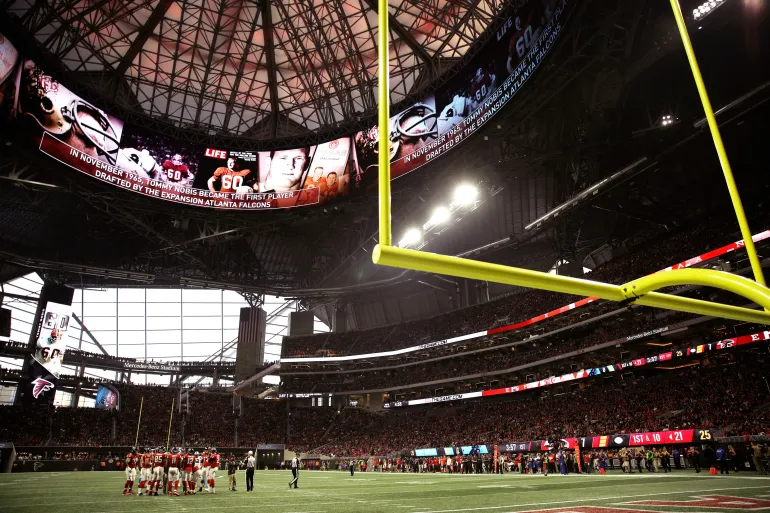
In Atlanta, the scene takes on special significance. The headquarters of the Centers for Disease Control is not far from the Mercedes-Benz Stadium, where the Congolese national team is scheduled to play one of its matches in the group stage.
After the games, Georgia health authorities will monitor any unusual patterns of symptoms among those arriving at emergency rooms. This does not mean waiting for a specific case, but rather looking early for signs that may reveal a change in the health landscape before it becomes magnified.
This method is known as “syndromic surveillance,” that is, monitoring symptoms and general patterns before confirmed diagnoses emerge. Local data will feed into a World Cup monitoring panel at the Centers for Disease Control, giving authorities a broader ability to track developments inside and outside their states.
Covid tools
In Los Angeles, which is hosting 8 matches at Sophie’s Stadium, preparations go to a tool that has become part of the Covid legacy: wastewater monitoring. Samples will be collected before, during and after the matches, then genetically analyzed for dozens of pathogens, including Covid and measles.
A few years ago, this capability was not so widely available. Pandemic funds built laboratories, expanded genetic sequencing capabilities, and made wastewater monitoring a practical tool rather than just a limited experiment. But the irony that Politico highlights is that cities are today required to operate these tools in a huge global event, after the extraordinary funding that created them has declined.
For example, Massachusetts alone received $46 million from a federal fund related to the World Cup, but the Department of Public Health only received about $310,000.
In Los Angeles, the authorities expect to spend millions of dollars on preparations and additional working hours for about 240 employees, but they learned that they will recover only less than a million dollars, less than a quarter of what they expect to spend. This comes while the Health Department closed 6 clinics In the province Due to cuts in federal funding.
Disaster training before it happens
In New York, preparedness is not limited to monitoring and data collection. There, hospitals are being trained for the worst-case scenario: the heart of an Ebola patient has stopped, and the medical team must save his life without exposing doctors and nurses to infection.
Politico describes a simulation that took place inside a special pathogen unit at Bellevue Hospital, where doctors and nurses wore layers of protective equipment and trained on resuscitation, isolation and communication inside suits that made movement slower and speech more difficult.
In diseases like Ebola, it is not enough for a doctor to safely enter an isolation room; Coming out of it may be more sensitive. Removing protective equipment requires careful and slow steps, and any small mistake may transfer contamination from the suit to the body.
These exercises are not the result of the World Cup alone, as Politico quotes the Medical Director of the Special Pathogens Unit, Erin McGuire, but rather part of the permanent preparation for serious diseases. But heroism gives it a new urgency. In Covid, health systems did not have enough time to train before the pandemic. Now, time is available, and the question is: Is it being invested properly?
The training extends to more than Ebola. Bellevue — a regional center serving New York, New Jersey, Puerto Rico and the U.S. Virgin Islands — has trained for scenarios of power outages, extreme heat, measles, swine flu, and other respiratory illnesses.
The training extended to various scenarios, including a hypothetical anthrax attack and a possible outbreak of Middle East respiratory syndrome during the tournament.
Daily danger
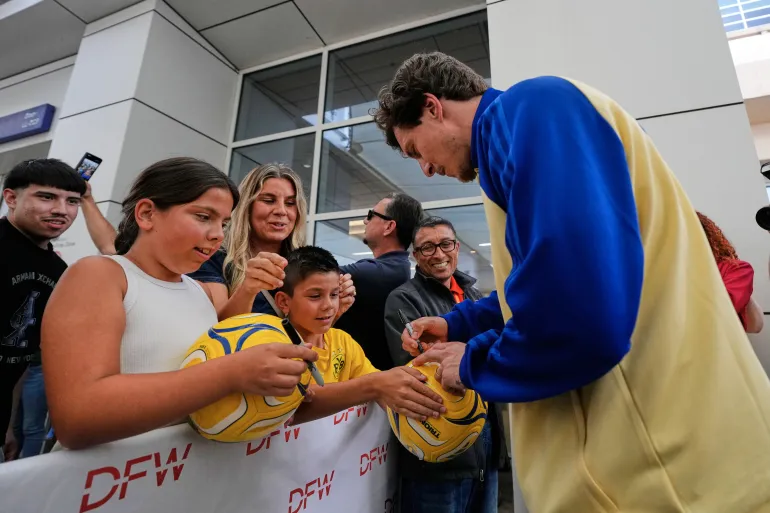
Although Ebola steals the title, health officials do not look at the World Cup from the perspective of a single disease. The tournament also means millions of meals, vendors spread around the stadiums, summer heat in cities like Miami and Los Angeles, public transit congestion, alcohol consumption, emergency injuries, and familiar illnesses such as measles, influenza and Covid.
The Politico report quotes New York Health Commissioner Alastair Martin as saying that what most concerns public health officials is not always the “global outbreak” that attracts headlines, but rather the everyday questions that create or threaten safety: Is food safe? Are crowds managed in a way that minimizes risk? Can emergency departments handle the pressure?
In Los Angeles, about half of the health workers assigned to the World Cup will be dedicated to monitoring food safety among vendors expected to be spread around Sophie Stadium and fan gathering areas. In Florida, preparedness expands to include extreme heat, emergency pressure, barricades, mobile lighting, trucks, and other details that seem administrative but may determine a city’s ability to absorb an event.
Under pressure
At the border level, the American newspaper The Hill says that the outbreak of Ebola in Africa has raised new concerns among public health officials in the United States before the expected increase in travel during the World Cup, despite American officials confirming that the possibility of a widespread outbreak of the disease within the United States is still weak.
The United States, Canada and Mexico acknowledged the outbreak and announced coordinated health measures for travelers arriving from higher-risk areas. According to the statement reported by The Hill, these measures aim to protect citizens and millions of visitors, fans, athletes and tourists, while maintaining cross-border travel and trade.
But politics is not out of the question. The administration of President Donald Trump has tightened restrictions on travelers and continues to take steps to keep Americans infected or exposed to Ebola out of the country. On the other hand, experts doubt that border inspection alone is sufficient, especially with long flights that pass through more than one airport.
The Hill adds that Congo has asked the International Federation of Association Football (FIFA) to refund tickets for fans who may not be able to enter the United States due to restrictions related to Ebola, while the Congolese national team and its crew left the country early to adhere to quarantine requirements before the competition.
However, experts are trying to allay fears. Ebola and Hantavirus, two of the diseases that have raised concerns in recent weeks, are less spreadable than Covid. Dr. Krutika Kuppalli believes that infectious risks during the World Cup will likely be more familiar than the frightening headlines suggest, and that the biggest threats may come from diseases that the health system is aware of and has tools to prevent, according to what was reported by The Hill.
First line of defense
If the World Cup fears the arrival of danger, the fight against it begins from another place: from eastern Congo. In a New York Times report, the Ebola outbreak there appears amid a broader vacuum in leadership of the international response. The United States, which played a prominent role in previous epidemics, appears less present this time, while all eyes turn to China: Will it fill the void?
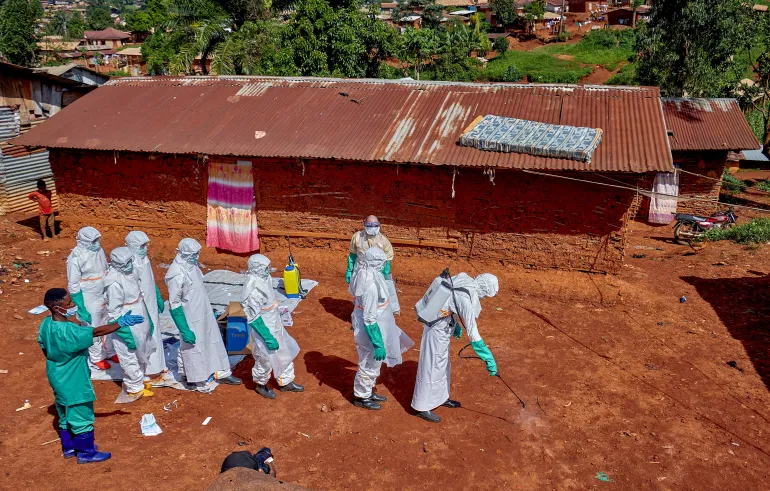
In the town of Mongowalo, the epicenter of the outbreak, treatment centers need equipment, medicines and basic supplies. The lack of testing makes slowing the spread of the virus more difficult, especially since the current strain, Bundibugyo, does not have an approved vaccine or treatment.
China has what it takes to help: a broad industrial base, experience in protective equipment, a large economic presence in Africa, and biotechnology companies capable of developing medical tests and innovations. But so far she has moved cautiously; It sent a small team of five experts to Kinshasa, more than a thousand miles from the epicenter of the outbreak, and did not announce a response to an African appeal requesting $319 million to confront the crisis.
The New York Times recalls that during the Ebola outbreak in West Africa between 2014 and 2016, China sent more than $100 million in supplies and hundreds of health workers to the region. But the world has changed since then: Covid has dampened global enthusiasm for health cooperation, the United States has retreated from its traditional role in leading international responses, and China is moving with more cautious calculations.
Memory of stadiums after Covid
The Covid experience continues to cast a shadow on the way major sports leagues deal with it. Major matches during the pandemic were linked to an acceleration of infection, from the match between Atalanta and Valencia in Milan in 2020, to the match between Liverpool and Atletico Madrid in Anfield, and then the Euro 2020 gatherings, to which tracking data in Britain linked thousands of infections.
Note that subsequent tournaments, such as Euro 2024 in Germany, showed that major events can pass without major outbreaks when there are adequate oversight, coordination, and preparations.
Therefore, the 2026 World Cup does not face one question: Will Ebola reach the stadiums? Rather, it faces a broader question: Can public health systems, after Covid, funding cuts, and declining confidence, manage a global gathering of this size without leaving a loophole that turns into a crisis?
The siren preceded the starting whistle, and the message is not that the tournament is definitely under threat, but rather that its success will not be measured by what happens inside the stadium alone, but also by what does not happen outside it: an outbreak that does not occur, a city that does not exhaust its emergencies, and a disease that does not find in the crowds a new bridge to the world.