

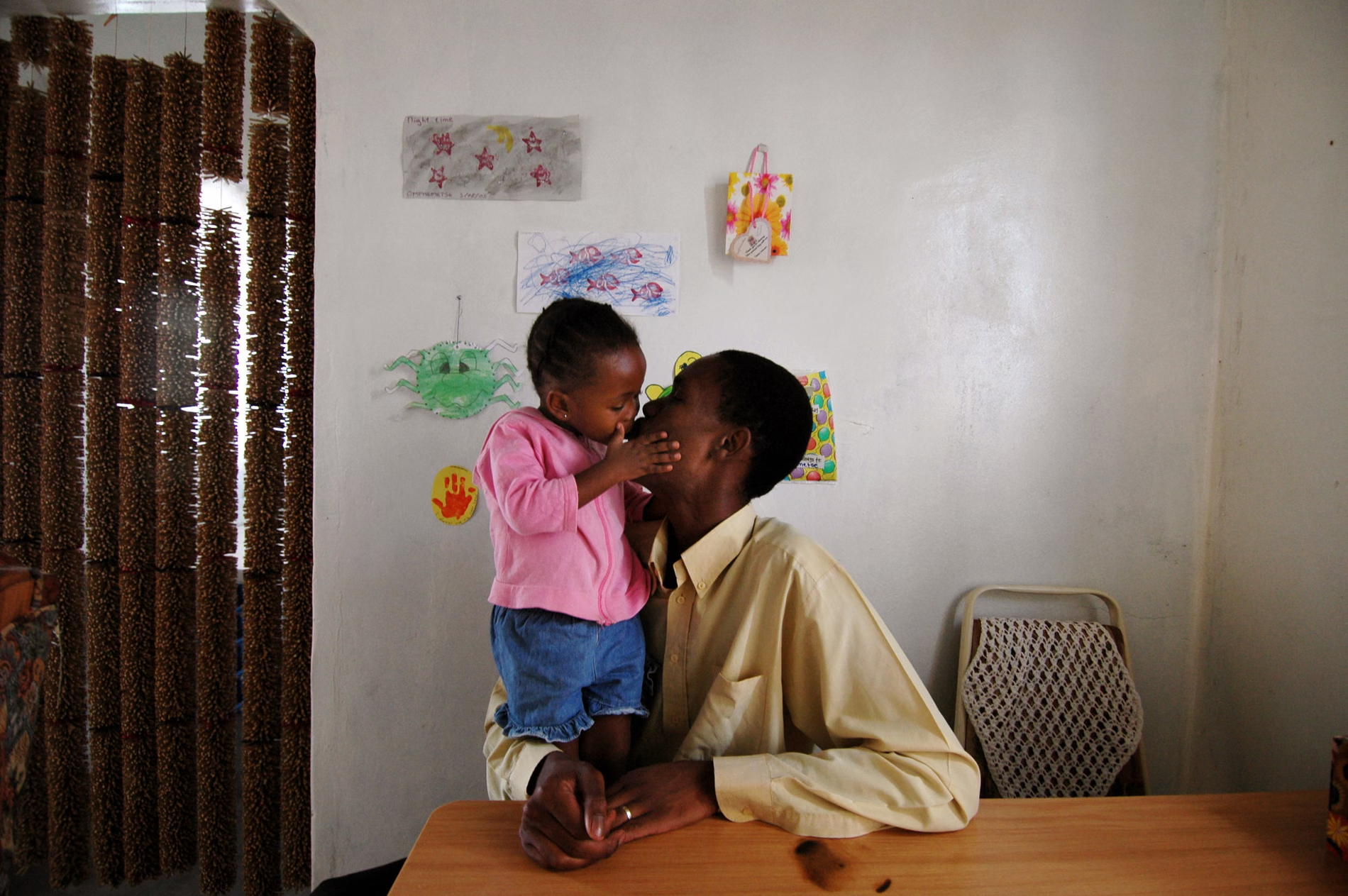
Betswana has succeeded in reducing the transmission rates of AIDS from mother to child to record levels, as this year’s infection between newborns was less than 1%.
Earlier this year, the World Health Organization has included a country in the Golden Classification of its success in ending the vertical transition of HIV as a threat to public health.
20 years ago, HIV was dangerous in that country, to the extent that politicians and doctors see it as an existential threat to the country with a population of only 1.7 million.
According to the United Nations anti -AIDS program, it was recorded the injury of one in every 8 at birth, while the transmission rates of the mother to the mother to the child during pregnancy, birth, or breastfeeding ranged between 20 and 40%.
The journey of transformation
In 2001, Betswana was classifying the second largest place for the spread of HIV at the global level, which made the then President Vestos Moghai call a call and says the population is threatened with extinction.
But from the heart of the crisis, one of the most successful preventive and therapeutic programs was born, as the country began on the journey of transformation, and after two decades, children’s infants injuries annually did not exceed 100 cases.
This success has been achieved through a strong political will, investment in the scientific structure, and comprehensive health awareness programs in which all actors in the country, led by the country’s president and national health organizations participated.
In the context of the efforts made to protect pregnant women and newborn children, the authorities established medical laboratories capable of conducting thousands of tests, and persuaded the mothers with milk manufactured for children, and provided them with free treatment.
Promising clinical experiences
Thanks to these efforts, a special generation of children and adolescents with the virus appeared, but they live at almost non -existent levels of the disease as a result of receiving treatment since birth, and these are ideal candidates for treatment experiences that seek a complete recovery.
At the recently held International AIDS conference in Rwanda, the researchers discussed a historical clinical trial in Betswana that will include 30 children receiving counter -bodies, a new category of AIDS drugs capable of attacking various breeds of the virus and stimulating the immune system.
Scientists hope that these children can live without the need for any medicinal treatment after 11 months of the experience of receiving antibodies, which means practically healing them.