

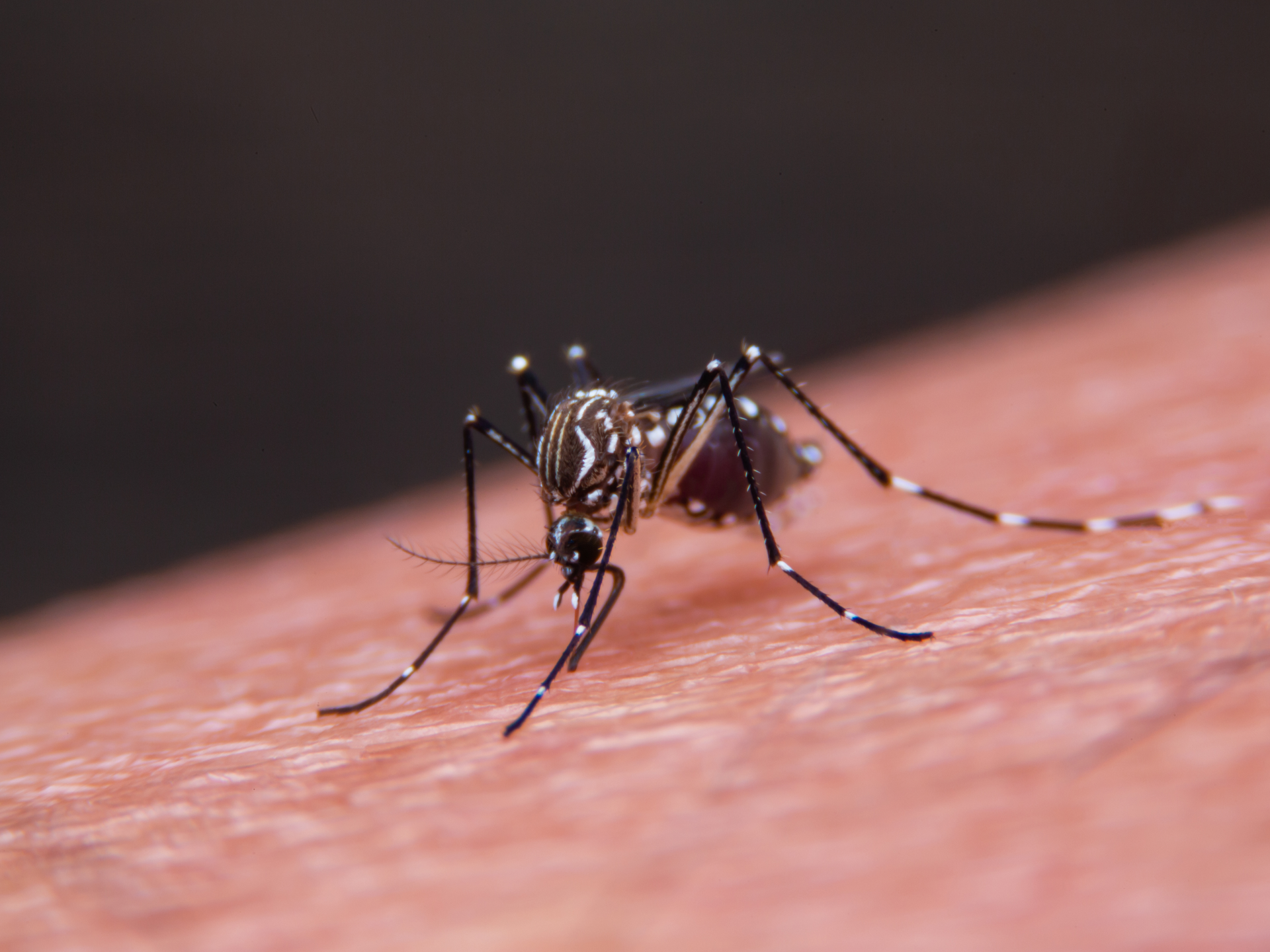
Most of the world’s population suffers during the summer from annoying mosquito bites, which have witnessed a wider spread globally as a result of global warming. Mosquitoes prefer warm and humid environments, and reproduce extensively in stagnant water, before spreading in large numbers in search of prey.
When biting, the female mosquito lands on the skin and begins feeding on blood, as her salivary glands secrete substances that help expand the blood vessels under the surface of the skin to facilitate blood flow. Their saliva also contains anticoagulant and antiplatelet compounds, which enable them to absorb blood smoothly without clotting during feeding.
Summer represents the peak of the mosquito breeding season, as its activity increases, its feeding rate increases, and the egg hatching process accelerates significantly.
These eggs usually cannot withstand extremely cold temperatures, but some of them may survive and adapt if the temperature does not drop to extreme levels, which explains the appearance of mosquitoes even during the winter.
Although information is limited about the exact causes of genetic changes that have enabled some mosquito species to adapt to conditions different from summer, global climate changes, especially global warming, play a fundamental role in this. Thanks to their short life cycle and high reproduction rate, mosquitoes were able to quickly adapt to these environmental shifts.
What happens after a mosquito bite?
After being bitten by a mosquito, a person usually feels a swelling or swelling that takes a circular shape surrounding the site of the mosquito bite on the skin, accompanied by redness that peaks within 20 to 30 minutes of the bite, then turns into itchy papules (pustules) that peak within 24 to 36 hours, after which it begins to disappear gradually.
The allergic reaction after a mosquito bite is due to the immune system’s response, as immunoglobulin E antibodies react with proteins secreted by the mosquito’s salivary glands on the surface of the skin. This reaction leads to the activation of mast cells, which secrete substances such as histamine and leukotrienes, which are responsible for itching and swelling at the site of the sting.
In most cases, this response is mild, localized, and tolerable, but some rare cases may witness severe reactions that require medical advice.
Different responses
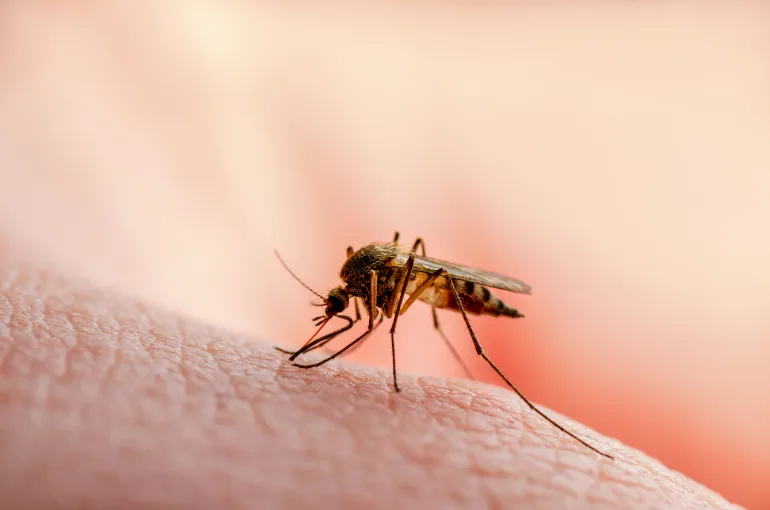
Many people notice a difference in their body’s response to mosquito bites even though they are in one place during one sitting. Explanations vary as to why one person is more susceptible to mosquito bites than another.
Scientists and researchers believe that genes are the main player in the equation of attracting mosquitoes, as they are what form the genetic fingerprint responsible for the emission of a unique smell from each person, which was reinforced by the experiment conducted by researchers from America and the United Kingdom and published in Plos One, in which they revealed the similarity in attracting mosquitoes among identical twins compared to non-identical twins.
Recent studies indicate that body odor plays an essential role in attracting mosquitoes, and that the skin microbiome is the most prominent factor in this.
In a study published in 2024 in Scientific Reports, researchers from American universities analyzed volatile compounds produced by natural bacteria on the skin, and studied mosquitoes’ response to them using models that mimic human odor.
The results showed that compounds such as lactic acid and carbon dioxide – resulting from the activity of these bacteria – are among the most prominent factors of attraction.
In another study, involving researchers from the University of California San Diego and published in PNAS Nexus in 2024, the role of the skin microbiome in reducing exposure to stings was explored. Where two types of skin bacteria were genetically modified to reduce the production of lactic acid, they were then transplanted onto the skin of laboratory mice.
The results showed a decrease in mosquito attraction, with a protective effect that lasted up to 11 days, which opens the way for the development of mosquito repellent methods based on modifying the skin microbiome.

Groups most susceptible to allergy to mosquito bites
Mosquito bites can cause unpleasant allergic reactions in people but not in others, as follows:
- In children, the most common thing they may encounter after a sting is urticaria or Skeeter syndrome (a high-intensity inflammatory reaction that causes redness, swelling, itching, and warming of the skin at the site of the sting, and possibly fever).
- People who work outdoors are susceptible to repeated stings.
- People who have never been bitten by a mosquito.
- Patients with diseases that weaken their immunity.
How to deal with mosquito bites
Here are the most important tips from experts for dealing with mosquito bites to mitigate their effects:
- Clean the mosquito bite site.
- Apply a cold compress to the mosquito bite.
- Use a topical gel designed to relieve the annoying symptoms associated with a mosquito bite.
- Use oral antihistamines to relieve associated symptoms, or topical corticosteroids to relieve redness and itching, or local anesthetics such as lidocaine or benzocaine.
Complications of mosquito bites
Mosquito bites can cause intolerable and annoying allergic reactions, and bacterial infections are the most common. The itching following a mosquito bite leads to scratching of the skin and the leakage of types of bacteria (staphylococci or streptococci) through these cracks, causing inflammation that may appear in the form of crusts and blisters known as impetigo, or it may cause cellulitis, or lymphangitis.
The danger of mosquito bites increases in endemic areas, as under these conditions they become a vector for serious infectious diseases, most notably leishmaniasis and dengue fever, which are the most prominent viral diseases transmitted by mosquitoes that breed in tropical and subtropical regions. Dengue fever is accompanied by unpleasant initial symptoms that begin within 3 to 4 days of the mosquito bite, the most prominent of which is fever with two of the symptoms below:
- Nausea
- Vomiting
- Painful muscle spasms
- Joint pain.
- Skin rash.
- Low white blood cell count.
The warning symptoms of dengue fever that require consulting a doctor include:
- tummy ache.
- Constant vomiting.
- Idleness.
- Fluid accumulation in the body, such as ascites.
- Liver enlargement.
- Low platelet count.
- Bleeding from the mucous membrane.
While severe symptoms of dengue fever are:
- High probability of bleeding from the body.
- Part of the plasma leaks into the tissues.
- Disorder of consciousness and perception.
- Heart muscle weakness.
- Respiratory problems.
Treatment of dengue fever
The treatment of dengue fever depends on the patient’s health condition. In minor cases that are not accompanied by serious symptoms, the doctor often only recommends that the patient drink sufficient amounts of fluids and take fever-reducing and analgesic medications, such as acetaminophen, and monitor the symptoms well. The return of the patient’s appetite for food is described as an indication that the infection has begun to subside and improve.
In cases that are accompanied by severe symptoms, the doctor may resort to intravenous fluids, and perhaps blood or platelet transfusions in very severe cases, and patients are recommended to avoid taking aspirin or non-steroidal anti-inflammatory drugs (NSAIDs) during this infection.
Prevention is better than cure
Experts agree that following possible preventive measures to confront mosquitoes and avoid their annoying bites is better and more effective than neglecting and surrendering to bites. Preventive guidelines against mosquito bites are summarized in adhering to a set of precautionary measures:
- Use insect repellents containing DEET that repel mosquitoes and prevent them from approaching, making sure to use those types that are safe for children.
- Cover as much of the skin exposed to the air as possible by wearing clothing that meets this purpose.
- Avoid using perfumes.
- Avoid wearing bright colors.
- Avoid going out at dusk or dawn, as mosquitoes spread most during these times of the day.
- Eliminate stagnant water accumulations that may arise due to drilling or otherwise.