

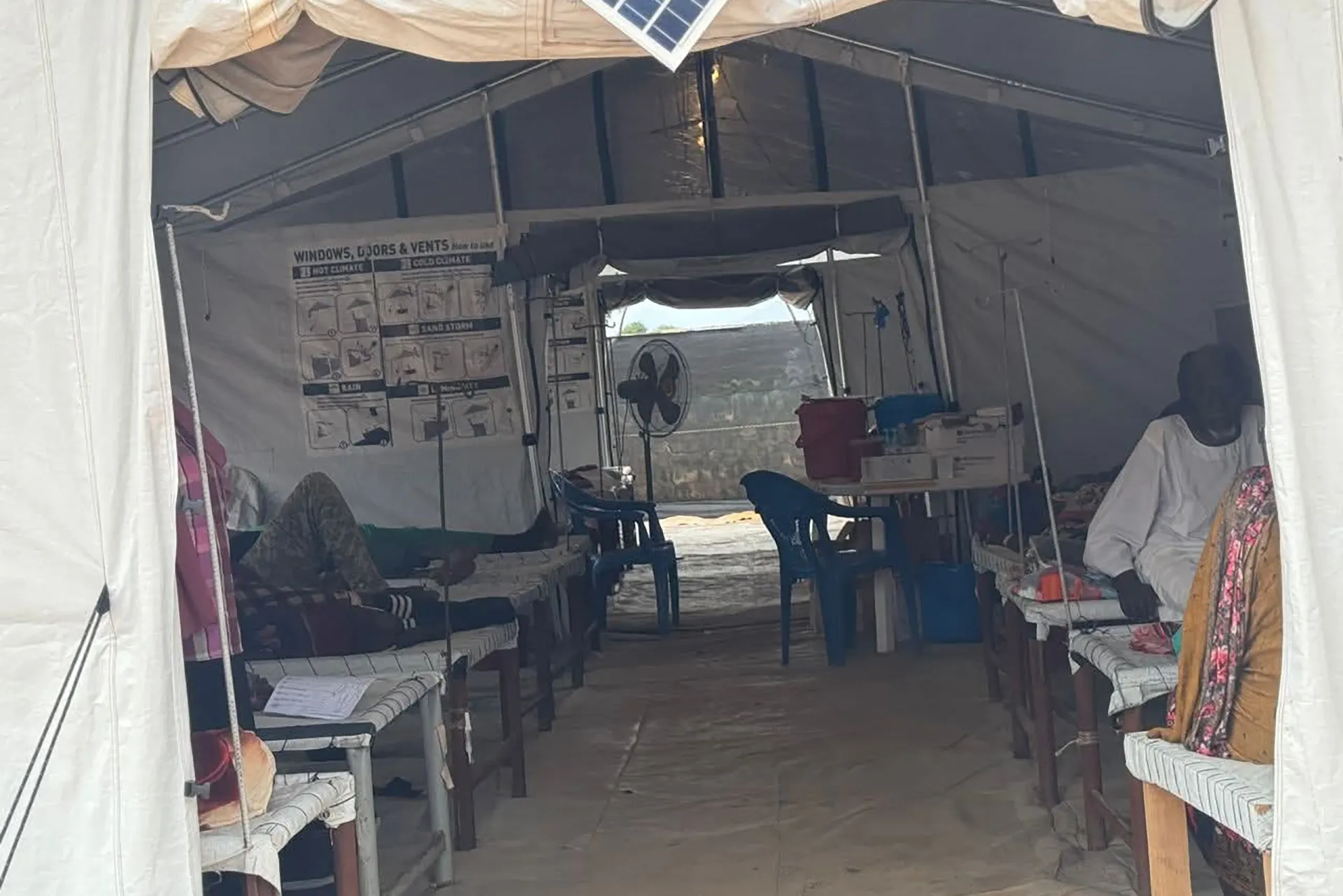
Khartoum- With great concern, Fatima Ibrahim (40 years old) carries her infant, who is no more than six months old and suffers from severe emaciation and high fever. She says in a voice choked with words: “My child has not been breastfed for three days. He was suffering from malnutrition, and now he has a fever and a rash.”
Some families told Fatima, a displaced woman from El Fasher to the Darbat area in Jebel Marra, that her child might be infected with “monkeypox.” She says: “We have no medicine, no hospital, and I am afraid of losing him.”
As for Fayza Mahjoub (32 years old), who is also displaced from El Fasher to the same area, she told Al Jazeera Net that the region is witnessing a “terrible deterioration” in health conditions, and is in dire need of urgent intervention.
She added: “There are no vaccines, no doctor, and no medicine. After Darbat Hospital went out of service, measles and smallpox spread widely, and residents cannot do anything.”
Hot spot
In the rugged Jebel Marra region, located in Central Darfur State, western Sudan, there are displacement camps crowded with thousands of families fleeing the hell of war in El Fasher and neighboring areas, where hunger meets disease and an almost complete absence of health services.
After three years of war, the region turned into a hotspot for epidemics, amid a complete collapse of the health sector and the cessation of routine vaccination programs for more than three years ago.
In this disastrous humanitarian scene, emergency rooms in the Dera Darbat area (east of Jebel Marra) announced the recording of about 37 confirmed cases of “monkeypox,” coinciding with the rapid spread of “measles” that has claimed the lives of dozens of children in Darfur.
“epidemiological interference”
This dangerous epidemiological interaction coincides with the last medical stronghold in the region being out of service for months, exposing any minor infection to the risk of death.
A member of the emergency room in the Deira Darbat area, east of Jebel Marra, Rabbani Hussein, describes the situation there as “catastrophic.” He told Al Jazeera Net: “Confirmed cases of monkeypox have been recorded in the Dayra and Suni area at the top of the mountainside, while measles is spreading rapidly throughout the district.”
Hussein warns of the overlap between the two epidemics, and says that it “puts families in real danger, especially with weak immunity,” stressing that children and pregnant women are the most affected.
Health breakdown
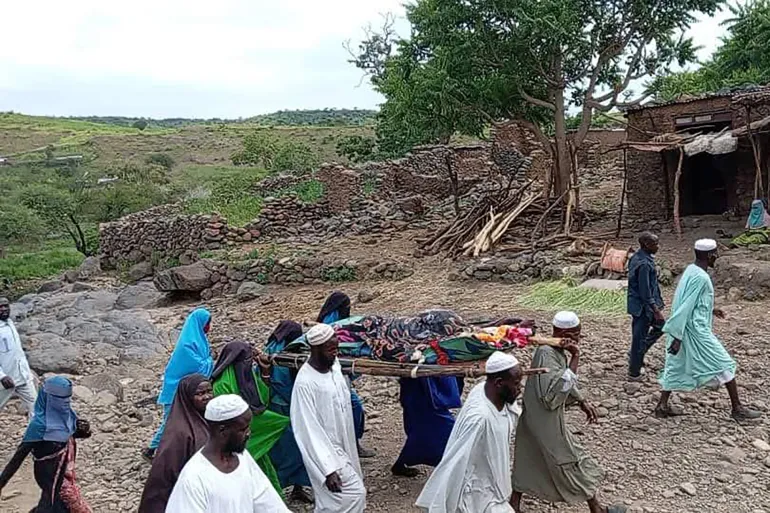
Observers and residents say that this epidemic wave did not come out of nowhere, but rather is a natural result of the collapse of the health sector in Darfur after three years of war.
According to a report issued by the World Health Organization on April 14, 37% of health facilities in Sudan are still out of service.
The organization also documented 217 attacks on the health care sector since the start of the war, resulting in 2,052 deaths and 810 injuries, indicating that this destruction made access to basic health services, and even a simple vaccine injection, almost impossible.
Hamza Hassan, media officer at the Tawila and Jebel Marra emergency room, told Al Jazeera Net that children are the most affected. He added: “Measles, which could have been prevented with simple vaccines, has now become fatal due to the interruption of vaccination campaigns for more than three years. In light of widespread malnutrition, children’s immunity has become almost non-existent.”
UNICEF indicates that 4.2 million children in Sudan suffer from acute malnutrition, including 825,000 serious cases.
In Jebel Marra, hunger meets disease in a never-ending vicious circle, where children die not only from hunger, but also because their weak immunity makes them easy prey to preventable diseases.
Shocking numbers
In the latest field assessment of the health conditions in the Jebel Marra areas, Adam Rijal, the official spokesman for the General Coordination for Displaced Persons and Refugees in Darfur, revealed to Al Jazeera Net numbers that reflect the scale of the disaster.
Rijal explained that the coordination monitored more than 200 suspected cases of monkeypox in the Jebel Marra areas, the majority of whom were children, in addition to 259 cases of whooping cough and 116 cases of other skin diseases.
He added that these numbers confirm that the camps have turned into hotspots for the spread of epidemics, warning that the continued collapse of the health sector and weak international funding will make the situation worse.
The funding gap of $428 million, according to warnings from the United Nations High Commissioner for Refugees and the World Food Program, threatens to reduce basic assistance to 1.3 million Sudanese refugees in Chad, and its repercussions are directly reflected in Jebel Marra.
Rijal confirms that thousands of displaced people are living in catastrophic conditions, lacking adequate food, clean water, and basic health services, calling on the international community to intervene urgently.
Abandoned hospital
Darbat Rural Hospital is the last medical stronghold that served thousands of families in the eastern Jebel Marra region. But he went out of service months ago; Due to interruptions in medical supplies and weak funding provided by international organizations.
Abdullah Musa (45 years old), a displaced person and health volunteer in the Deira emergency room, tells Al Jazeera Net his experience with those infected in the area. He says: “We used to transfer patients with hemorrhagic fever to Darbat Hospital, but now it is deserted. There are no beds, no medicines, and no doctors.”
He adds: “We are trying to isolate suspected cases inside homes, but we lack the minimum requirements for sanitary isolation. This means that the infection will spread faster.”
For her part, Areej Dhaifallah, from the medical team at Darbat Hospital, confirmed to Al Jazeera Net that most cases are transported to other distant areas, noting that children and pregnant mothers are the most affected, as the majority of them die on the way to transportation to Tawila and other areas. She called for the need to provide support and restart the hospital, especially the obstetrics and gynecology ward.
A cry for help
In the midst of this escalating health disaster, emergency rooms in the Deira region went out to sound the alarm, warning that the situation had exceeded their meager capabilities. These rooms, which rely on volunteers and almost non-existent capabilities, issued an urgent call for help.
The appeal stated, “The health situation in Deira district is not only bad, but is in a state of complete collapse. Patients, children, and women face their fate without medical cover, in light of the scarcity of medicines and the lack of medical personnel. We appeal to international health organizations to intervene urgently to provide vaccines, medicines, and basic medical equipment.”
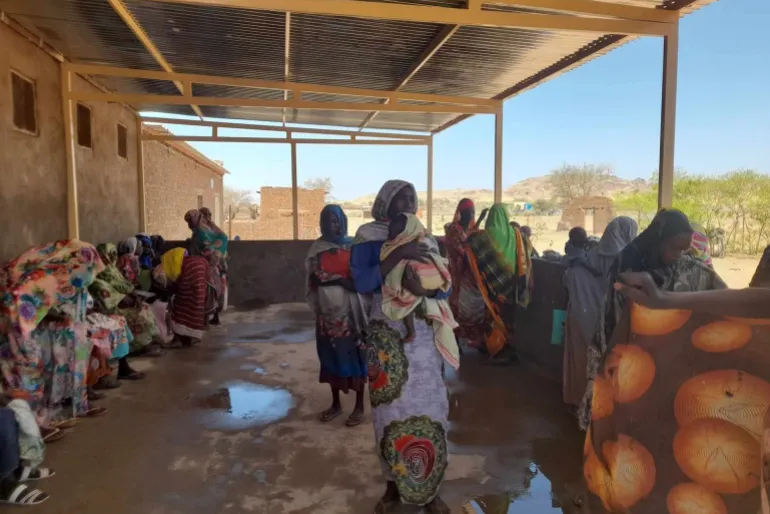
A member of the Dera Rabbani Emergency Room, Hussein, called on the international community to take immediate action, indicating that the emergency rooms operate entirely on volunteer basis, and their capabilities are almost non-existent. He said: “We urgently need urgent support before these epidemics get completely out of control.”
In the Marra Mountains, death by bullets is no different from death by disease; Children are dying from measles, others are fighting monkeypox, and mothers are searching for medicine that does not exist, while hospitals have been reduced to rubble or closed due to lack of supplies.