

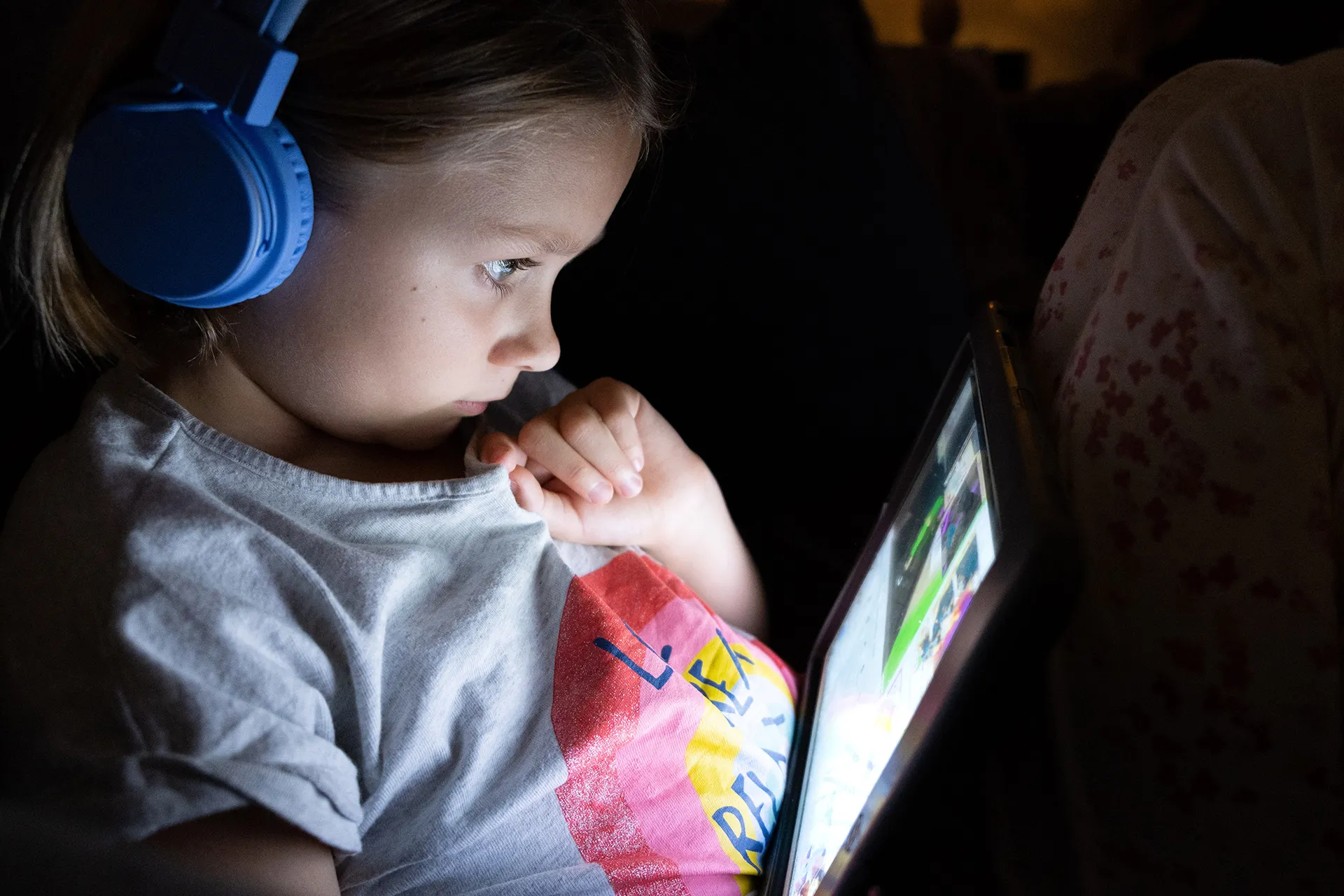
The dangers of children spending long hours in front of phones and tablets are no longer limited to eye strain, as they may extend to sleep disturbances, lack of movement, weight gain, decreased concentration, and mood changes. But the size of the effect does not depend on the number of hours alone, but is also related to the type of content, timing of use, and what screens deprive the child of of sleep, play, movement, and social interaction.
The American Academy of Pediatrics confirms, in its updated policy for the year 2026, that dealing with digital media should not be limited to counting screen time, but rather should take into account the nature of the content, the way the platforms are designed, and the conditions of use, and the extent of their impact on the activities necessary for the child’s development and health.
Warning signs
Dr. Rita Khalil, a pediatric specialist at Alfardan Medical Hospital and Northwestern Medicine in Qatar, says that there are behavioral changes that may alert parents to their children’s excessive use of screens, most notably tantrums, constant thinking about electronic games, and loss of interest in traditional play.
She added, in statements to Al Jazeera Net, that excessive use may be accompanied by a decline in concentration and attention, poor memory, a low level of completion of assignments and academic performance, as well as a tendency toward isolation and the emergence of problems in social relationships.
The signs do not stop at behavioral changes, as the child may also complain of headaches and eye redness, which are symptoms that require attention to the nature and duration of his use of digital devices.
Sleep and weight
Dr. Rita explains that using screens may delay a child’s bedtime, make waking up in the morning more difficult, as well as cause daytime sleepiness, which may negatively affect learning and concentration.
Excessive use also affects physical activity, as long hours in front of electronic devices reduce the time available for movement and play, which may contribute to weight gain and obesity and associated health and metabolic problems, such as insulin resistance.
To reduce these risks, the pediatrician stresses the necessity of preventing the use of devices at least an hour before bedtime, while maintaining an appropriate distance between the child and the screen, and taking into account the body position and ambient lighting during use.
Is educational content safer?
Not everything that children watch on screens is equal in its impact. There is a difference between spending long hours playing electronic games and using devices for learning and reading purposes.
Dr. Rita explains that the effect of screens depends on the duration of use, the type of content, and the timing of use, noting that increasing time in front of devices increases the chances of eye strain, headaches, and lack of movement, while prolonged use of electronic games may affect attention, mood, and sleep in a way that differs from educational use.
Research results support the importance of looking at the nature of the content and conditions of use, and not the number of hours alone.
A systematic review and meta-analysis published in JAMA Pediatrics, which included 100 studies including 176,742 children under six, revealed that the context in which screens are used is associated with different outcomes on children’s development.
The researchers found that exposure to age-inappropriate content was associated with worse psychosocial outcomes, while screen use with parental involvement was associated with better cognitive outcomes.
These results indicate the importance of choosing content appropriate for the child’s age and sharing it while watching, rather than letting him spend long periods alone in front of devices.

The right time for every age
Screen time recommendations vary depending on the child’s age and needs. According to the World Health Organization, it is not recommended to expose infants under one year of age to screens, and the organization also recommends that children under one year of age not spend any time in front of screens while sitting.
As for children from 2 to 4 years old, the organization recommends that screen time should not exceed one hour per day, stressing that reducing this period is better for their health and development.
These recommendations include activities that the child engages in while sitting, such as watching television and video clips and playing computer games.
The potential impact is not limited to the screens that the child uses directly, as the TV turned on in the background may leave an impact even when the child is not watching it.
A review published in JAMA Pediatrics revealed an association between exposure to background television and worse cognitive outcomes in children under six, noting that an open screen during play may attract a child’s attention and distract him from his activities.
As for school-age children and adolescents, the American Academy of Pediatrics does not specify uniform time periods that are suitable for everyone, due to the lack of sufficient evidence to support the adoption of a single time limit for these age groups.
Instead, the academy recommends evaluating the quality of use and striking a balance between the time a child spends in front of a screen and the time allocated to sleep, physical activity, playing, reading, learning, and interacting with family members.
When does it become a disorder?
A child may get angry when his parents ask him to stop an electronic game or stay away from the phone, but this behavior alone does not mean that he has gaming disorder.
The World Health Organization explains that gaming disorder is characterized by three main features: poor control over gaming, giving it increasing priority over other activities and interests, and continuing with it despite its negative consequences.
To be diagnosed with the disorder, this behavioral pattern must be severe enough to cause a clear decline in important aspects of the child’s life, such as family and social relationships and academic performance, and usually last for a period of no less than 12 months.
Requesting an evaluation from a doctor or psychologist for children and adolescents becomes appropriate when the use of screens clearly and continuously affects the child’s studies, relationships, or daily activities, or when the family finds it difficult to control its use despite setting clear limits.
The role of parents
Dr. Rita stresses that protecting children from the dangers of excessive screen use begins at home, by setting clear times for using electronic devices and adhering to them.
It recommends encouraging children to engage in physical activity, free play, and reading, and involving them in daily activities and duties, thus reducing their dependence on digital devices to occupy their free time.
She stresses the importance of parents being role models for their children in the balanced use of screens, so that the rules are not limited to children, but rather become part of the family’s daily lifestyle.