

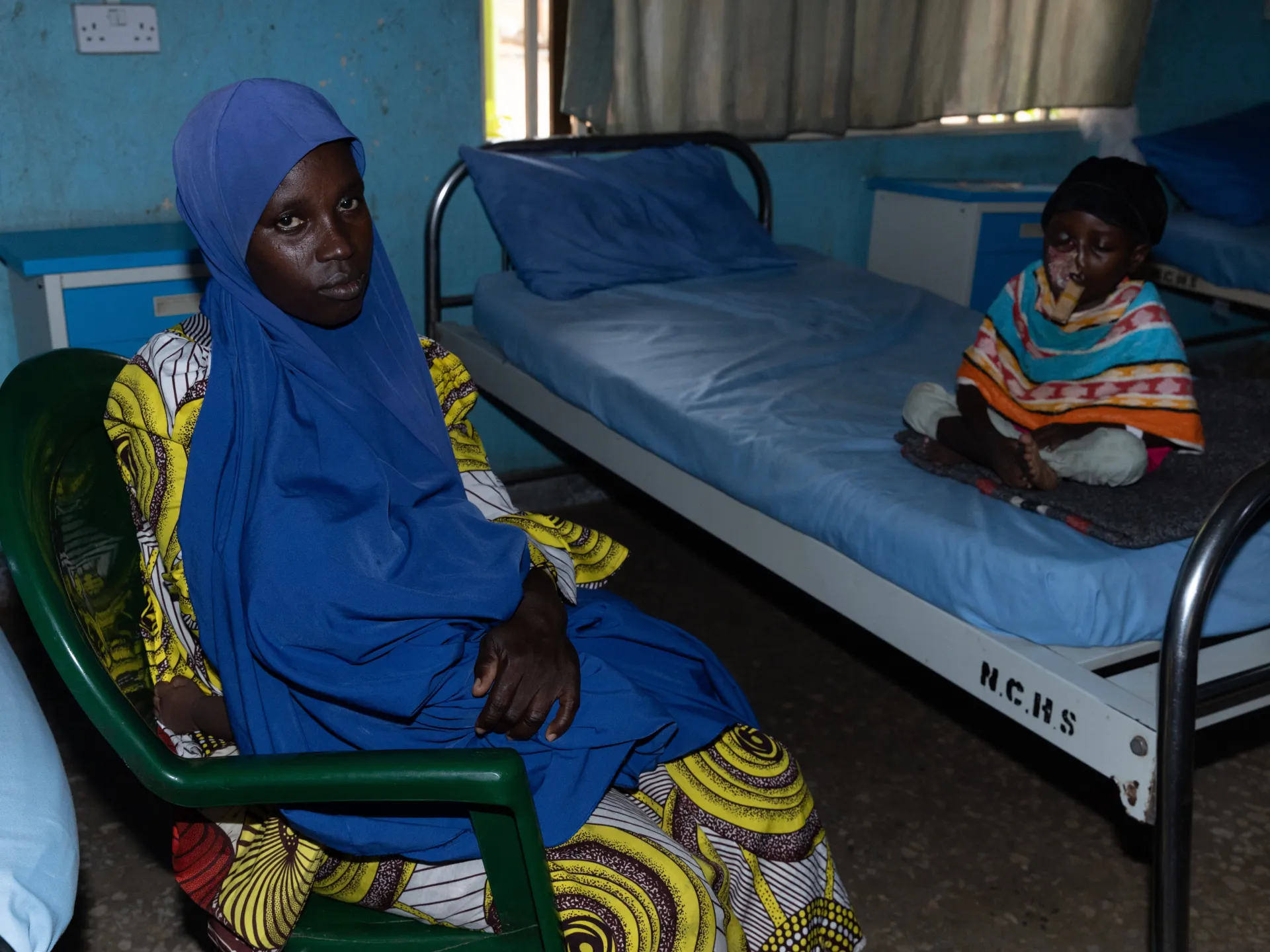
Ibrahim Dalhato was three years old when he contracted Noma, a disease that disfigures the face and kills most children it infects. Since 2021, Ibrahim, who is now 8 years old, has undergone 6 surgeries at a children’s hospital specialized in treating this disease, located in Sokoto State, northern Nigeria, according to a report by the Associated Press.
“Noma” is a rapidly developing infection that affects the face and mouth. According to the agency, it begins with inflammation of the gums in children suffering from malnutrition and living in polluted environments. It then spreads rapidly, destroying soft tissue and bones.
It mostly affects children between 2 and 6 years old, especially in poor communities. Treatment in its early stages includes antibiotics, wound care, and improved nutrition, but as the disease worsens, surgery is necessary.
Médecins Sans Frontières performs these multi-stage operations free of charge. Ibrahim’s father said: “I was previously worried about the cost of treatment, but when I was informed that it was free, I was very happy.”
A sign of absolute poverty
Experts who spoke to The Associated Press said the main risk factors for the disease are extreme poverty and severe malnutrition.
The World Health Organization describes “noma” as “a sign of absolute poverty,” while the United Nations Human Rights Council believes that the conditions leading to it represent a violation of the rights of affected children.
The Director-General of the World Health Organization, Tedros Adhanom Ghebreyesus, said in 2023 that “sleep is more than just a disease. It is a social indicator of extreme poverty and malnutrition, and it affects the most vulnerable groups,” according to the Cidrap website of the University of Minnesota.
In northern Nigeria, which has been exhausted by the repercussions of armed violence and economic hardship, experts say that the number of children diagnosed with the disease is increasing, and that many are arriving late to treatment due to a lack of awareness, according to what the agency quoted Doctors Without Borders and medical officials.
The organization’s medical affairs coordinator in Nigeria, Bukola Oloyede, said: “We are seeing more severe cases, and we are moving to educate the community so that they can bring their children early to prevent tissue loss and the need for reconstructive surgery years later.”
Negligence in data and financing
The World Health Organization classifies “noma” as a neglected tropical disease, meaning that, as the Associated Press explains, it receives little or no international attention and funding.
This classification came on December 15, 2023, after a request led by the Nigerian Ministry of Health in January of the same year, supported by letters of support from 31 countries, according to Doctors Without Borders.
The organization has not updated its data on the disease since 1998, when it estimated the number of infections at 140,000 annually, with a mortality rate of 90%.
On the other hand, a study published by The Lancet Global Health last July, based on Sokoto Hospital data, monitored more than 50,000 cases in 12 states in northern Nigeria between 1999 and 2024. The so-called “Noma Belt” extends across Africa from Senegal and Mauritania in the west to Ethiopia in the east.
In terms of funding, the Nigeria Health Watch website reported in December 2025 from the World Health Organization that official development aid allocated to neglected tropical diseases declined by 41% between 2018 and 2023, and that funding cuts began to disrupt drug distribution campaigns and delay field surveys.
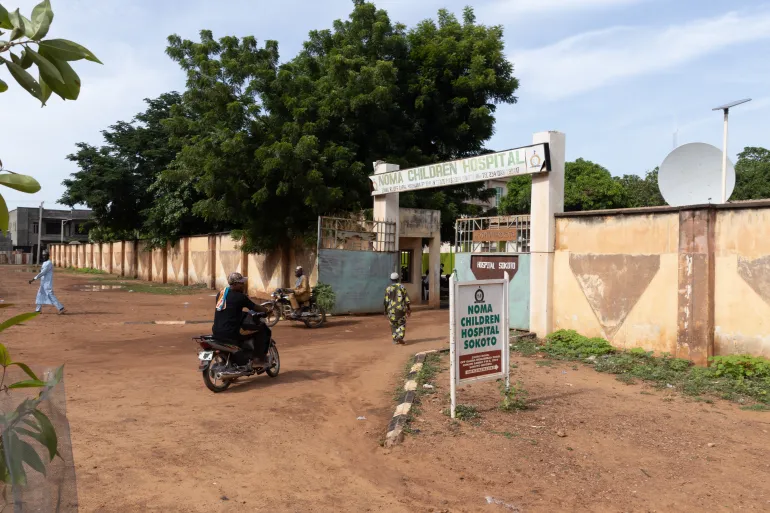
Nigeria has only two hospitals to treat the disease, one in Sokoto and the other in the capital, Abuja, built in 2023.
Yuka Makino, technical officer for oral health at the WHO African office, says Nigeria records more cases than others because of its specialized hospitals, large population, and a government-led response that likely allows more cases to be detected than are detected in most countries.
Sokoto Hospital treated more than 500 injured children who came from across northern Nigeria between 2023 and 2025, according to data seen by the Associated Press, while others are waiting for their turn in 3 surgical courses organized by Doctors Without Borders annually for children whose bodies can withstand surgery.
Neither the Federal Ministry of Health nor the Sokoto State Ministry of Health responded to an Associated Press request for comment on the government’s plans to combat the disease.