

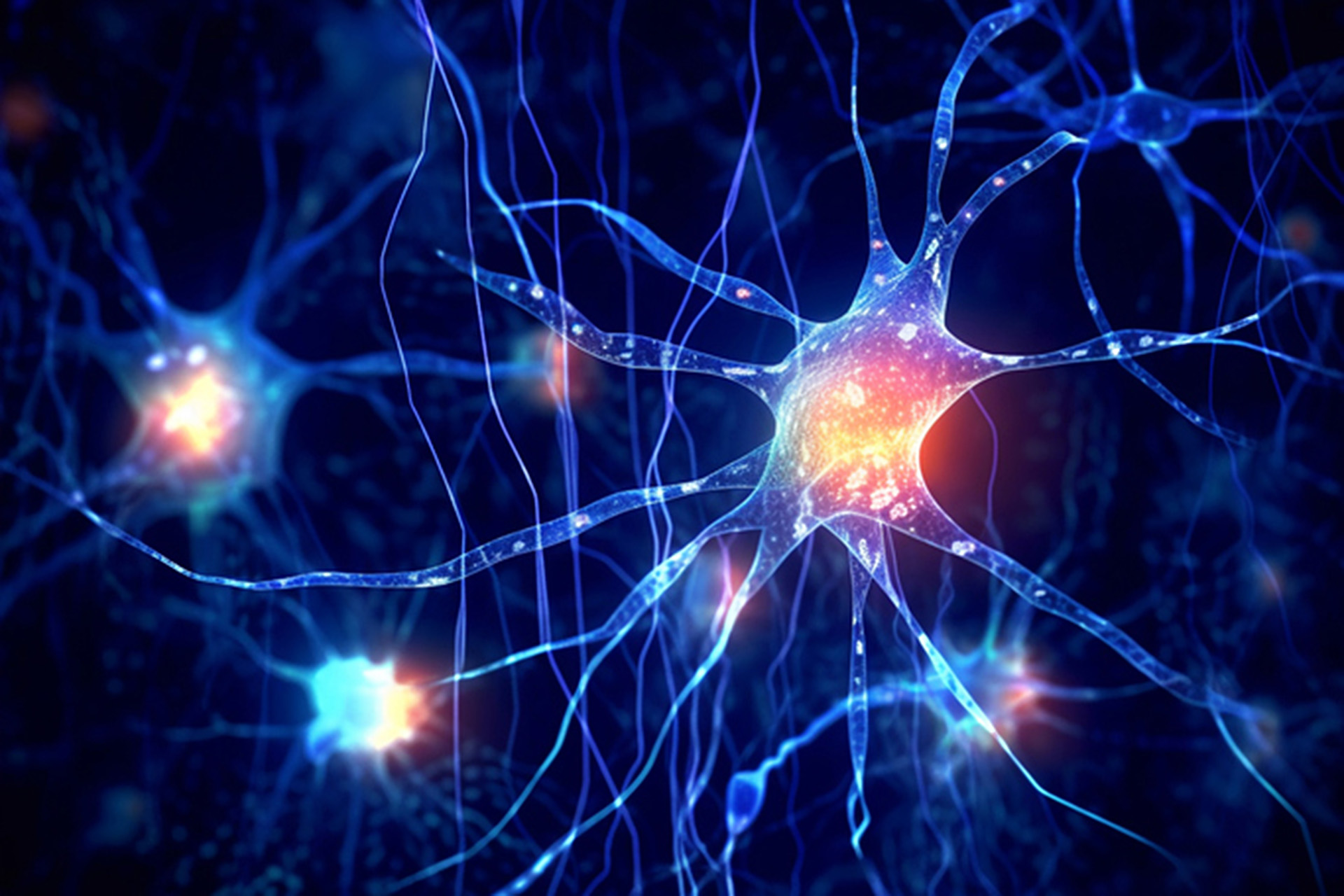
Researchers have put forward a new hypothesis on how stellar cells – a category of brain cell – contributed to memory storage. This hypothesis, which researchers propose, contribute to the explanation of the enormous storage capacity of the brain, which is much greater than what is expected of neurons alone.
The study was conducted by researchers from the Massachusetts Institute of Technology in the United States, and its results were published in the Journal of the National Academy of Sciences on May 23 last May, and the Yurik Alert website was written.
Jean -Jacques Slutn, a professor of mechanical engineering, brain science and perception at the Massachusetts Institute of Technology and one of the authors of the study. Since each stars can communicate with hundreds of thousands of nervous clash points, it may be logical to also use in mathematical functions.
The “nervous clash points” are known as the points in which two nerve cells interact with each other, which are sites to transfer signals from the neuron before the clamp to the nerve cell after the clamp.
The human brain contains about 86 billion nerve cells. These cells release electrical signals that help the brain to store memories and send information and orders throughout the brain and nervous system.
The brain also contains billions of star cells, which are a star -shaped star -shaped cells that enable it to interact with millions of neurons. Despite the prevailing belief that they are primarily supportive cells, recent studies indicated that stellar cells may play a role in storing memory and other cognitive functions.
Memory
Star cells perform a variety of support functions in the brain, they clean cell waste, provide nutrients for neurons, and help ensure adequate blood supply.
Corner cells also send many fine sensors, known as “appendages”, each of which can wrap around one neuropathic clamp to form a three -part clamp.
During the past two years, neuroscientists have shown that if the links between the star cells and neurons in the hippocampus (part of the brain plays a fundamental role in memory and their composition), storing and retrieving memory is affected.
Unlike neurons, star cells cannot launch “Action Potentals”, which are electrical impulses that carry information throughout the brain, but can use calcium signals to communicate with other star cells.
Over the past few decades, and with the improvement of the accuracy of calcium imaging, researchers have found that calcium signals also allow star cells to coordinate their activity with neurons in the neurons that are associated with them.
These studies indicate that stellar cells can detect nervous activity, which leads them to change their calcium levels, and these stellar cell changes may stimulate the release of digital vectors (signaling signaling molecules) in the nervous clamp.
“There is a closed link between neuronal cell signals and star cells to neurons,” said Leo Kozachov of the Massachusetts Institute of Technology, and the study researcher.
Memory and nerve clips
The Massachusetts Institute Technology Team has started modeling these links and how they can contribute to memory storage, and their model depends on Hobfield networks, a type of neuroma that can store and call patterns.
Hopfield networks, which were originally developed by John Hobfeld and Shawn Ichi Amari in the 1970s and eighties of the last century, are often used for the mixture of the brain, but it has been proven that these networks cannot store enough information to take into account the massive memory of the human brain, and researchers developed a newer and modified version of the Hopfield network, known as the dense interconnection memory, store much more information through A higher arrangement of the associations between more than two nervous cells, but it is not clear how the brain can implement these multi -cell neurons in a virtual clip, because traditional clamps link only two nervous cells: a cell before the clamp and a cell after the clamp, and here comes the role of the stellar cells.
“If you have a network of neurons, you are interconnected in pairs, there will be only a very small amount of information that you can cord with in those networks,” says Dmitry Crotov, co -researcher of the Massachusetts Institute of Technology and International Business Machines, and the Watson AI Laboratory, Massachusetts, in the United States.
He added: “To build dense correlation memories, we need to connect more than two nervous cells. Because one stellar cell is able to contact many neurons, and many neurons, it is striking that there is a process of transferring information between the neurons by this cell. This was the greatest inspiration for us to study stellar cells, and prompted us to think about how to build intense correlation memories in biology.”
The correlation model of the nerve stereotype, which the researchers in their new studies, can store much more information than the traditional Hopfield network, that is more than enough to explain the capacity of the brain memory.
Complex contacts
The researchers say that the extensive biological bonds between nerve cells and stellar cells support the idea that this type of models may explain how memory storage systems work in the brain, and assume that memories inside the stellar cells are encrypted by gradual changes in the patterns of calcium flow, and this information is transferred to neurons by stiff vehicles that are released when the nerve clamps that are connected to them Star cells operations.
“Through the careful coordination of these two things – the spatial pattern of calcium in the cell, then refer to neurons – the exact dynamics of this increasing storage capacity can be obtained.”
One of the main features of the new model is that it deals with stellar cells as groups of operations, instead of one entity, and each of these operations can be considered one mathematical unit, and given the capabilities of storing high information for dense bonding memories, the percentage of the amount of information stored to the number of mathematical units is very high and grows with the size of the network, this not only makes the high capacity system, but also energy saving.
In addition to providing an insightful vision on how the brain is stored in memory, this model can also provide instructions to researchers working in the field of artificial intelligence.
Researchers – by changing the connection of the operating network – can create a wide range of models that can be explored for various purposes.
“While neuroscience initially inspired major ideas in the field of artificial intelligence, the past 50 years of neuroscience research had a little effect on this field, and many modern artificial intelligence algorithms have moved away from neurological analogues. In this sense, this work may be one of the first contributions in the field of artificial intelligence derived from modern neuroscience research.”