

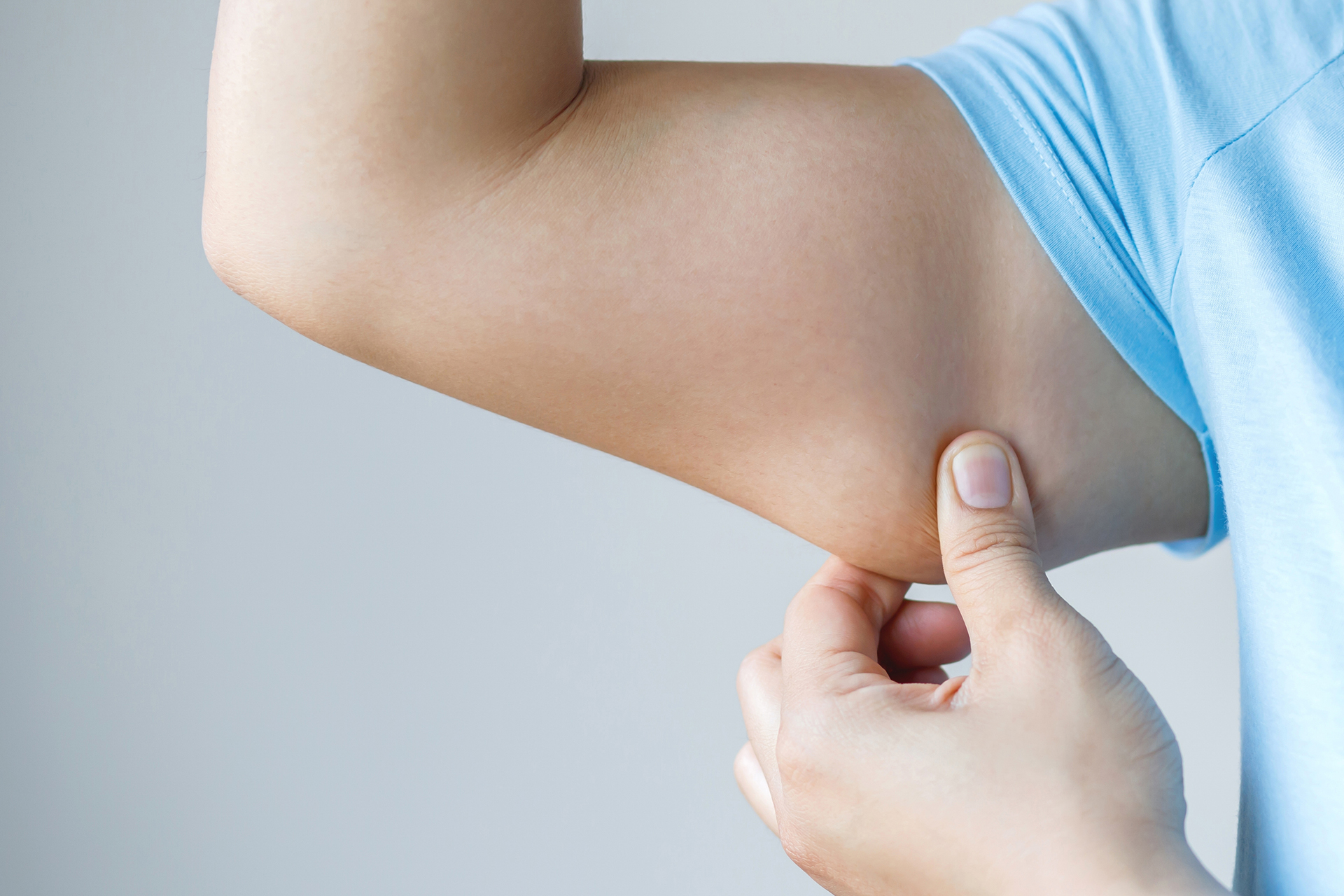
The high use of slimming drugs such as Ozambik and Jovi is associated with the phenomenon of “Ozambic face”, loss of facial volume, and sagging skin.
Loose skin is more than just a cosmetic problem, as it can affect the fit of clothing, a person’s feeling about himself, and even physical health. Friction, rashes, and inflammation in the folds of excess skin are not uncommon, as are the psychological effects of seeing a body that does not resemble the body that patients strived to achieve.
As with any side effect, not everyone experiences the same degree of sagging, and some may not experience it at all.
The skin sags after sudden weight loss, but there are many natural or surgical treatments that can help reduce this, so what are they?
Plastic surgeon Dr. Raj Raghuwansi tells the British newspaper The Telegraph that prevention is better than cure, and that the solution lies in following a gradual weight loss diet.
The skin has some elasticity thanks to collagen and elastin, but it is not infinitely elastic. When a person gains weight, the skin expands to accommodate the increased body size, and when this weight is lost quickly, the skin may not return to its completely normal shape.
“The speed and quantity of weight loss are key,” explains Raghuwansi. “Younger skin recovers better, but smoking and diet may also affect its ability to shrink. When patients use slimming injections of GLP1 agonists, they may suffer from nutrient deficiencies, which affects the quality of their skin.”
Non-surgical treatments
Anyone who has lost significant weight quickly, whether through medication, diet, or surgery, will notice few cosmetic side effects. While there is no method that guarantees complete prevention of sagging skin, there are many treatments, from natural to surgical, that can help reduce it.
Diet and exercise
A nutrient-dense, skin-friendly diet can make a big difference in skin firmness, and the goal should be to support collagen production.
Collagen is the protein that gives skin its structure and firmness, while elastin allows it to return to its natural shape after stretching.
Proteins, made up of amino acids, are the essential elements the body uses to produce both.
Strength exercises
Exercising promotes muscle mass, as muscles add volume under the skin, which may fill in some areas of sagging, so resistance exercises for the arms, abdomen and legs can help improve the appearance of sagging skin over time, especially when combined with consistent weight control.
This also applies to the face and neck, so activate the muscles under the skin through facial exercises, using repetitive movements to tighten and lift the skin.
Retinol and topical treatments
It is preferable to use topical skin treatment as a preventive measure and not as a treatment for sagging skin resulting from significant weight loss. Specifically, retinoids improve skin texture and may stimulate collagen production in the upper layers, helping skin appear firmer and more elastic.
Vitamin C is a great supplement to support skin health by protecting it from oxidative stress, supporting existing collagen, and improving overall skin tone.
Radiofrequency treatments
Radiofrequency technology uses electrical energy to heat the dermis – the layer beneath the surface of the skin – stimulating the production of collagen and elastin. It is ideal for overall skin tightening and shaping of larger areas such as the face, neck, arms and abdomen.
Ultrasound therapy
Also known as high-intensity focused ultrasound, this treatment uses focused ultrasound waves to penetrate much deeper layers of skin than radiofrequency, stimulating collagen production in the same layers that surgeons treat in a facelift.
It is usually used to tighten the skin of the face and neck, although some clinics offer body treatments for the abdomen and thighs as well.
Laser skin tightening
Lasers work in a similar way to radiofrequency in delivering pulses of energy to the deeper layers of the skin, but they use light instead of heat, and are better for more targeted tightening, as well as skin resurfacing and color correction.
Cosmetic laser
Cosmetic laser is a cosmetic treatment using microscopic laser fibers in which a fine needle is inserted into the skin. The laser energy heats and tightens the tissue, stimulates collagen production and, at the same time, dissolves fat in the targeted areas for a better appearance.
This treatment is ideal for anyone who wants more visible results – similar to surgery – but without general anesthesia or a recovery period.
Surgical options
Raghuwansi spoke about the best surgical options for excess skin and how to determine if you can benefit from them. “The best way is to sit in a chair and notice if there is any loose skin on the pubic area,” he said.
Loose skin causing chafing, rash, or infection should always be evaluated by a qualified health care professional to determine the most appropriate treatment based on individual needs and circumstances.
Abdominoplasty
It is considered one of the most famous operations, as fat and excess skin are removed from the abdomen and the underlying muscles are tightened.
Ideal candidates are usually those who have lost significant weight and have sagging skin mainly around the lower abdomen and above the navel.
Raghwansi says this is the most common surgical priority for his patients who want to address excess skin after weight loss.
He added: “A mini tummy tuck is also an option if there is mild excess skin, especially below the navel, and the resulting scar is much smaller, with a shorter recovery period.”
Panniculectomy
This procedure is similar to a tummy tuck, but is more stringent in cases of significant weight loss, and focuses specifically on removing the “panniculus” (popularly known as the “apron tummy”), a sagging layer of skin and fat that may cover the thighs and pubic area, and is often medically necessary for reasons of hygiene and mobility.
Tighten the abdominal belt
This comprehensive procedure removes skin from the abdomen, sides, and back in one procedure (but can be performed in two separate procedures to facilitate recovery).
It’s often recommended for people who have undergone significant weight loss, and as Mr. Raghuwansi explains: “It’s like a full-body lift, with a recovery period of about 12 weeks.”