

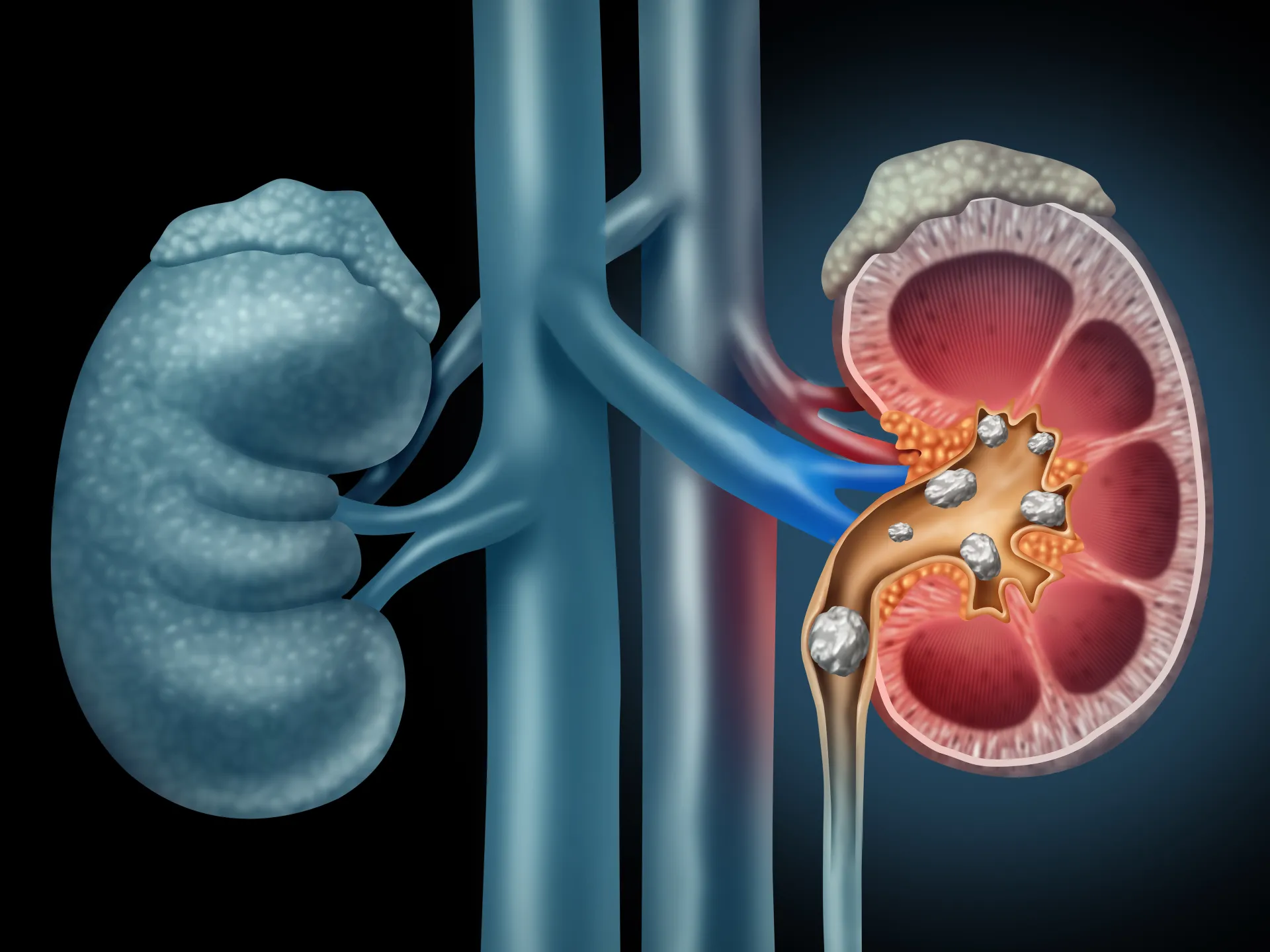
Deep within our bodies work two small organs, each of which is no larger than a fist, yet they perform one of the greatest tasks that sustain life: the kidneys.
The kidneys are located in the back of the abdominal cavity, on either side of the spine, slightly below the rib cage. The right kidney is usually slightly lower than the left due to the presence of the liver above it. Each kidney has a shape resembling a bean, and is about 10 to 12 centimeters long. Each of them weighs between 120 and 170 grams in adults. They perform vital functions on which the continuation of life, yes, the continuation of life, depends.
Each kidney is encased in a durable fibrous capsule that protects it and maintains its structure, while inside it contains approximately a million nephrons, which are microscopic units that work in amazing harmony to purify the blood and maintain the body’s balance. The work of each nephron begins with the glomerulus, which is a very fine network of capillaries that filters the blood. Then fluids pass through the renal tubules that return water and useful elements to the body, and get rid of wastes and toxins.
It is a very precise system; The kidneys filter about 180 liters of fluid daily, but they reabsorb most of it, so only about one and a half to two liters comes out with urine. It is a process similar to a highly intelligent laboratory that distinguishes at every moment between what should be kept and what should be discarded. Two safe guards protect the beneficial and expel the harmful with extreme precision.
The purification plant never sleeps
The process of urine formation goes through three main stages:
- Filtration of blood inside the glomeruli.
- Reabsorption of water and beneficial elements.
- Excretion of waste and unwanted materials.
At the end of this journey, urine collects in the kidney pelvis, then travels through the ureter to the bladder, where it is stored until it is time to excrete it from the body.
Urine formation is not just the excretion of waste, but rather a vital mechanism that maintains the body’s balance, and its greatness is only revealed when it is lost.
Purifying the blood from waste and toxins
The most famous function of the kidneys is to purify the blood from wastes resulting from metabolic processes, such as urea, creatinine, and uric acid, in addition to getting rid of the remains of many medications and toxic substances.
The kidneys work non-stop. Whenever blood passes through them, it undergoes a “screening and purification” process, removing harmful substances, while preserving the elements that the body needs.
If this process was disrupted, toxins would accumulate in the blood and begin to affect the brain, heart, lungs, and other organs of the body, a condition that could be life-threatening if not treated quickly.
A faithful guardian of the balance of water and salts
Water is the basis of life, but increasing or decreasing it may cause serious problems, and this is where the ingenuity of the kidneys appears. They precisely determine the amount of water the body retains and the amount it gets rid of. They also regulate the concentration of important salts such as sodium, potassium, calcium, phosphorus, and magnesium, which are essential elements for muscle contraction, nerve function, and heart rhythm regulation.
Therefore, any severe disturbance in kidney function may lead to an imbalance of these salts, which may cause muscle weakness or serious disturbances in the heartbeat.
Regulating blood pressure
When the kidneys sense a decrease in blood flow, they secrete a hormone called renin, which activates a series of reactions that help raise blood pressure and maintain blood supply to vital organs.
On the other hand, high blood pressure for long periods of time causes damage to the small blood vessels inside the kidneys, creating something similar to a vicious circle. High pressure causes kidney damage, and kidney damage in turn leads to increased high pressure.
pH balance keeper
The body works efficiently within a very narrow range of pH, and if this balance is disturbed, most vital reactions are affected. The kidneys contribute to maintaining this balance by eliminating excess acids and reabsorbing bicarbonates, so that the internal environment remains suitable for the work of enzymes and cells.
Blood production plant
One of the surprises that many people do not know is that the kidneys not only purify blood, but also help produce it. When the level of oxygen in the body decreases, they secrete the hormone erythropoietin, which stimulates the bone marrow to produce red blood cells. This is why many patients with chronic kidney failure suffer from anemia, because the diseased kidney does not produce sufficient amounts of this hormone.
An essential partner in building bones
The kidneys convert vitamin D into its active form that the body can benefit from. This vitamin is necessary for absorbing calcium and strengthening bones and teeth. Therefore, deterioration of kidney function may lead, over time, to weak bones and an increased risk of fractures.
What happens when the kidneys get sick?
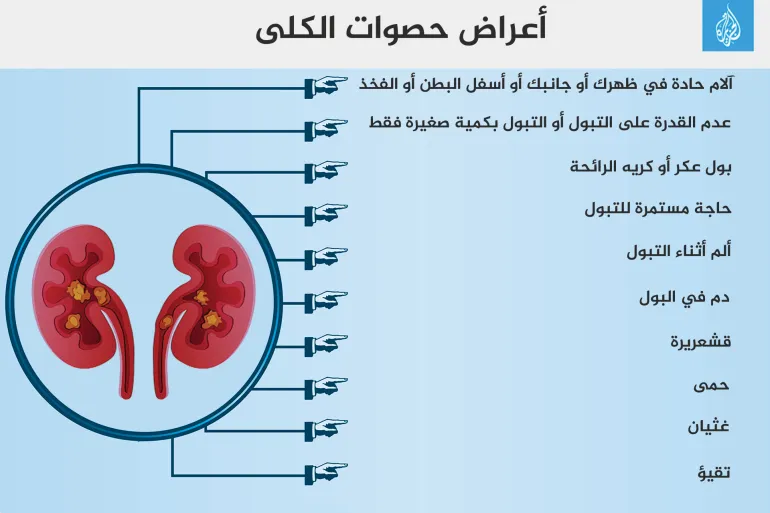
Symptoms worth paying attention to
- Swelling of the feet, ankles, or around the eyes, and high blood pressure for no apparent reason.
- Urine color changes or a lot of foam appears in it.
- Frequent urination at night.
- Decreased urine output.
- Constant fatigue and exhaustion.
- Loss of appetite or nausea.
- Skin itching in advanced stages.
The most important kidney diseases
- Chronic kidney disease: It occurs when kidney function gradually declines for more than three months, and diabetes and high blood pressure are the main causes of most cases around the world.
- Acute renal failure: It is a sudden decrease in kidney function, which may occur within hours or days, due to severe dehydration, serious infections, some medications, or urinary tract obstruction. It represents a medical emergency, but many patients regain kidney function if the cause is treated quickly.
- Kidney stones: It is formed when some salts and minerals are deposited within the urinary system. For many people, increasing drinking water and reducing salt helps reduce the risk of stone formation.
- Kidney infections: It may result from the transmission of a bacterial infection from the bladder to the kidneys, and usually appears with high fever, pain in the flank, and difficulty or burning during urination, and its treatment requires early intervention to prevent complications.
- Hereditary kidney cyst: A hereditary disease in which fluid-filled cysts form inside the kidneys. They gradually increase in size, and their function may decrease over the years.
- Kidney cancer: One of the most common urinary system cancers in adults, it occurs when kidney cells begin to grow abnormally to form a tumor that may spread to other organs if not detected early.
People who need more care
- Diabetic patients, as diabetic nephropathy is the number one cause of chronic kidney failure in many countries of the world.
- High blood pressure, because high pressure damages the tiny blood vessels inside the kidneys.
- Obesity or metabolic syndrome.
- The elderly, as the efficiency of the kidneys gradually decreases with age.
- Those who have a family history of kidney disease, especially hereditary diseases.
How do we protect the kidneys?
- Getting rid of habits such as excessive salt, lack of drinking water, and smoking.
- Controlling blood sugar and pressure.
- Follow a balanced diet.
- Maintain a healthy weight.
- Doing physical activity.
- Drink water in moderation.
Most adults need about 1.5-2 liters per day, with the amount increasing during heat, physical exertion, or fluid loss. - Do not take medications or painkillers without consulting.
- Conduct regular examinations, especially if you have diabetes, high blood pressure, or have a family history of kidney disease.