

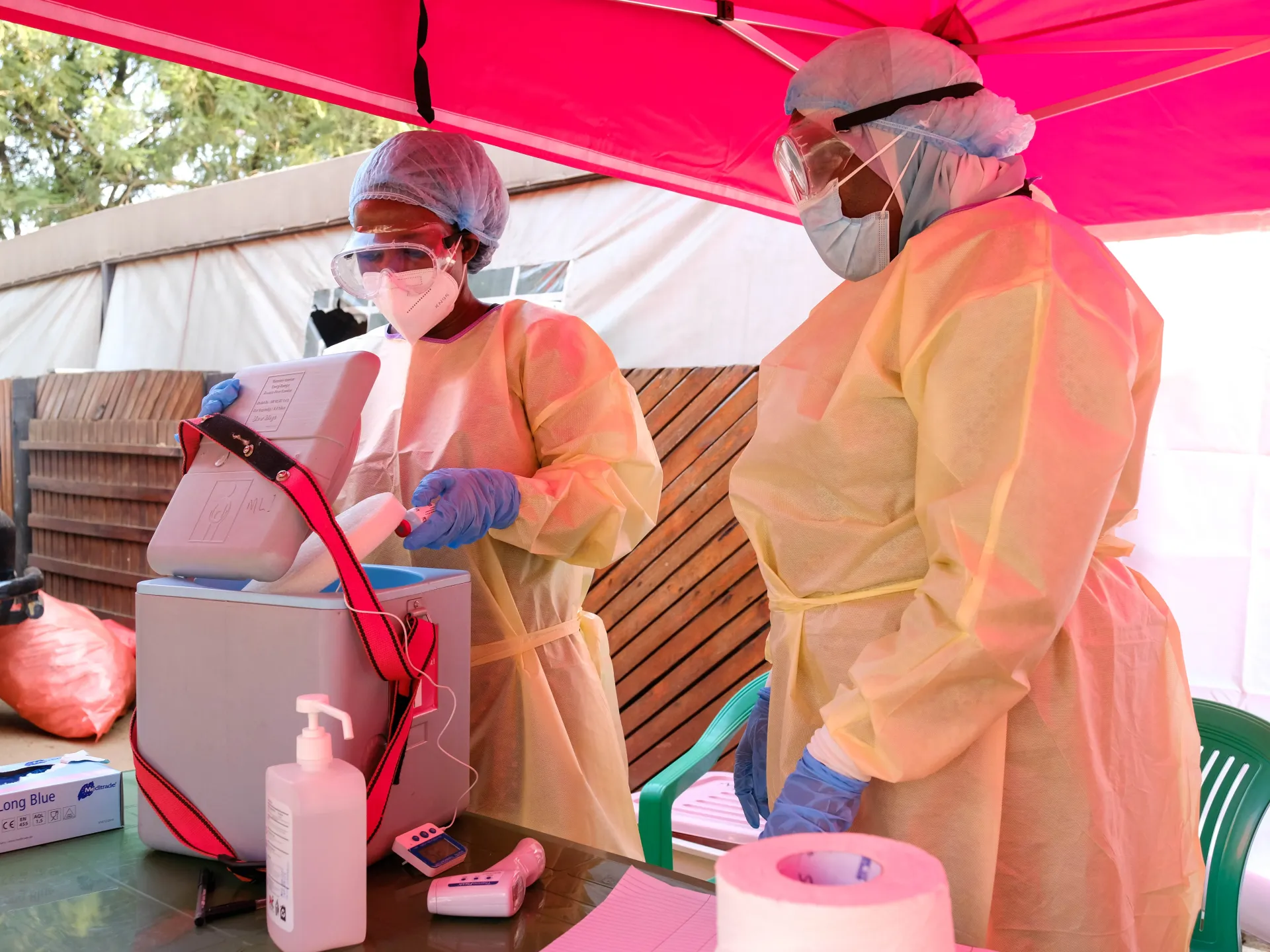
The World Health Organization has declared the Ebola outbreak in the Democratic Republic of the Congo and Uganda a public health emergency of international concern, following more than 300 suspected cases and 88 deaths.
According to reports, the current outbreak is not yet classified as a “global pandemic,” but it represents a “public health emergency of international concern,” which is the highest warning level that the World Health Organization can declare before reaching the stage of a global pandemic.
The Director-General of the Organization, Tedros Adhanom Ghebreyesus, explained in a post on social media on Sunday that the outbreak does not yet rise to the level of an epidemic pandemic, but he warned of the high risk of the infection spreading to neighboring countries and the widening of its spread.
The organization reported a laboratory-confirmed case in Kinshasa, the capital of Congo, which is about 1,000 kilometers (620 miles) away from the epicenter of the disease in the eastern province of Ituri, indicating the possibility of its spread on a larger scale.
She also explained that the patient had visited Ituri, and that other suspected cases had also been recorded in North Kivu province, one of the most populous provinces of the Congo, which neighbors Ituri.
Rare breed
Health authorities say the current outbreak, first confirmed last Friday, is caused by the Bundibugyo virus, a rare strain of Ebola for which there are no approved treatments or vaccines.
Although more than 20 Ebola outbreaks have occurred in Congo and Uganda, this is only the third time the Bundibugyo virus has been detected.
Highly contagious
Ebola is a highly contagious disease that can be contracted through bodily fluids such as vomit, blood, or semen. It is a rare, but serious, and often fatal disease.
Early symptoms include fever, muscle aches, fatigue, headache, and sore throat, followed by vomiting, diarrhea, rash, and bleeding.
Surveillance and prevention
The World Health Organization stressed that the event requires international coordination and cooperation to understand the extent of the disease outbreak, coordinate surveillance, prevention and response efforts, expand and strengthen the scope of operations, and ensure the ability to implement control measures to limit the expansion of the hotspots.
She announced that the Director-General of the Organization would, under the provisions of the International Health Regulations, convene an Emergency Committee meeting as soon as possible to advise, among other matters, on the proposed interim recommendation for States Parties to respond to this event.
Organization tips
The World Health Organization advised both the Democratic Republic of the Congo and Uganda to establish emergency operations centers to monitor and track cases and implement infection prevention measures.
She stressed the need to isolate confirmed cases immediately, to limit the spread of the virus, and the cases must be treated until the results of two tests for the Bundibugyo virus, each conducted at least 48 hours apart, appear negative.
As for countries neighboring areas where confirmed cases of infection have been recorded, their governments should strengthen health surveillance and reporting.