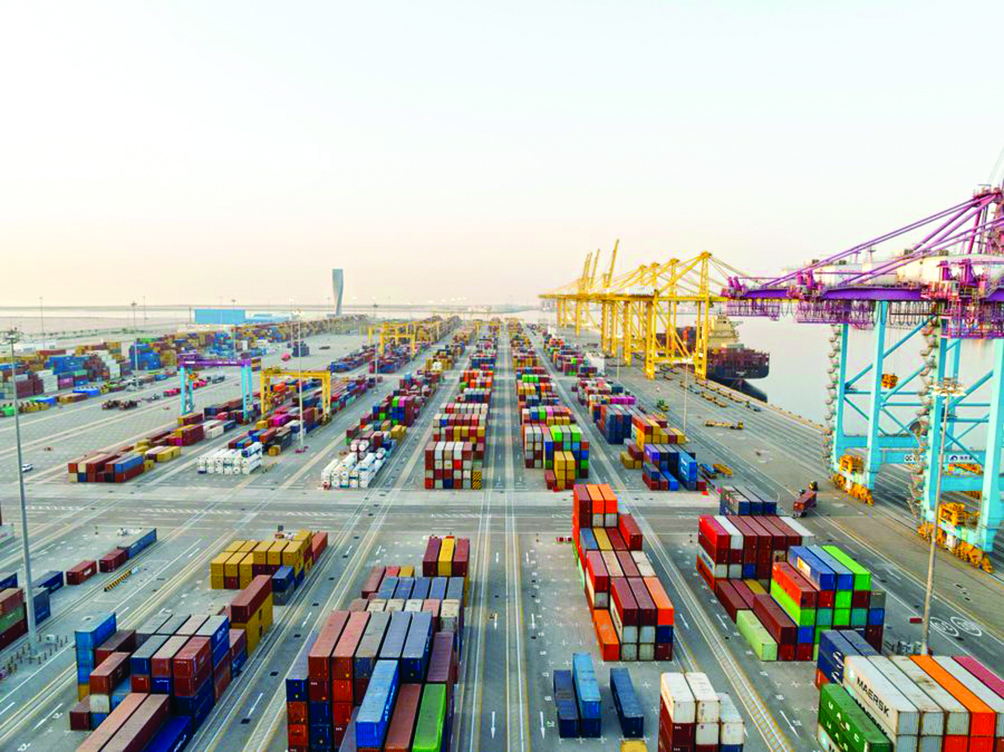
Mwani Qatar’s statistics revealed statistics for last September, when it received 160 ships, an increase of 20% compared to August 2026, and container handling recorded an increase of 10%, while livestock recorded an increase of 38%. Over the course of September, Hamad Port, Ruwais Port, and Old Doha Port received about 54,086 TEUs, general goods amounted to 40,513 tons, the number of cars and equipment reached 33 units, and the number of livestock reached 8,239 heads.
Mwani Qatar recorded a strong operational performance during the first half of 2026, continuing to enhance its role in supporting maritime trade movement and supply chains, as it received 866 ships through its three ports, and was able to handle 493,105 standard containers, in an indicator that reflects the efficiency of operational operations and the growing maritime activity in the country.
Statistics showed that from January to June 2026, it handled about 273,325 tons of general cargo, in addition to 324,512 tons of bulk cargo. It also received 24,652 units of cars and equipment, as well as 112,492 heads of livestock, which confirms the vital role of ports in securing the needs of the local market and supporting the import and export movement.
The efficiency of performance reflects the modern infrastructure capabilities of Qatari ports, in addition to the advanced maritime and logistical services provided by Qatar Ports, ensuring speedy handling of goods, raising the efficiency of supply chains, and achieving streamlined operational processes in accordance with the highest international standards.
In light of the challenges facing global trade, Qatar’s ports stand out as a model of readiness and ability to adapt to changes, benefiting from its strategic location, advanced infrastructure, and the efficiency of its operational system, thus enhancing the confidence of global shipping lines and investors in the Qatari market.
Hamad Port is Qatar’s main gateway to trade with the world, the main and most important port in the country, and represents the backbone of maritime trade movement. Its capacity is more than 7.5 million TEU annually, and it receives more than 95 percent of the country’s maritime imports, which makes it a vital center for the import and export of all types of goods, as it is characterized by a smart infrastructure that includes, in addition to container terminals, a general and bulk cargo terminal with a capacity of up to 7 million tons annually, and a multi-use station for handling livestock, cars and equipment with a capacity of 500,000 cars annually, and other facilities, which puts it in an advanced position to provide… Re-export, warehousing and distribution services at the regional level.