

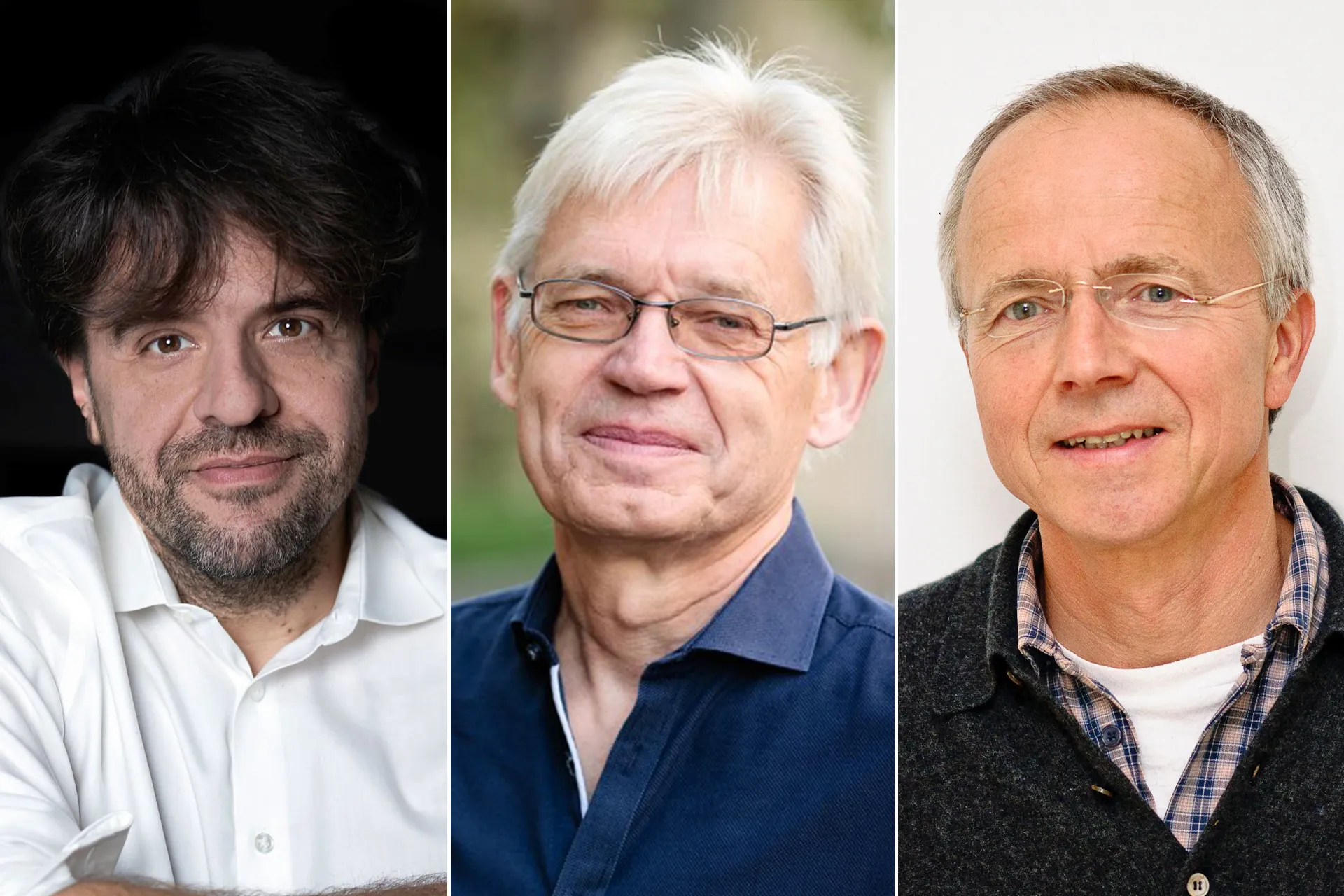
Scientists Karl Deisseroth, Peter Hegemann and Georg Nagel won the 2026 Nobel Prize in Physiology or Medicine, in recognition of their discoveries related to ion channels that respond to light and their development of “optogenetics” technology, according to what the Nobel Committee announced in Stockholm on Monday.
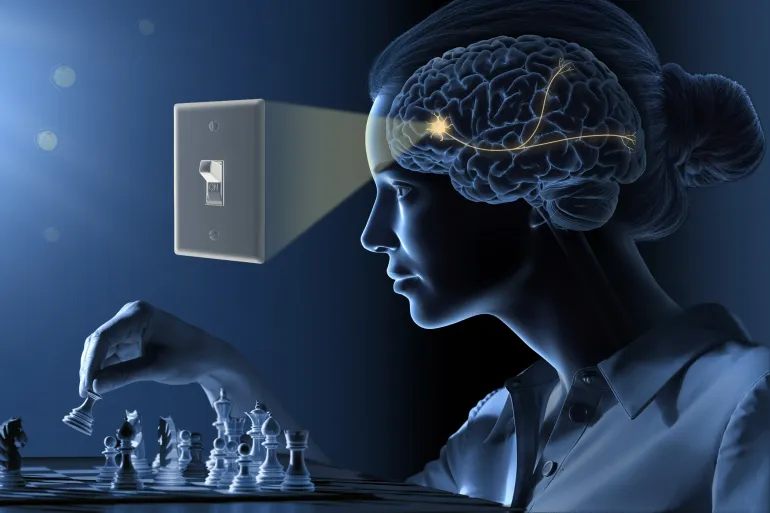
This technology allows controlling the activity of specific cells using light after making them genetically sensitive to it, especially nerve cells, which gave researchers a highly accurate tool to study the work of the brain and neural circuits, and opened new horizons for understanding a number of neurological disorders and developing future treatments for them.
“Using optogenetics technology, researchers were able to uncover the neural circuits that control specific memories, feelings, and behaviors associated with neurological and psychiatric disorders,” the Nobel committee said. In clinical medicine, researchers use this method in attempts to restore sight in people with low vision.
She added: “Optogenetics has radically changed our understanding of the brain. Every day brings new discoveries that help solve one of humanity’s greatest mysteries: how our amazing brain works.” Using light, researchers are able to activate or deactivate individual neural circuits in the brain.
Carl Deisseroth, a psychiatrist, neuroscientist, and bioengineer at Stanford University, is considered one of the most prominent people who developed optogenetics and turned it into a tool capable of controlling specific neurons using light.
As for Peter Hegemann, he is a biophysicist at Humboldt University in Berlin. His research focused on light-sensitive proteins in microorganisms, and he contributed to revealing the properties of “rhodopsin channels,” which became the basis for this technology.
George Nagel works as a professor at the University of Würzburg in Germany, and was one of the pioneers in identifying and characterizing ion channels that are activated by light.
The work of the three scientists converged to establish the field of “optogenetics,” which allowed researchers to turn neurons on or off with light and study neural circuits with unprecedented precision. Both Higman and Nagel contributed to the discovery of light-sensitive molecular tools, while Deisseroth was one of the most prominent people who turned these tools into a technique for precise control of nerve cell activity.
Nobel Prizes Week
Today, Monday, the Nobel Prizes Week 2026 began with the announcement of the Nobel Prize in Physiology or Medicine from the Karolinska Institute in Sweden.
Last year, three scientists won the Nobel Prize in Medicine for discoveries related to the mechanism by which the immune system knows when to attack germs and when to refrain from attacking the body’s own tissues.
Research by Mary E. Bronko, Fred Ramsdell, and Dr. Shimon Sakaguchi has revealed a key pathway that the body uses to regulate the functioning of the immune system, known as “peripheral immune tolerance.”
Experts described these findings as fundamental to understanding autoimmune diseases, such as type 1 diabetes, rheumatoid arthritis and lupus.
The Medicine Prize will be followed today, Monday, by the announcement of the Physics Prize tomorrow, Tuesday, then Chemistry on Wednesday, and Literature on Thursday.
After the Peace Prize was announced on Friday, the Bank of Sweden Prize in Economic Sciences in Memory of Alfred Nobel will be announced on October 12.
The Nobel Foundation increased the value of each award this year to 12 million Swedish krona (about 1.2 million dollars), on the occasion of the 125th anniversary of the launch of the awards.
The Nobel Prizes are awarded on December 10, the anniversary of the death of its founder, Alfred Nobel. The Peace Prize is awarded in Oslo, while the rest of the prizes are awarded in Stockholm.
633 awards
Between 1901 and 2025, the Nobel Prizes and the Prize in Economic Sciences were awarded 633 times to 1,026 individuals and organizations. But some winners received the award more than once, so the actual number of winners reached 990 people and 28 organizations.
The awards were distributed among 119 awards in physics, 117 in chemistry, 116 in medicine, 118 in literature, 106 in peace, and 57 in economic sciences.
A researcher, writer, or politician cannot nominate himself for the Nobel Prize. The right to nominate is limited to specific categories that vary depending on the award, and include former Nobel laureates, members of academies and scientific committees, selected university professors and researchers, in addition to members of parliaments and governments with regard to the Peace Prize.
The nomination process usually begins in September of each year, and the final nominations reach the committees at the end of January or early February, and then months of evaluation and consultation with experts begin before a decision is made in October.
The names of the nominees, the names of those who nominated them, and the deliberations related to the award remain confidential for 50 years.
Winners in the last ten years:
– 2025: Mary E. Bronko and Fred Ramsdell (United States) and Shimon Sakaguchi (Japan) for their research on how the body controls the immune system.
– 2024: Victor Ambros and Gary Rafkin (United States) for their discovery of “microRNA”, a new class of small DNA molecules that play a crucial role in regulating gene activity.
– 2023: Katalin Karikó (Hungary) and Drew Weissman (United States) for their mRNA vaccine discoveries that paved the way for COVID-19 vaccines.
– 2022: Svante Pääbo (Sweden) for his role in determining the complete sequence of the Neanderthal genome, and in establishing this specialty, which seeks, through the study of DNA belonging to fossils of ancient times, to know the characteristics of human genes in ancient times.
– 2021: David Julius and Arderem Patapoutian (USA) for their discoveries regarding how the nervous system transmits signals associated with temperature and touch.
– 2020: Harvey Alter, Charles Rice (United States) and Michael Houghton (Britain) for their role in discovering the virus responsible for hepatitis C.
– 2019: William Kaelin, Greg Semenza (United States) and Peter Ratcliffe (Britain) for their discovery of molecular mechanisms responsible for cells adapting to fluctuating oxygen levels in the body, which opened therapeutic horizons for cancer and anemia.
– 2018: James P. Allison (United States) and Tasaku Honjo (Japan) for their research on immunotherapy, which has proven effective specifically in treating lethal cancers.
– 2017: Jeffrey S. Hall, Michael Rosbach, and Michael W. Yang (USA) for their discovery of molecular mechanisms regulating circadian rhythms.
– 2016: Yoshinori Ohsumi (Japan) for his research on autophagy in damaged cells.