

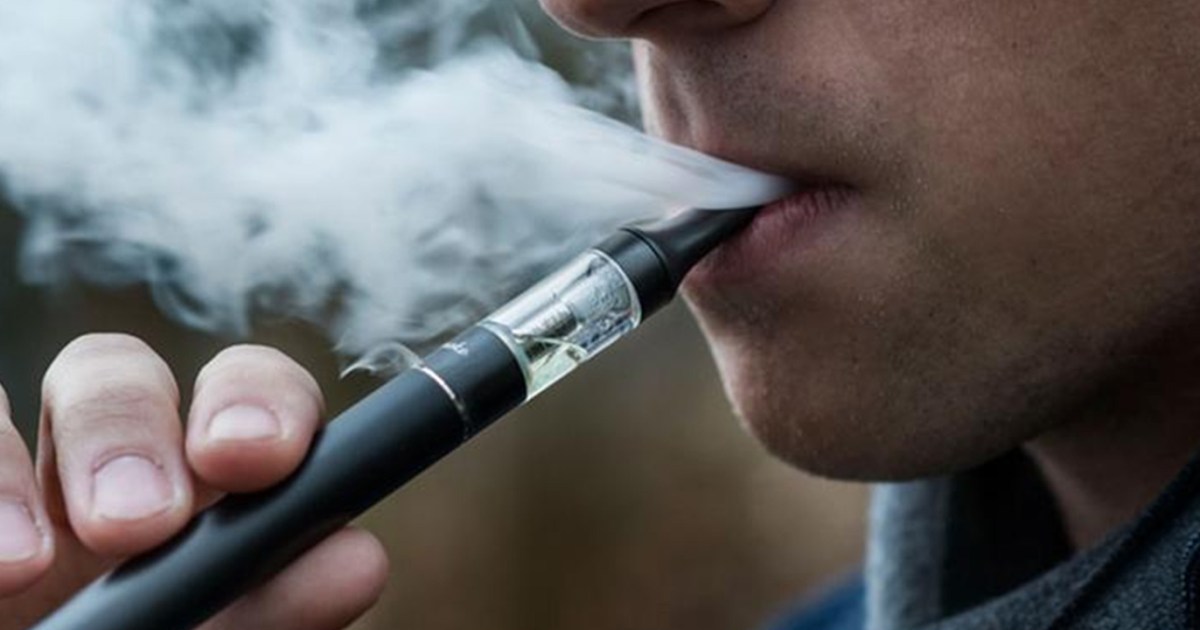
Researchers have revealed the acute effects of smoking cigarettes and e-cigarettes on blood vessel function, even without nicotine. The research results will be presented next week at the annual meeting of the Radiological Society of North America.
E-cigarettes are battery-operated devices that heat a liquid to produce an aerosol, which is then inhaled into the lungs. E-cigarettes contain far fewer chemicals and toxins than those found in tobacco smoke. As a result, many believe that e-cigarettes are less harmful than smoking traditional cigarettes. E-cigarettes also come in different flavours, making them popular among young people.
According to the Eurek Alert website, study author Dr. Marian Nabbout, a resident physician in the Department of Radiology at the University of Arkansas for Medical Sciences in Little Rock in the United States, said, “E-cigarettes have long been marketed as a safer alternative to regular tobacco smoking. Some believe that cigarettes E-cigarettes do not contain any of the harmful products, such as free radicals, found in regular tobacco cigarettes, because they do not involve any combustion.”
While vaping exposes users to fewer toxic chemicals than cigarettes, it can still be harmful to blood vessel function and overall health.
Determine acute effects on blood vessels
In the study conducted at the University of Pennsylvania, Dr. Nabbout and her colleagues sought to determine the acute effects on vascular function of smoking and the immediate effects of vaping, with and without nicotine.
So far, 31 healthy smokers and vapers between the ages of 21 and 49 have participated in the study. In 3 separate sessions, study participants underwent two MRI scans, before and after each of the following smoking or vaping sessions: tobacco cigarette, e-cigarette aerosol with nicotine and e-cigarette aerosol without nicotine.
A cuff was placed on the participants’ upper thigh to restrict blood flow. Once drained, the velocity of blood flow in the femoral artery and venous oxygen saturation (a measurement of the amount of oxygen in the blood that returns to the heart after oxygenating the body’s tissues) were assessed.
Brain blood flow was measured using a special type of MRI called phase-contrast MRI.
Data from smokers and vapers were then compared to data from 10 non-smokers and non-vapers aged 21 to 33 years.
How does smoking affect blood flow and oxygen load?
After inhaling each type of vaping or smoking, there was a significant decrease in resting blood flow velocity in the superficial femoral artery. This artery runs along the thigh and supplies the entire lower body with oxygenated blood.
The decrease in vascular function was most pronounced after inhaling nicotine-containing e-cigarettes, followed by non-nicotine e-cigarettes.
Decreased venous oxygen saturation was also present in e-smokers, whether the e-cigarettes contained nicotine or not. This indicates an immediate decrease in oxygen uptake by the lungs after vaping.
Dr. Nabout explained, “This study aims to shed light on the acute effects that smoking and vaping can have on many blood vessels in the human body. If acute consumption of electronic cigarettes may have an effect that is immediately apparent at the level of blood vessels, it is reasonable that Chronic use can cause vascular disease.”
According to Dr. Nabbout, the message that needs to get across to the public is that vaping may not be harmless. “It is always recommended to abstain from smoking and vaping,” she said.